- BPM
- 132
- Key
- G Minor
- Camelot
- 6A
Stravinsky: The Rite of Spring, Pt. 2 "The Sacrifice": Glorification of the Chosen One by Igor Stravinsky, Riccardo Muti, Philadelphia Orchestra Song Details
"Stravinsky: The Rite of Spring, Pt. 2 "The Sacrifice": Glorification of the Chosen One" by Igor Stravinsky, Riccardo Muti, Philadelphia Orchestra had its release date on January 1, 1979. With This song being less than two minutes long, at 1:28, we are fairly confident that this song is not explicit and is safe for all ages. Based on the duration of this song, this song duration is much smaller than the average song duration. There are a total of 13 in the song's album "Stravinsky: The Rite of Spring". In this album, this song's track order is #10. Furthermore, we believe that the track originated from United Kingdom. Based on our statistics, Stravinsky: The Rite of Spring, Pt. 2 "The Sacrifice": Glorification of the Chosen One's popularity is not that popular right now. Although the tone can be danceable to some, this track does projects more of a negative sound rather than a postive one.
BPM and Tempo
With Stravinsky: The Rite of Spring, Pt. 2 "The Sacrifice": Glorification of the Chosen One by Igor Stravinsky, Riccardo Muti, Philadelphia Orchestra having a BPM of 132 with a half-time of 66 BPM and a double-time of 264 BPM, we would consider this track to have a Allegro (fast, quick, and bright) tempo marking. Because of this, we believe that the song has an overall fast tempo. Looking at the BPM of this song, this song might go great with walking. The time signature for this track is 4/4.
Music Key
This song is in the music key of G Minor. Which also means that the camelot key for this song is 6A. So, the perfect camelot match for 6A would be either 6A or 5B. While, a low energy boost can consist of either 6B or 7A. For moderate energy boost, you would use 3A and a high energy boost can either be 8A or 1A. However, if you are looking for a low energy drop, finding a song with a camelot key of 5A would be a great choice. Where 9A would give you a moderate drop, and 4A or 11A would be a high energy drop. Lastly, 9B allows you to change the mood.
Want to find the BPM and music key for other songs? Check out our BPM and Key Finder page!
- Popularity
- 2%
- Loudness
- -11.981 dB
- Acousticness
- 88%
- Danceability
- 49%
- Energy
- 52%
- Instrumentalness
- 94%
- Liveness
- 56%
- Loudness
- 80%
- Speechiness
- 7%
- Valence
- 12%
Recommendations
| Track | Artist | Key | Energy | Camelot | BPM | ||
|---|---|---|---|---|---|---|---|
 | Quatuor pour la fin du Temps: V. Louange à l'éternité de Jésus | Olivier Messiaen, Lucas Debargue, Torleif Thedéen | E Major | 0 | 12B | 81 BPM | |
 | Stravinsky: Petrouchka, Tableau I "La foire du Mardi-Gras": Introduction - Fête populaire de la semaine grasse (1947 Version) | Igor Stravinsky, Riccardo Muti, Philadelphia Orchestra | D Major | 9 | 10B | 142 BPM | |
 | Pictures at an Exhibition (Orch. Ravel): Promenade I | Modest Mussorgsky, Wiener Philharmoniker, Gustavo Dudamel | F Major | 0 | 7B | 88 BPM | |
 | Symphonie fantastique, Op. 14, H 48: IV. Marche au supplice | Hector Berlioz, London Symphony Orchestra, Sir Colin Davis | B♭ Major | 1 | 6B | 155 BPM | |
 | Symphony No. 1 in E Major, Op. 26: I. Lento | Alexander Scriabin, Mikhail Pletnev, Russian National Orchestra | E Major | 0 | 12B | 88 BPM | |
 | Elégie in C Minor, Op. 24 (Arr. Parkin) | Gabriel Fauré, Sheku Kanneh-Mason, Rowena Calvert, Ashok Klouda, Nicholas Trygstad, Caroline Dearnley, Desmond Neysmith, Josephine Knight, Hannah Roberts, Chris Murray, Robert Max | A♭ Major | 0 | 4B | 88 BPM | |
 | 2 Elegiac Melodies, Op. 34: No. 1, The Wounded Heart | Edvard Grieg, Malmö Symphony Orchestra, Bjarte Engeset | G Major | 2 | 9B | 72 BPM | |
 | Stravinsky: Symphony in C: I. Moderato alla breve | Igor Stravinsky, Sir Simon Rattle, Berliner Philharmoniker | C Major | 0 | 8B | 147 BPM | |
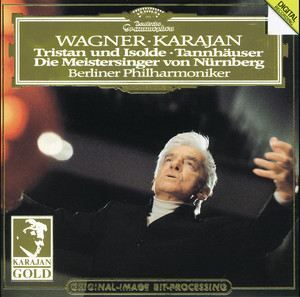 | Tristan und Isolde, Act III: Liebestod (Concert Version) | Richard Wagner, Berliner Philharmoniker, Herbert von Karajan | B Major | 2 | 1B | 94 BPM | |
 | Prince Igor: Polovtsian Dances (Remastered): No. 8, Dance of the Polovtsian Maidens | Alexander Borodin, Leonard Bernstein, New York Philharmonic | F Major | 2 | 7B | 99 BPM | |
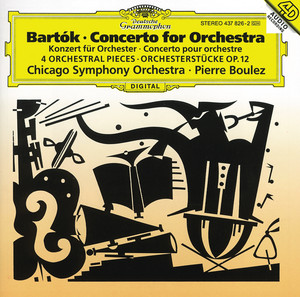 | Concerto for Orchestra, Sz. 116: II. Giuoco della coppie. Allegretto scherzando | Béla Bartók, Chicago Symphony Orchestra, Pierre Boulez | G Major | 1 | 9B | 124 BPM | |
 | Mathis der Maler Symphony: I. Engelkonzert | Paul Hindemith, Berliner Philharmoniker, Claudio Abbado | D Major | 1 | 10B | 106 BPM | |
 | The Rite of Spring, K15, Pt. 1: IV. Spring Rounds | Igor Stravinsky, Berliner Philharmoniker, Herbert von Karajan | B♭ Minor | 0 | 3A | 61 BPM | |
![Spartacus, Act III: Adagio of Spartacus and Phrygia (arr. Y. Grigorovich) [1968 Bolshoi Version] by Aram Khachaturian, RIAS Kammerchor, Deutsches Symphonie-Orchester Berlin, Michail Jurowski](https://i.scdn.co/image/ab67616d00001e02c21d253eed4ccdd547b4b94d) | Spartacus, Act III: Adagio of Spartacus and Phrygia (arr. Y. Grigorovich) [1968 Bolshoi Version] | Aram Khachaturian, RIAS Kammerchor, Deutsches Symphonie-Orchester Berlin, Michail Jurowski | E Major | 2 | 12B | 123 BPM | |
| Pictures At An Exhibition (Orch. Ravel): 8a. Catacombae (Sepulchrum Romanum) | Modest Mussorgsky, Wiener Philharmoniker, Gustavo Dudamel | B Minor | 0 | 10A | 71 BPM | |
 | Japanese Suite, Op. 33, H. 126: II. Ceremonial Dance | Gustav Holst, Ulster Orchestra, Joann Falletta | C Minor | 3 | 5A | 103 BPM | |
 | Alborada del gracioso, M. 43: Assez vif | Maurice Ravel, Berliner Philharmoniker, Pierre Boulez | D Major | 1 | 10B | 121 BPM | |
 | Schoenberg: Suite in the Old Style for String Orchestra: II. Adagio | Arnold Schoenberg, Mario Venzago, Deutsche Kammerphilharmonie Bremen | G Major | 1 | 9B | 101 BPM | |
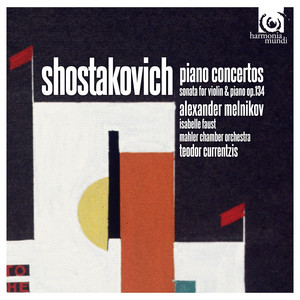 | Piano Concerto No. 2 Op. 102 in F Major: III. Allegro | Dmitri Shostakovich, Alexander Melnikov, Mahler Chamber Orchestra, Teodor Currentzis | C Major | 4 | 8B | 150 BPM | |
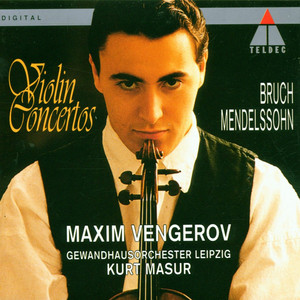 | Bruch : Violin Concerto No.1 in G minor Op.26 : III Finale - Allegro energico | Max Bruch, Maxim Vengerov, Kurt Masur, Gewandhausorchester Leipzig | G Major | 2 | 9B | 90 BPM | |
 | In the Steppes of Central Asia | Alexander Borodin, Royal Philharmonic Orchestra, Vladimir Ashkenazy | A Major | 0 | 11B | 69 BPM | |
 | Symphony No. 1 in D Major: III. Feierlich und gemessen, ohne zu schleppen - Live | Gustav Mahler, Berliner Philharmoniker, Claudio Abbado | G Minor | 0 | 6A | 56 BPM | |
 | Symphony No. 5 in E Minor, Op. 64: IV. Finale. Andante maestoso – Allegro vivace – Moderato assai e molto maestoso – Presto – Molto meno mosso | Pyotr Ilyich Tchaikovsky, Berliner Philharmoniker, Kirill Petrenko | E Major | 3 | 12B | 141 BPM | |
 | D'un matin de printemps | Lili Boulanger, Yan Pascal Tortelier, BBC Philharmonic | C Major | 1 | 8B | 130 BPM | |
![Symphony No. 5 In C Sharp Minor: 1. Trauermarsch (In gemessenem Schritt. Streng. Wie ein Kondukt) [Symphony No.5 in C sharp minor / Part 1] by Gustav Mahler, Wiener Philharmoniker, Pierre Boulez](https://i.scdn.co/image/ab67616d00001e025e6aa0e42f447f00063084c2) | Symphony No. 5 In C Sharp Minor: 1. Trauermarsch (In gemessenem Schritt. Streng. Wie ein Kondukt) [Symphony No.5 in C sharp minor / Part 1] | Gustav Mahler, Wiener Philharmoniker, Pierre Boulez | D♭ Minor | 1 | 12A | 86 BPM |
- ISRC
- GBAYC0100796
- Label
- L-M Records/RCA Records