- BPM
- 102
- Key
- G Major
- Camelot
- 9B
Two Melodies, Op. 53, for string Orchestra: Norsk (Norwegian). Allegro Risoluto by Edvard Grieg, WDR Sinfonieorchester Köln, Eivind Aadland Song Details
"Two Melodies, Op. 53, for string Orchestra: Norsk (Norwegian). Allegro Risoluto" by Edvard Grieg, WDR Sinfonieorchester Köln, Eivind Aadland had its release date on May 4, 2012. With this song being around four minutes long, at 4:24, the duration of this song is pretty average compared to other songs. This track is safe for children and doesn't appear to contain any foul language, since the "Explicit" tag was not present in this track. The track order of this song in Edvard Grieg, WDR Sinfonieorchester Köln, Eivind Aadland's "Grieg: Complete Symphonic Works, Vol. II" album is number 8 out of 12. On top of that, Germany appears to be the country where this track was created. In terms of popularity, Two Melodies, Op. 53, for string Orchestra: Norsk (Norwegian). Allegro Risoluto is currently not that popular. In our opinion, the overall tone is not very danceable and projects negative sounds, such as being sad, depressed, or angry.
BPM and Tempo
We consider the tempo marking of Two Melodies, Op. 53, for string Orchestra: Norsk (Norwegian). Allegro Risoluto by Edvard Grieg, WDR Sinfonieorchester Köln, Eivind Aadland to be Andante (at a walking pace) because the track has a tempo of 102 BPM, a half-time of 51BPM, and a double-time of 204 BPM. Based on that, the speed of the song's tempo is slow. The time signature for this track is 3/4.
Music Key
G Major is the music key of this track. This also means that this song has a camelot key of 9B. So, the perfect camelot match for 9B would be either 9B or 10A. While, 10B can give you a low energy boost. For moderate energy boost, you would use 6B and a high energy boost can either be 11B or 4B. Though, if you want a low energy drop, you should looking for songs with either a camelot key of 9A or 8B will give you a low energy drop, 12B would be a moderate one, and 7B or 2B would be a high energy drop. Lastly, 6A allows you to change the mood.
Want to find the BPM and music key for other songs? Check out our BPM and Key Finder page!
- Popularity
- 3%
- Loudness
- -15.684 dB
- Acousticness
- 93%
- Danceability
- 29%
- Energy
- 13%
- Instrumentalness
- 91%
- Liveness
- 10%
- Loudness
- 74%
- Speechiness
- 4%
- Valence
- 7%
Recommendations
| Track | Artist | Key | Energy | Camelot | BPM | ||
|---|---|---|---|---|---|---|---|
 | Kol Nidrei - Adagio For Cello, Opus 47 | Max Bruch, Alisa Weilerstein, Staatskapelle Berlin, Daniel Barenboim | D Major | 1 | 10B | 81 BPM | |
 | 6 Impromptus, Op. 5: Impromptu VI | Jean Sibelius, Leif Ove Andsnes | E Major | 0 | 12B | 62 BPM | |
 | Adagio from Violin Sonata in G Minor, Op. 5 No. 5 (Arr. Leopold Stokowski) | Arcangelo Corelli, Matthias Bamert, BBC Philharmonic | G Minor | 0 | 6A | 175 BPM | |
 | Maskerade-Suite: I. Waltz | Aram Khachaturian, Veronika Dudarova, Moscow Symphony Orchestra | G Major | 10 | 9B | 107 BPM | |
 | Berceuse in D-Flat Major, Op. 57 | Frédéric Chopin, Maurizio Pollini | D♭ Major | 1 | 3B | 69 BPM | |
![Etudes symphoniques (Symphonic Etudes), Op. 13, Adagio and Allegro brillante: Variation 11 [arr. P.I. Tchaikovsky for orchestra] by Robert Schumann, Seattle Symphony Orchestra, Gerard Schwarz](https://i.scdn.co/image/ab67616d00001e029057c124b554163ef1edd618) | Etudes symphoniques (Symphonic Etudes), Op. 13, Adagio and Allegro brillante: Variation 11 [arr. P.I. Tchaikovsky for orchestra] | Robert Schumann, Seattle Symphony Orchestra, Gerard Schwarz | A Minor | 0 | 8A | 104 BPM | |
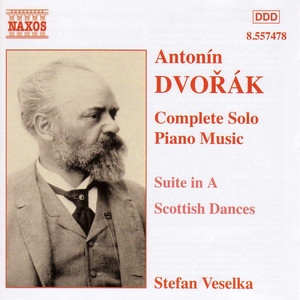 | 2 Pieces, Op. Posth., B. 188: No. 1, Lullaby in G Major | Antonín Dvořák, Stefan Veselka | G Major | 0 | 9B | 66 BPM | |
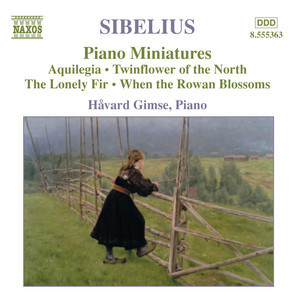 | 13 Pieces, Op. 76: No. 2 Etude | Jean Sibelius, Håvard Gimse | A Minor | 2 | 8A | 72 BPM | |
 | Serenade in C Major, Op. 48: IV. Finale (Tema Russo) | Pyotr Ilyich Tchaikovsky, Vienna Chamber Orchestra, Philippe Entremont | G Major | 3 | 9B | 146 BPM | |
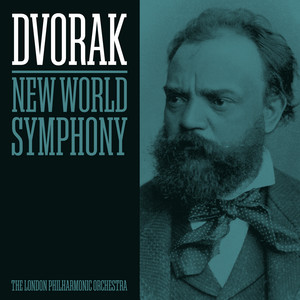 | 2nd Movement: Largo | London Philharmonic Orchestra | D♭ Major | 0 | 3B | 74 BPM | |
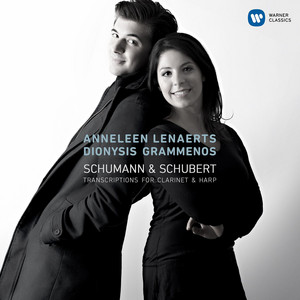 | Schumann: 12 Gedichte aus Liebesfrühling, Op. 37: No. 11: Warum willst du andre fragen | Clara Schumann, Anneleen Lenaerts, Dionysis Grammenos | A♭ Major | 0 | 4B | 71 BPM | |
 | Lyric Pieces, Book 1, Op. 12: Arietta | Edvard Grieg, Einar Steen-Nøkleberg | E♭ Major | 0 | 5B | 111 BPM | |
 | Ravel: Jeux d'eau, M. 30 | Maurice Ravel, Monique Haas | F♯ Major | 0 | 2B | 151 BPM | |
 | Minuet in G Minor, HWV 434 No. 4 (Transc. W. Kempff) | George Frideric Handel, Roberto Cominati | G Minor | 0 | 6A | 66 BPM | |
| Serenade in C Major, Op. 48: II. Walzer | Pyotr Ilyich Tchaikovsky, Vienna Chamber Orchestra, Philippe Entremont | G Major | 2 | 9B | 180 BPM | |
 | Symphony No. 6 in B Minor, Op. 74 "Pathétique": II. Allegro con grazia | Pyotr Ilyich Tchaikovsky, Teodor Currentzis, musicAeterna | D Major | 2 | 10B | 66 BPM | |
 | Ständchen, D. 889 | Franz Schubert, Tanguy de Williencourt, Bruno Philippe | D Major | 0 | 10B | 76 BPM | |
 | Kinderszenen, Op. 15: I. Von fremden Ländern und Menschen | Robert Schumann, Martha Argerich | G Major | 0 | 9B | 128 BPM | |
 | 3 Liebesträume, S. 541/3: No. 3, O lieb, so lang du lieben kannst (Arr. for Harp by Nora von Marschall) | Franz Liszt, Nora von Marschall | B♭ Major | 0 | 6B | 85 BPM | |
 | Carmen Suite No. 1 (Arr. E. Guiraud): III. Intermezzo | Georges Bizet, Orquestra Simfònica de Barcelona i Nacional de Catalunya, Pablo González | E♭ Major | 0 | 5B | 81 BPM | |
 | Le tombeau de Couperin: 3. Menuet (version for orchestra) | Maurice Ravel, フランス国立リヨン管弦楽団, レナード・スラットキン | A Major | 1 | 11B | 107 BPM | |
 | Violin Partita No. 3 in E Major, BWV 1006: I. Preludio | Johann Sebastian Bach, Hilary Hahn | A Major | 3 | 11B | 126 BPM | |
 | Young Birches, Op. 128, No. 2 | Amy Beach, Joanne Polk | F♯ Minor | 1 | 11A | 170 BPM | |
 | Tristan und Isolde, WWV 90: Prelude To Act I | Richard Wagner, Gewandhausorchester Leipzig, Andris Nelsons | A Minor | 1 | 8A | 79 BPM | |
 | Bruch : Violin Concerto No.1 in G minor Op.26 : III Finale - Allegro energico | Max Bruch, Maxim Vengerov, Kurt Masur, Gewandhausorchester Leipzig | G Major | 2 | 9B | 90 BPM |
- ISRC
- DEE211057908
- Label
- L-M Records/RCA Records