- BPM
- 109
- Key
- D Minor
- Camelot
- 7A
24 Caprices en formes d'etudes: No. 10 in C-Sharp Minor by Pierre Rode, Elizabeth Wallfisch Song Details
Pierre Rode, Elizabeth Wallfisch's ' "24 Caprices en formes d'etudes: No. 10 in C-Sharp Minor" was released on its scheduled release date, May 19, 2010. The duration of This song is about two minutes long, specifically at 2:31. This song does not appear to have any foul language. 24 Caprices en formes d'etudes: No. 10 in C-Sharp Minor's duration is considered a little bit shorter than the average duration of a typical track. There are a total of 24 in the song's album "Rode: 24 Caprices en formes d'etudes". In this album, this song's track order is #10. Furthermore, we believe that the track originated from Germany. In terms of popularity, 24 Caprices en formes d'etudes: No. 10 in C-Sharp Minor is currently unknown. Since there is more of a neutral sound being played, this makes the track somewhat danceable.
BPM and Tempo
With 24 Caprices en formes d'etudes: No. 10 in C-Sharp Minor by Pierre Rode, Elizabeth Wallfisch having a BPM of 109 with a half-time of 54 BPM and a double-time of 218 BPM, we would consider this track to have a Moderato (at a moderate speed) tempo marking. Because of this, we believe that the song has an overall moderate tempo. The time signature for this track is 3/4.
Music Key
This song has a musical key of D Minor. Which also means that the camelot key for this song is 7A. So, the perfect camelot match for 7A would be either 7A or 6B. While, a low energy boost can consist of either 7B or 8A. For moderate energy boost, you would use 4A and a high energy boost can either be 9A or 2A. However, if you are looking for a low energy drop, finding a song with a camelot key of 6A would be a great choice. Where 10A would give you a moderate drop, and 5A or 12A would be a high energy drop. Lastly, 10B allows you to change the mood.
Want to find the BPM and music key for other songs? Check out our BPM and Key Finder page!
- Popularity
- 0%
- Loudness
- -16.32 dB
- Acousticness
- 99%
- Danceability
- 44%
- Energy
- 16%
- Instrumentalness
- 62%
- Liveness
- 13%
- Loudness
- 73%
- Speechiness
- 6%
- Valence
- 55%
Recommendations
| Track | Artist | Key | Energy | Camelot | BPM | ||
|---|---|---|---|---|---|---|---|
 | Violin Concerto No. 9 in A Minor, Op. 104: II. Adagio | Charles-Auguste de Bériot, Takako Nishizaki, RTBF Symphony Orchestra, Alfred Walter | E Major | 1 | 12B | 129 BPM | |
 | Wieniawski: Polonaise No. 2, Op. 21 | Henryk Wieniawski, Itzhak Perlman, Samuel Sanders | E Major | 2 | 12B | 95 BPM | |
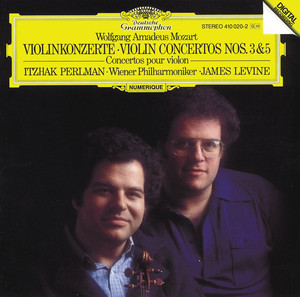 | Violin Concerto No. 5 in A Major, K. 219 "Turkish": I. Allegro aperto (Cadenza Itzhak Perlman) | Wolfgang Amadeus Mozart, Itzhak Perlman, Wiener Philharmoniker, James Levine | A Major | 2 | 11B | 122 BPM | |
 | Variations on a Theme of Rossini | Niccolò Paganini, Sebastian Bru | D Major | 2 | 10B | 176 BPM | |
 | Spohr: Duo Concertante in D Major, Op. 67 No. 2: I. Allegro | Louis Spohr, Itzhak Perlman, Pinchas Zukerman | D Major | 2 | 10B | 130 BPM | |
| Leclair: Sonata for 2 Violins in E Minor, Op. 3 No. 5: II. Gavotte. Andante grazioso | Jean-Marie Leclair, Itzhak Perlman, Pinchas Zukerman | E Minor | 1 | 9A | 114 BPM | |
 | Symphonie espagnole, Op. 21: V. Rondo | Édouard Lalo, Itzhak Perlman, André Previn, London Symphony Orchestra | D Major | 2 | 10B | 109 BPM | |
 | 5 Pieces for 2 Violins & Piano (Arr. for 2 Violins & Piano by Lev Atovmyan): No. 1, Prelude. Moderato | Dmitri Shostakovich, Julia Fischer, Kirill Troussov, Henri Bonamy | G Major | 2 | 9B | 101 BPM | |
 | Sarasate: Spanish Dances, Op. 22: No. 1, Romanza andaluza | Pablo de Sarasate, Itzhak Perlman, Samuel Sanders | C Major | 2 | 8B | 98 BPM | |
 | Sonata in G Minor, "The Devil's Trill", B.g5: 2. Allegro | Giuseppe Tartini, Yu-Chien Tseng, Rohan De Silva | G Minor | 4 | 6A | 95 BPM | |
 | Concerto For Violin and Orchestra No. 5 in A minor Op. 37 Allegro con fuoco | Henri Vieuxtemps, Sarah Chang, Philharmonia Orchestra, Charles Dutoit | A Minor | 4 | 8A | 138 BPM | |
 | Violin Sonata, Op. 5, No. 9: Allegro | Jean Baptiste Senaillé, Tianwa Yang, Markus Hadulla | F Major | 1 | 7B | 97 BPM | |
 | Sonata for 2 Violins, Op.56: I. Andante cantabile | Itzhak Perlman, Pinchas Zukerman | G Major | 0 | 9B | 98 BPM | |
 | Minute Caprice (rec. pre-1915/ single face record/ HMV: 5-7955-b) | Jacques Thibaud, Pierre Rode | D♭ Major | 1 | 3B | 139 BPM | |
 | Violin Concerto No. 8 in A Minor, Op. 47 (Im Form einer Gesangsszene): I. Recitative - Allegro molto | Louis Spohr, Hilary Hahn, Swedish Radio Symphony Orchestra, Eije Oue | A Minor | 0 | 8A | 131 BPM | |
 | The Last Rose of Summer "Étude No. 6" | Heinrich Wilhelm Ernst, Midori | G Major | 0 | 9B | 98 BPM | |
 | The Last Rose of Summer, "Polyphonic Study No. 6": Introduction. Moderato - Tema. Andante non troppo - Variations I, II, III, IV - Finale | Heinrich Wilhelm Ernst, Ning Feng | G Major | 1 | 9B | 115 BPM | |
 | Sonata No. 6: Rondo | Moshe Hammer, Norbert Kraft, Niccolò Paganini | A Major | 2 | 11B | 101 BPM | |
 | 24 caprices en formes d'etudes: No. 3 in G Major | Pierre Rode, Axel Strauss | C Minor | 1 | 5A | 100 BPM | |
 | Paganiniana, Variations for Solo Violin | Nathan Milstein | A Minor | 1 | 8A | 104 BPM | |
 | Violin Sonata No. 3 in C Minor, Op. 45: I. Allegro molto ed appassionato | Edvard Grieg, Frederic Chiu, Pierre Amoyal | C Major | 0 | 8B | 102 BPM | |
 | Passacaglia and Sarabande for Violin and Viola (With Variations on a Theme by Handel) | Johan Halvorsen, Itzhak Perlman, Pinchas Zukerman | G Minor | 3 | 6A | 112 BPM | |
 | Violin Concerto No. 4 in D Minor, Op. 31: IV. Finale marziale: Andante - Allegro | Henri Vieuxtemps, Hilary Hahn, Deutsche Kammerphilharmonie Bremen, Paavo Järvi | D Major | 2 | 10B | 78 BPM | |
 | 24 Caprices for Solo Violin, Op. 22: No. 22 in G Minor. Presto | Pierre Rode, Roksana Kwaśnikowska | G Minor | 1 | 6A | 86 BPM | |
 | Every Violinist's Guide - 18 Traditional Etudes (First Recording): No. 17 | Pierre Rode, Steven Staryk, Kenneth Gilbert, Adela Kotowska, Eloise Niwa | C Minor | 1 | 5A | 115 BPM |
- ISRC
- DEB200412910
- Label
- L-M Records/RCA Records