- BPM
- 127
- Key
- D Minor
- Camelot
- 7A
ウィーン奇想曲 by フリッツ・クライスラー, 小林美恵, 江口 玲 Song Details
"ウィーン奇想曲" by フリッツ・クライスラー, 小林美恵, 江口 玲 had its release date on December 17, 2008. With this song being around four minutes long, at 4:15, the duration of this song is pretty average compared to other songs. This track is safe for children and doesn't appear to contain any foul language, since the "Explicit" tag was not present in this track. There is only one song in 愛の喜び/美しきロスマリン 〜クライスラー作品集, so we believe that "ウィーン奇想曲" is a single. Based on our statistics, ウィーン奇想曲's popularity is unknown right now. Although the tone can be danceable to some, this track does projects more of a negative sound rather than a postive one.
BPM and Tempo
The tempo marking of ウィーン奇想曲 by フリッツ・クライスラー, 小林美恵, 江口 玲 is Allegro (fast, quick, and bright), since this song has a tempo of 127 BPM. With that information, we can conclude that the song has a fast tempo. This song can go great with walking. The time signature for this track is 4/4.
Music Key
D Minor is the music key of this track. Because this track belongs in the D Minor key, the camelot key is 7A. So, the perfect camelot match for 7A would be either 7A or 6B. While, a low energy boost can consist of either 7B or 8A. For moderate energy boost, you would use 4A and a high energy boost can either be 9A or 2A. However, if you are looking for a low energy drop, finding a song with a camelot key of 6A would be a great choice. Where 10A would give you a moderate drop, and 5A or 12A would be a high energy drop. Lastly, 10B allows you to change the mood.
Want to find the BPM and music key for other songs? Check out our BPM and Key Finder page!
- Popularity
- 0%
- Loudness
- -18.977 dB
- Acousticness
- 99%
- Danceability
- 51%
- Energy
- 4%
- Instrumentalness
- 93%
- Liveness
- 9%
- Loudness
- 68%
- Speechiness
- 8%
- Valence
- 5%
Recommendations
| Track | Artist | Key | Energy | Camelot | BPM | ||
|---|---|---|---|---|---|---|---|
 | Pavane pour une infante défunte, M. 19 | Maurice Ravel, Louis Lortie | E Minor | 0 | 9A | 108 BPM | |
 | Après un rêve, Op. 7: No. 1 | Gabriel Fauré, Joshua Bell, Frederic Chiu | G Minor | 2 | 6A | 91 BPM | |
 | Violin Concerto No. 3 In E Major, MS 50: II. Adagio, Cantabile Spianato | Erno Rozsa, Slovak Radio Symphony Orchestra, Niccolò Paganini | A Major | 0 | 11B | 98 BPM | |
 | Liebesleid (Love's Sorrow) | Fritz Kreisler, Sergei Rachmaninoff, RueiBin Chen | A Major | 2 | 11B | 98 BPM | |
 | 3 Etudes Opus 104b: No. 1 in B-Flat Minor | Felix Mendelssohn, Bertrand Chamayou | B♭ Minor | 1 | 3A | 52 BPM | |
 | Elgar: Salut d'amour, Op. 12 | Edward Elgar, Kyung Wha Chung, Kevin Kenner | E Major | 1 | 12B | 79 BPM | |
 | 21 Hungarian Dances, WoO 1: No. 1 in G Minor. Allegro molto (Version for Orchestra) | Johannes Brahms, Wiener Philharmoniker, Claudio Abbado | G Minor | 2 | 6A | 142 BPM | |
 | Sonata for Violin and Piano in A: 1. Allegretto ben moderato | César Franck, Kaja Danczowska, Krystian Zimerman | F♯ Minor | 1 | 11A | 145 BPM | |
 | Piano Quartet in E Flat, Op. 47: 3. Andante cantabile | Robert Schumann, Menahem Pressler, Emerson String Quartet | B♭ Major | 0 | 6B | 104 BPM | |
 | Polovetsian Dances from Prince Igor: Introduzione | Alexander Borodin, George Szell, The Cleveland Orchestra | A Major | 1 | 11B | 83 BPM | |
 | Rachmaninov / Arr. Press & Gingold for Violin and Piano: 14 Romances, Op. 34: No. 14, Vocalise | Hermione Gingold, Michael Press, Sergei Rachmaninoff, Itzhak Perlman, Samuel Sanders | E Minor | 2 | 9A | 98 BPM | |
 | Sonata in G Minor, "The Devil's Trill", B.g5: 1. Larghetto affettuoso | Giuseppe Tartini, Yu-Chien Tseng, Rohan De Silva | G Minor | 1 | 6A | 176 BPM | |
 | Cantabile, MS 109/Op. 17 (Arr. for Cello and Guitar) | Niccolò Paganini, Jan Vogler | D Major | 3 | 10B | 124 BPM | |
 | Saint- Saëns: Introduction and Rondo Capriccioso, Op. 28 | Camille Saint-Saëns, Min Kym | A Minor | 1 | 8A | 90 BPM | |
 | Liebeslied | Fritz Kreisler, Elissa Lee Koljonen, Robert Koenig | G Minor | 1 | 6A | 160 BPM | |
 | Espana, Op. 165: No. 2, Tango | Isaac Albéniz, Gerald Fauth, Katrin Scholz, Fritz Kreisler | D Major | 1 | 10B | 170 BPM | |
 | Salut d'amour, Op. 12 | Edward Elgar, Sueye Park, Love Derwinger | E Major | 1 | 12B | 83 BPM | |
 | XIII. Le cygne (Transcr. L. Godowsky for Piano) | Camille Saint-Saëns, Leopold Godowsky, Konstantin Scherbakov | F♯ Major | 0 | 2B | 72 BPM | |
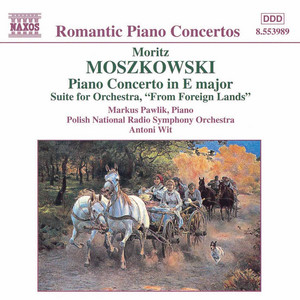 | Piano Concerto in E Major, Op. 59: IV. Allegro deciso | Moritz Moszkowski, Markus Pawlik, Polish National Radio Symphony Orchestra, Antoni Wit | E Major | 2 | 12B | 84 BPM | |
 | Violin Concerto No. 2 in D Minor, Op. 22: II. Romance | Henryk Wieniawski, Itzhak Perlman, Orchestre de Paris, Daniel Barenboim | B♭ Major | 1 | 6B | 91 BPM | |
 | Carmen Fantasy, Op. 25: IV. Moderato | Pablo de Sarasate, Hilary Hahn, Frankfurt Radio Symphony Orchestra, Andrés Orozco-Estrada | F Minor | 2 | 4A | 84 BPM | |
 | Elegy No. 1 in D Major | Giovanni Bottesini, Andrew Burashko, Joel Quarrington | D Major | 0 | 10B | 89 BPM | |
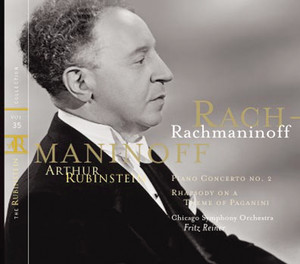 | Piano Concerto No. 2 in C Minor, Op. 18: I. Moderato | Sergei Rachmaninoff, Arthur Rubinstein, Fritz Reiner | C Minor | 1 | 5A | 71 BPM | |
 | Piazzolla: Oblivion | Julian Lloyd Webber, John Lenehan | D Minor | 0 | 7A | 81 BPM | |
 | Hungarian Rhapsody No. 6 in D-Flat Major, S. 244/6 | Franz Liszt, Martha Argerich | D♭ Major | 3 | 3B | 127 BPM |
- ISRC
- JPCO00132250
- Label
- L-M Records/RCA Records