- BPM
- 85
- Key
- D♭ Major
- Camelot
- 3B
Wiegenmusik by Helmut Lachenmann, David Greilsammer Song Details
"Wiegenmusik" by Helmut Lachenmann, David Greilsammer had its release date on February 10, 2012. With this song being around four minutes long, at 4:15, the duration of this song is pretty average compared to other songs. This track is safe for children and doesn't appear to contain any foul language, since the "Explicit" tag was not present in this track. The song is number 14 out of 15 in Baroque Conversations by David Greilsammer. Going off of the ISRC code of this track, we detected that the origin of this track is from United States. Wiegenmusik is not that popular right now. Although the tone can be danceable to some, this track does projects more of a negative sound rather than a postive one.
BPM and Tempo
The tempo marking of Wiegenmusik by Helmut Lachenmann, David Greilsammer is Andante (at a walking pace), since this song has a tempo of 85 BPM. With that information, we can conclude that the song has a slow tempo. This song can go great with yoga or pilates. The time signature for this track is 4/4.
Music Key
This song is in the music key of D♭ Major. This also means that this song has a camelot key of 3B. So, the perfect camelot match for 3B would be either 3B or 4A. While, 4B can give you a low energy boost. For moderate energy boost, you would use 12B and a high energy boost can either be 5B or 10B. Though, if you want a low energy drop, you should looking for songs with either a camelot key of 3A or 2B will give you a low energy drop, 6B would be a moderate one, and 1B or 8B would be a high energy drop. Lastly, 12A allows you to change the mood.
Want to find the BPM and music key for other songs? Check out our BPM and Key Finder page!
- Popularity
- 7%
- Loudness
- -28.013 dB
- Acousticness
- 92%
- Danceability
- 55%
- Energy
- 1%
- Instrumentalness
- 5%
- Liveness
- 11%
- Loudness
- 53%
- Speechiness
- 13%
- Valence
- 10%
Recommendations
| Track | Artist | Key | Energy | Camelot | BPM | ||
|---|---|---|---|---|---|---|---|
 | Extended Circular Music No. 5 | Jürg Frey, Fabio Oehrli, Jonas Tschanz, Stefan Rolli | E♭ Major | 0 | 5B | 137 BPM | |
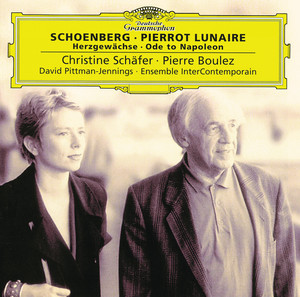 | Pierrot Lunaire, Op. 21, Pt. 1: IV. Eine blasse Wäscherin | Arnold Schoenberg, Christine Schäfer, Ensemble Intercontemporain, Pierre Boulez | B Minor | 0 | 10A | 96 BPM | |
 | Bene Feast | Estoria | E Minor | 1 | 9A | 105 BPM | |
 | Piano & Violoncello 13 | Irena And Vojtech Havlovi | C Minor | 1 | 5A | 66 BPM | |
 | Lux aeterna: Lux aeterna | György Ligeti, Cappella Amsterdam, Daniel Reuss | C Major | 0 | 8B | 54 BPM | |
 | Concerto grosso no.1 (1976-77): 1. Preludio: Andante | Alfred Schnittke, Gidon Kremer, Tatiana Grindenko, Yuri Smirnov, Chamber Orchestra of Europe, Heinrich Schiff | C Minor | 0 | 5A | 93 BPM | |
 | Emily — No Prisoner Be: No. 5, Interlude No. 1 | Kevin Puts, Time For Three | E Minor | 1 | 9A | 105 BPM | |
 | Pithoprakta | Iannis Xenakis, Luxembourg Philharmonic Orchestra, Arturo Tamayo | D Minor | 4 | 7A | 101 BPM | |
 | Ik Heb Gejaagd, Wel Jaren Lang (Johannes Brugman) | Martien van der Knijff | A♭ Major | 2 | 4B | 105 BPM | |
 | Concerto for String Orchestra: I. Allegro | Grażyna Bacewicz, Capella Bydgostiensis, Mariusz Smolij | C Major | 2 | 8B | 125 BPM | |
 | Játékok, Book I: No. 1b, Prelude and Waltz in C | György Kurtág, Pierre-Laurent Aimard | C Major | 0 | 8B | 138 BPM | |
 | Breathturn, Pt. 1 | John Zorn, Mika Stoltzman, Richard Stoltzman, Fred Sherry | E Minor | 1 | 9A | 105 BPM | |
 | Adams: American Berserk | John Adams, Nicolas Hodges | G Minor | 2 | 6A | 108 BPM | |
 | Advertisement | Henry Cowell | G Major | 5 | 9B | 113 BPM | |
 | Orpheus, Scene I: Lento sostenuto | London Symphony Orchestra, Robert Craft | A Minor | 2 | 8A | 83 BPM | |
 | Three Piano Pieces, Op. 11: Massig | Arnold Schoenberg, Paul Jacobs | A Major | 0 | 11B | 144 BPM | |
 | Shaker Loops: 4. A Final Shaking | John Adams, San Francisco Symphony, Edo de Waart | E Minor | 2 | 9A | 171 BPM | |
 | Piano Quintet No. 2 "Transience Patterns": I. Prelude | Jim Aitchison, Roderick Chadwick, Kreutzer Quartet | E Minor | 1 | 9A | 105 BPM | |
 | Das Mädchen mit den Schwefelhölzern / Teil 2: An der Hauswand: Abendsegen ("Wenn ein Stern fällt") | Helmut Lachenmann, Sylvain Cambreling, SWR Vokalensemble Stuttgart, SWR Symphony Orchestra | E Major | 1 | 12B | 72 BPM | |
 | Schoenberg: 3 Piano Pieces, Op. 11: No. 2 Mässige Achtel (Arr. Busoni) | Arnold Schoenberg, Daniel Barenboim | B♭ Major | 0 | 6B | 97 BPM | |
 | Toccatina for Violin | Helmut Lachenmann, Melise Mellinger | G Minor | 0 | 6A | 86 BPM | |
 | Lost Highway (2002/03): Scene 1.1 | Olga Neuwirth, Constance Hauman, Johannes Kalitzke, Klangforum Wien, Vincent Crowly | D Major | 1 | 10B | 80 BPM | |
 | Schoenberg - 4 Pieces from 6 Kleine Klavierstucke, Op. 19: No. 6. Sehr langsam | Hans Abrahamsen, Arnold Schoenberg, BIT20 Ensemble, Ilan Volkov | G Major | 0 | 9B | 0 BPM | |
 | Turangalîla-Symphonie: X. Final | Olivier Messiaen, Yuja Wang, Cécile Lartigau, Boston Symphony Orchestra, Andris Nelsons | D♭ Major | 5 | 3B | 87 BPM | |
 | 7 Papillons: No. 5, — | Kaija Saariaho, Anssi Karttunen | D Major | 2 | 10B | 61 BPM |
- ISRC
- USSM11105111
- Label
- L-M Records/RCA Records