- BPM
- 85
- Key
- B♭ Minor
- Camelot
- 3A
Adagio for strings (or string quartet; arr. from 2nd mvt. of String Quartet), Op. 11 by Samuel Barber, Milwaukee Symphony Orchestra, Philippe Entremont Song Details
"Adagio for strings (or string quartet; arr. from 2nd mvt. of String Quartet), Op. 11" by Samuel Barber, Milwaukee Symphony Orchestra, Philippe Entremont had its release date on February 15, 1994. Since This song is still less than 10 minute long, it is still considered a pretty long duration song compared to the average song length. This song does not appear to be explicit due to the lack of the "E" tag. The song is number 5 out of 58 in CLASSICAL MUSIC FOR PEOPLE WHO HATE CLASSICAL MUSIC 4-CD SET by Various Artists. Going off of the ISRC code of this track, we detected that the origin of this track is from United States. Adagio for strings (or string quartet; arr. from 2nd mvt. of String Quartet), Op. 11 is not that popular right now. In our opinion, the overall tone is not very danceable and projects negative sounds, such as being sad, depressed, or angry.
BPM and Tempo
The tempo marking of Adagio for strings (or string quartet; arr. from 2nd mvt. of String Quartet), Op. 11 by Samuel Barber, Milwaukee Symphony Orchestra, Philippe Entremont is Andante (at a walking pace), since this song has a tempo of 85 BPM. With that information, we can conclude that the song has a slow tempo. This song can go great with yoga or pilates. The time signature for this track is 3/4.
Music Key
This song has a musical key of B♭ Minor. Because this track belongs in the B♭ Minor key, the camelot key is 3A. So, the perfect camelot match for 3A would be either 3A or 2B. While, a low energy boost can consist of either 3B or 4A. For moderate energy boost, you would use 12A and a high energy boost can either be 5A or 10A. However, if you are looking for a low energy drop, finding a song with a camelot key of 2A would be a great choice. Where 6A would give you a moderate drop, and 1A or 8A would be a high energy drop. Lastly, 6B allows you to change the mood.
Want to find the BPM and music key for other songs? Check out our BPM and Key Finder page!
- Popularity
- 2%
- Loudness
- -28.182 dB
- Acousticness
- 93%
- Danceability
- 9%
- Energy
- 4%
- Instrumentalness
- 89%
- Liveness
- 10%
- Loudness
- 53%
- Speechiness
- 5%
- Valence
- 3%
Recommendations
| Track | Artist | Key | Energy | Camelot | BPM | ||
|---|---|---|---|---|---|---|---|
 | Adagio for Strings, Op. 11 | Samuel Barber, Janos Balint, Lajos Lencsés, Reinhold Friedrich, Budapest Strings, Béla Bánfalvi | B♭ Minor | 0 | 3A | 102 BPM | |
 | Lalo: Cello Concerto in D Minor: II. Intermezzo - Allegro presto | Édouard Lalo, André Navarra, Charles Münch, Orchestre des Concerts Lamoureux | C Minor | 1 | 5A | 75 BPM | |
 | String Quartet, Op. 11: II. Molto adagio | Samuel Barber, Ying Quartet | A Minor | 0 | 8A | 79 BPM | |
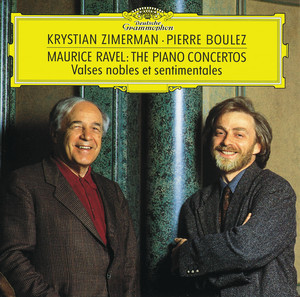 | Piano Concerto in G Major, M. 83: II. Adagio assai | Maurice Ravel, Krystian Zimerman, Cleveland Orchestra, Pierre Boulez | E Major | 0 | 12B | 74 BPM | |
 | 2 Pieces, Op. 12: Dainele: Grave | Slovak Philharmonic, Mikalojus Konstantinas Čiurlionis | E Minor | 0 | 9A | 82 BPM | |
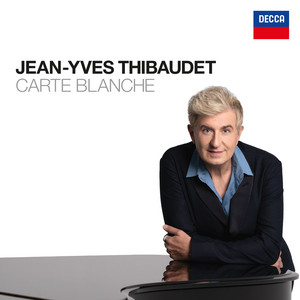 | Consolations, S. 172: No. 3 in D-Flat Major. Lento placido | Franz Liszt, Jean-Yves Thibaudet | D♭ Major | 0 | 3B | 134 BPM | |
 | Come, Sweet Death | Johann Sebastian Bach, Eugene Ormandy, Philadelphia Orchestra | E Minor | 1 | 9A | 87 BPM | |
 | Ludus pro Patria, La Nuit et l'Amour: La Nuit et l'Amour: Interlude de l'ode symphonique - Ludus pro Patria | Augusta Holmès, Staatsphilharmonie Rheinland-Pfalz, Patrick Davin | B♭ Major | 0 | 6B | 78 BPM | |
 | Variations on an Original Theme, Op. 36, "Enigma": Enigma | Edward Elgar, Bournemouth Symphony Orchestra, George Hurst | C Major | 5 | 8B | 132 BPM | |
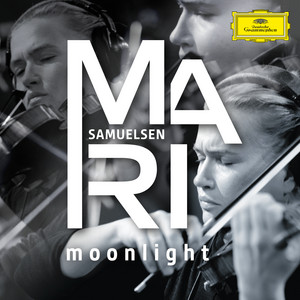 | Moonlight | Mari Samuelsen | D♭ Minor | 3 | 12A | 85 BPM | |
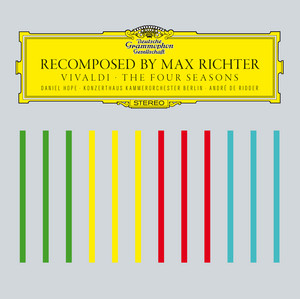 | Summer 2 - 2012 | Max Richter, Daniel Hope, Konzerthaus Kammerorchester Berlin, Andre de Ridder | G Minor | 2 | 6A | 90 BPM | |
 | Orfeo ed Euridice, Wq. 30: Dance of the Blessed Spirits "Melody" (Arr. Sgambati for Piano) | Christoph Willibald Gluck, Yuja Wang | D Minor | 0 | 7A | 70 BPM | |
 | Orfeo ed Euridice, Wq. 30, Act II: Danse des champs-elysées "Mélodie" (Arr. for Piano by Ignaz Friedman) | Christoph Willibald Gluck, Joseph Banowetz | A Major | 0 | 11B | 72 BPM | |
 | String Quartet, Op. 11: II. Adagio | Samuel Barber, Quatuor Modigliani | B♭ Minor | 1 | 3A | 76 BPM | |
 | Orchestral Suite No. 3 in D Major, BWV 1068: II. Air ("On a G String") [Transcr. L. Stokowski] | Johann Sebastian Bach, Bournemouth Symphony Orchestra, José Serebrier | D Major | 1 | 10B | 57 BPM | |
 | Madama Butterfly, Act II: Coro a bocca chiusa "Humming Chorus" | Giacomo Puccini, Wiener Staatsopernchor, Wiener Philharmoniker, Herbert von Karajan | B♭ Major | 0 | 6B | 78 BPM | |
 | Rachmaninov: Rhapsody on a Theme of Paganini, Op. 43: Variation XVIII | Sergei Rachmaninoff, Nikolai Lugansky, Sakari Oramo, City Of Birmingham Symphony Orchestra | D♭ Major | 1 | 3B | 61 BPM | |
 | Violin Concerto: II. - | Philip Glass, Adele Anthony, Ulster Orchestra, Takuo Yuasa | C Minor | 1 | 5A | 82 BPM | |
 | Symphony No. 3, Op. 36: II. Lento e Largo - Tranquillissimo | Henryk Górecki, Dawn Upshaw, London Sinfonietta, David Zinman | B♭ Minor | 1 | 3A | 70 BPM | |
 | Piano Concerto No. 2 in C Minor, Op. 18: II. Adagio sostenuto | Sergei Rachmaninoff, Arthur Rubinstein, Fritz Reiner, Chicago Symphony Orchestra | E Major | 0 | 12B | 64 BPM | |
 | Concerto in D Minor, BWV 974: II. Adagio (Arr. for Cello and Piano by Mischa Maisky) | Johann Sebastian Bach, Mischa Maisky, Lily Maisky | B♭ Major | 3 | 6B | 139 BPM | |
 | Abodah (God's Worship) (Arr. Cello) | Ernest Bloch, Sheku Kanneh-Mason | B Minor | 0 | 10A | 134 BPM | |
 | Satie / Arr. Barker & Balsom: 3 Gymnopédies: No. 3, Lent et grave | Erik Satie, Alison Balsom, Guy Barker, Guy Barker Orchestra | A Minor | 2 | 8A | 78 BPM | |
 | Lieder ohne Worte, Op. 19: No. 6 in G Minor (Andante sostenuto) "Venetian Gondola Song", MWV U78 | Felix Mendelssohn, Jan Lisiecki | G Minor | 0 | 6A | 168 BPM | |
 | Requiem, K. 626 (Ed. Beyer/Levin): I. Introitus. Requiem aeternam - Live | Wolfgang Amadeus Mozart, Karita Mattila, Berliner Philharmoniker, Claudio Abbado, Swedish Radio Choir, Kay Johannsen | G Minor | 2 | 6A | 95 BPM |
- ISRC
- USCMG0303330
- Label
- L-M Records/RCA Records