- BPM
- 98
- Key
- A Major
- Camelot
- 11B
A quoi ça sert l'amour ? by Édith Piaf Song Details
Édith Piaf's ' "A quoi ça sert l'amour ?" was released on its scheduled release date, October 31, 1987. The duration of This song is about two minutes long, specifically at 2:26. This song does not appear to have any foul language. A quoi ça sert l'amour ?'s duration is considered a little bit shorter than the average duration of a typical track. The song is number 16 out of 38 in Eternelle by Édith Piaf. Going off of the ISRC code of this track, we detected that the origin of this track is from France. In terms of popularity, A quoi ça sert l'amour ? is currently below average in popularity. Since there is more of a neutral sound being played, this makes the track somewhat danceable.
BPM and Tempo
The tempo marking of A quoi ça sert l'amour ? by Édith Piaf is Andante (at a walking pace), since this song has a tempo of 98 BPM. With that information, we can conclude that the song has a slow tempo. The time signature for this track is 4/4.
Music Key
A Major is the music key of this track. This also means that this song has a camelot key of 11B. So, the perfect camelot match for 11B would be either 11B or 12A. While, 12B can give you a low energy boost. For moderate energy boost, you would use 8B and a high energy boost can either be 1B or 6B. Though, if you want a low energy drop, you should looking for songs with either a camelot key of 11A or 10B will give you a low energy drop, 2B would be a moderate one, and 9B or 4B would be a high energy drop. Lastly, 8A allows you to change the mood.
Want to find the BPM and music key for other songs? Check out our BPM and Key Finder page!
- Popularity
- 26%
- Loudness
- -4.947 dB
- Acousticness
- 78%
- Danceability
- 48%
- Energy
- 60%
- Instrumentalness
- 0%
- Liveness
- 15%
- Loudness
- 92%
- Speechiness
- 5%
- Valence
- 49%
Recommendations
| Track | Artist | Key | Energy | Camelot | BPM | ||
|---|---|---|---|---|---|---|---|
 | Que c'est triste Venise | Charles Aznavour | F Major | 6 | 7B | 110 BPM | |
 | Chanson de Maxence - Reprise / From "Les demoiselles de Rochefort" | Jacques Revaux | C Minor | 4 | 5A | 126 BPM | |
 | Ma môme | Jean Ferrat | G Minor | 5 | 6A | 95 BPM | |
 | Mademoiselle de Paris | Jacqueline François | G Major | 1 | 9B | 79 BPM | |
 | La tendresse | Andre Bourvil | E Major | 2 | 12B | 137 BPM | |
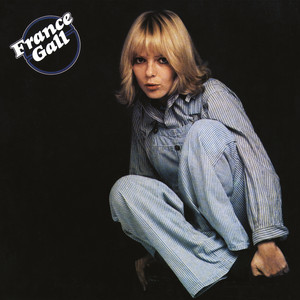 | Si l'on pouvait vraiment parler | France Gall | C Major | 4 | 8B | 135 BPM | |
 | Le Déserteur | Mouloudji | G Minor | 1 | 6A | 81 BPM | |
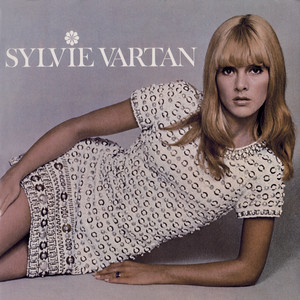 | Le silence | Sylvie Vartan | A Minor | 4 | 8A | 94 BPM | |
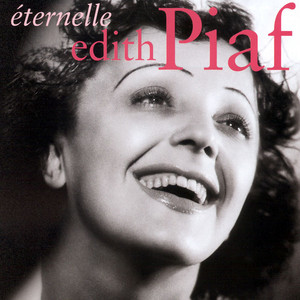 | A quoi ça sert l'amour ? | Édith Piaf | A Major | 6 | 11B | 98 BPM | |
 | Dis quand reviendras-tu ? | Mouloudji | A♭ Major | 2 | 4B | 73 BPM | |
 | Quand on s'promène au bord de l'eau | Jean Gabin | D Major | 3 | 10B | 98 BPM | |
 | A quoi ça sert l'amour ? - Live à L'Olympia 1962 | Theo Sarapo, Édith Piaf | F♯ Major | 9 | 2B | 100 BPM | |
 | Capri C'Est Fini | Hervé Vilard | D Major | 4 | 10B | 68 BPM | |
 | Itsi bitsi petit bikini - Remasterisé en 2013 | Line Renaud | G Major | 4 | 9B | 129 BPM | |
 | On n'est pas là pour se faire engueuler | Boris Vian | D Major | 5 | 10B | 85 BPM | |
 | Pour se parler d'amour - From Le Capitan, 1960 | Bourvil, Pierrette Bruno | E Major | 3 | 12B | 92 BPM | |
 | Le Bal aux Baléares | Line Renaud | A Major | 4 | 11B | 131 BPM | |
 | Que sera, sera | Jacqueline François | F Major | 5 | 7B | 103 BPM | |
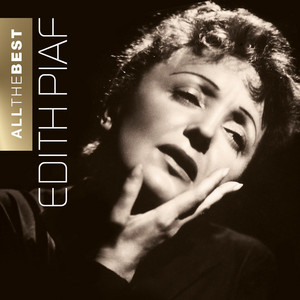 | Une enfant | Édith Piaf | A Minor | 3 | 8A | 123 BPM | |
| C'était bien (Le p'tit bal perdu) | Andre Bourvil | C Major | 1 | 8B | 144 BPM | |
 | Le temps du muguet | Francis Lemarque | F Minor | 4 | 4A | 122 BPM | |
 | La vie de Cocagne | Jeanne Moreau | B♭ Major | 2 | 6B | 90 BPM | |
 | T'as pas profite de ta chance | Michel Emer, Édith Piaf, Robert Chauvigny | C Major | 2 | 8B | 111 BPM | |
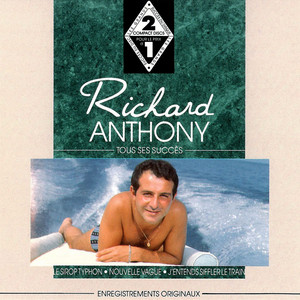 | J'entends siffler le train | Richard Anthony | A Major | 3 | 11B | 103 BPM | |
 | A Paris | Francis Lemarque | D Major | 3 | 10B | 116 BPM |
- ISRC
- FRZ116200330
- Label
- L-M Records/RCA Records