- BPM
- 103
- Key
- B♭ Minor
- Camelot
- 3A
Les Cinq Doigts: II. by Igor Stravinsky, Ronald Lumsden Song Details
"Les Cinq Doigts: II." by Igor Stravinsky, Ronald Lumsden had its release date on June 1, 1978. With This song being less than two minutes long, at 1:03, we are fairly confident that this song is not explicit and is safe for all ages. Based on the duration of this song, this song duration is much smaller than the average song duration. There are a total of 20 in the song's album "Stravinsky: Symphonies Of Wind Instruments". In this album, this song's track order is #17. Furthermore, we believe that the track originated from United Kingdom. In terms of popularity, Les Cinq Doigts: II. is currently unknown. Although the tone can be danceable to some, this track does projects more of a negative sound rather than a postive one.
BPM and Tempo
With Les Cinq Doigts: II. by Igor Stravinsky, Ronald Lumsden having a BPM of 103 with a half-time of 52 BPM and a double-time of 206 BPM, we would consider this track to have a Andante (at a walking pace) tempo marking. Because of this, we believe that the song has an overall slow tempo. The time signature for this track is 4/4.
Music Key
This song is in the music key of B♭ Minor. Which also means that the camelot key for this song is 3A. So, the perfect camelot match for 3A would be either 3A or 2B. While, a low energy boost can consist of either 3B or 4A. For moderate energy boost, you would use 12A and a high energy boost can either be 5A or 10A. However, if you are looking for a low energy drop, finding a song with a camelot key of 2A would be a great choice. Where 6A would give you a moderate drop, and 1A or 8A would be a high energy drop. Lastly, 6B allows you to change the mood.
Want to find the BPM and music key for other songs? Check out our BPM and Key Finder page!
- Popularity
- 0%
- Loudness
- -27.589 dB
- Acousticness
- 98%
- Danceability
- 48%
- Energy
- 2%
- Instrumentalness
- 78%
- Liveness
- 11%
- Loudness
- 54%
- Speechiness
- 6%
- Valence
- 5%
Recommendations
| Track | Artist | Key | Energy | Camelot | BPM | ||
|---|---|---|---|---|---|---|---|
 | Schoenberg: Verklärte Nacht, Op. 4: V. Adagio, molto tranquilo | Arnold Schoenberg, Daniel Barenboim, Chicago Symphony Orchestra, Charles Pikler, John Sharp, Joseph Golan, Li-Kuo Chang, Ruben Gonzalez, Stephen Balderston | E Minor | 1 | 9A | 125 BPM | |
 | Symphony No. 9 in E-Flat Major, Op. 70: II. Moderato | Dmitri Shostakovich, Berliner Philharmoniker, Kirill Petrenko | B♭ Minor | 2 | 3A | 122 BPM | |
 | La Mer, L.109: 2. Play of the Waves (Jeux de vagues) | Claude Debussy, Orchestre Symphonique de Montréal, Charles Dutoit | E Major | 1 | 12B | 113 BPM | |
 | Symphony No. 2 in C minor - "Resurrection" / 5th Movement: Sehr langsam und gedehnt ("der grosse Appell") | Gustav Mahler, Wiener Philharmoniker, Gilbert Kaplan | D♭ Minor | 0 | 12A | 67 BPM | |
 | Symphony No. 3 in C Minor, Op. 78 "Organ": Allegro moderato | Camille Saint-Saëns, Eugene Ormandy, Philadelphia Orchestra | A♭ Major | 1 | 4B | 109 BPM | |
 | Copland: Symphony No. 3: III. Andantino quasi allegretto - | Aaron Copland, San Francisco Symphony, Michael Tilson Thomas | E Minor | 0 | 9A | 71 BPM | |
 | Sinfonietta, JW VI/18: II. The Castle, Brno. Andante – Allegretto | Leoš Janáček, Bavarian Radio Symphony Orchestra, Rafael Kubelík | A♭ Minor | 2 | 1A | 144 BPM | |
 | The Firebird, KC 10: VII. Danse infernale de tous les sujets de Kachtcheï | Igor Stravinsky, London Symphony Orchestra, Valery Gergiev | E Major | 3 | 12B | 149 BPM | |
| Taras Bulba: 3. The Prophecy And The Death Of Taras Bulba | Leoš Janáček, Bavarian Radio Symphony Orchestra, Rafael Kubelik | D♭ Major | 3 | 3B | 132 BPM | |
 | I. Thème. Modéré | Olivier Messiaen, Benjamin Frith, Lucy Gould | C Minor | 0 | 5A | 84 BPM | |
 | Symphonie fantastique, Op. 14, H 48: II. Un Bal | Hector Berlioz, London Symphony Orchestra, Sir Colin Davis | A Major | 1 | 11B | 113 BPM | |
 | Symphony No. 5 in B-Flat Major, Op. 100: I. Andante | Sergei Prokofiev, Berliner Philharmoniker, Herbert von Karajan | B♭ Major | 3 | 6B | 93 BPM | |
 | Violin Concerto in E Minor, Op. 64, MWV O14: III. Allegretto non troppo - Allegro molto vivace | Felix Mendelssohn, Hilary Hahn, Hugh Wolff, Oslo Philharmonic Orchestra, Oslo-Filharmonien | D Major | 3 | 10B | 169 BPM | |
 | Lutosławski: Concerto for Orchestra: I. Intrada. Allegro maestoso | Witold Lutosławski, Daniel Barenboim, Chicago Symphony Orchestra | F♯ Minor | 1 | 11A | 128 BPM | |
 | Prelude in C Sharp Minor, Op. 3, No. 2 (Arr. Orchestra) - Live | Sergei Rachmaninoff, Czech Philharmonic, Leopold Stokowski | E♭ Major | 4 | 5B | 124 BPM | |
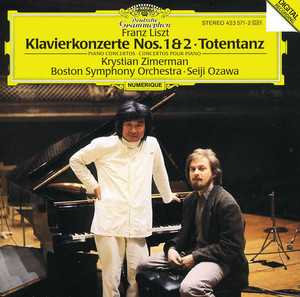 | Piano Concerto No. 1 in E-Flat Major, S. 124: 1. Allegro maestoso | Franz Liszt, Krystian Zimerman, Boston Symphony Orchestra, Seiji Ozawa | A♭ Minor | 1 | 1A | 120 BPM | |
 | El amor brujo: Ritual Fire Dance | Manuel de Falla, Fritz Reiner, Chicago Symphony Orchestra | G Major | 1 | 9B | 134 BPM | |
 | Introduction And Allegro For Harp, String Quartet, Flute And Clarinet | Maurice Ravel, Nash Ensemble, Skaila Kanga, Philippa Davies, Michael Collins | E♭ Minor | 1 | 2A | 70 BPM | |
 | Rachmaninov: Scherzo in D Minor | Sergei Rachmaninoff, Mariss Jansons, St. Petersburg Philharmonic Orchestra | D Minor | 1 | 7A | 109 BPM | |
 | Eine Alpensinfonie: VIII. Stille vor den Sturm - Gewitter und Sturm, Abstieg - Sonnenuntergang | Richard Strauss, Bernard Haitink, London Symphony Orchestra | F♯ Major | 2 | 2B | 73 BPM | |
 | Symphony No. 5 in E Minor, Op. 64: IV. Finale. Andante maestoso – Allegro vivace – Moderato assai e molto maestoso – Presto – Molto meno mosso | Pyotr Ilyich Tchaikovsky, Berliner Philharmoniker, Kirill Petrenko | E Major | 3 | 12B | 141 BPM | |
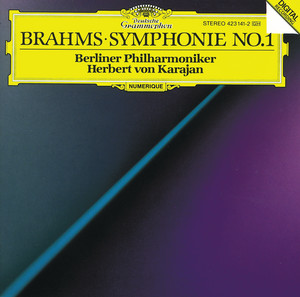 | Symphony No. 1 in C Minor, Op. 68: III. Un poco allegretto e grazioso | Johannes Brahms, Berliner Philharmoniker, Herbert von Karajan | A♭ Major | 1 | 4B | 84 BPM | |
 | Organ Concerto in G Minor, FP 93: IV. Tempo allegro. Molto agitato | Francis Poulenc, Philippe Lefebvre, Orchestre National de Lille, Jean-Claude Casadesus | B♭ Minor | 0 | 3A | 133 BPM | |
 | El sombrero de tres picos, Pt. 2: I. Danza de los vecinos | Manuel de Falla, Carlos Miguel Prieto, The Orchestra of the Americas | D Major | 1 | 10B | 100 BPM | |
 | Aladdin Suite, Op. 34, FS 89: IV. Chinese Dance | Carl Nielsen, South Jutland Symphony Orchestra, Niklas Willen | E Minor | 1 | 9A | 96 BPM |
- ISRC
- GBLWD9105817
- Label
- L-M Records/RCA Records