- BPM
- 73
- Key
- D Major
- Camelot
- 10B
4 Orchestral Pieces, Sz. 51: III. Intermezzo. Moderato by Béla Bartók, Chicago Symphony Orchestra, Pierre Boulez Song Details
"4 Orchestral Pieces, Sz. 51: III. Intermezzo. Moderato" by Béla Bartók, Chicago Symphony Orchestra, Pierre Boulez had its release date on January 1, 1993. With this song being about 5 minutes long, at This song is fairly a long song compared to the average song length. This song does not have an "Explicit" tag, making it safe for all ages. The song is number 3 out of 9 in Bartók: Concerto for Orchestra; Orchestral Pieces, Op. 12 by Béla Bartók, Chicago Symphony Orchestra, Pierre Boulez. Going off of the ISRC code of this track, we detected that the origin of this track is from Germany. 4 Orchestral Pieces, Sz. 51: III. Intermezzo. Moderato is not that popular right now. In our opinion, the overall tone is not very danceable and projects negative sounds, such as being sad, depressed, or angry.
BPM and Tempo
The tempo marking of 4 Orchestral Pieces, Sz. 51: III. Intermezzo. Moderato by Béla Bartók, Chicago Symphony Orchestra, Pierre Boulez is Adagio (slowly with great expression), since this song has a tempo of 73 BPM. With that information, we can conclude that the song has a slow tempo. The time signature for this track is 5/4.
Music Key
D Major is the music key of this track. This also means that this song has a camelot key of 10B. So, the perfect camelot match for 10B would be either 10B or 11A. While, 11B can give you a low energy boost. For moderate energy boost, you would use 7B and a high energy boost can either be 12B or 5B. Though, if you want a low energy drop, you should looking for songs with either a camelot key of 10A or 9B will give you a low energy drop, 1B would be a moderate one, and 8B or 3B would be a high energy drop. Lastly, 7A allows you to change the mood.
Want to find the BPM and music key for other songs? Check out our BPM and Key Finder page!
- Popularity
- 15%
- Loudness
- -18.691 dB
- Acousticness
- 90%
- Danceability
- 14%
- Energy
- 8%
- Instrumentalness
- 64%
- Liveness
- 10%
- Loudness
- 69%
- Speechiness
- 4%
- Valence
- 4%
Recommendations
| Track | Artist | Key | Energy | Camelot | BPM | ||
|---|---|---|---|---|---|---|---|
 | Gustav II Adolf, Op. 49: VI. Breitenfeld - Bataljmålning (Breitenfeld - Battle Painting) | Hugo Alfvén, Gothenburg Symphony Orchestra, Neeme Järvi | A Major | 2 | 11B | 75 BPM | |
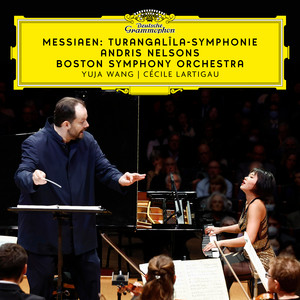 | Turangalîla-Symphonie: VIII. Développement de l'amour | Olivier Messiaen, Yuja Wang, Cécile Lartigau, Boston Symphony Orchestra, Andris Nelsons | D♭ Major | 5 | 3B | 87 BPM | |
 | Copland: Symphony No. 3: II. Allegro molto | Aaron Copland, San Francisco Symphony, Michael Tilson Thomas | F♯ Minor | 1 | 11A | 68 BPM | |
 | Stravinsky: 3 Pieces for String Quartet: No. 1 | Alban Berg Quartett | A Major | 2 | 11B | 75 BPM | |
 | Romeo and Juliet Suite No. 1, Op. 64bis: IV. Minuet (Live) | Sergei Prokofiev, Riccardo Muti, Chicago Symphony Orchestra | E♭ Major | 1 | 5B | 92 BPM | |
 | Symphony No. 5: I. Trauermarsch | Gustav Mahler, Chicago Symphony Orchestra, Claudio Abbado | D♭ Minor | 1 | 12A | 81 BPM | |
 | Schoenberg: Verklärte Nacht, Op. 4: V. Adagio, molto tranquilo | Arnold Schoenberg, Daniel Barenboim, Chicago Symphony Orchestra, Charles Pikler, John Sharp, Joseph Golan, Li-Kuo Chang, Ruben Gonzalez, Stephen Balderston | E Minor | 1 | 9A | 125 BPM | |
 | The Exterminating Angel Symphony: I. Entrances | Thomas Adès, Minnesota Orchestra, Thomas Søndergård | C Major | 2 | 8B | 88 BPM | |
 | Eine Alpensinfonie, Op. 64, TrV 233: XIX. Gewitter und Sturm, Abstieg | Richard Strauss, Berliner Philharmoniker, Seiji Ozawa | B♭ Minor | 5 | 3A | 79 BPM | |
 | Violin Concerto "To the Memory of an Angel": I. Andante – Allegretto | Alban Berg, Berliner Philharmoniker, Frank Peter Zimmermann, Kirill Petrenko | G Major | 1 | 9B | 70 BPM | |
 | Symphony No. 3 in C Minor, Op. 78, R. 176 "Organ Symphony": IIa. Allegro moderato - Presto - Allegro moderato | Camille Saint-Saëns, Gaston Litaize, Chicago Symphony Orchestra, Daniel Barenboim | D♭ Major | 1 | 3B | 110 BPM | |
 | Violin Concerto No. 2 in D Minor, Op. 61: II. Andantino sostenuto | Karol Szymanowski, Warmia Symphonic Orchestra, Silvano Frontalini, Beatrice Antonionini | A♭ Major | 4 | 4B | 103 BPM | |
 | Variations On An Original Theme, Op.36 "Enigma": 13. Romanza *** (Moderato) | Edward Elgar, BBC Symphony Orchestra, Leonard Bernstein | A♭ Major | 0 | 4B | 87 BPM | |
 | Symphony No. 4, Op. 29 "The Inextinguishable": III. Poco adagio quasi andante | Carl Nielsen, Danish National Symphony Orchestra, Fabio Luisi | D♭ Major | 3 | 3B | 95 BPM | |
 | Japanese Suite, Op. 33, H. 126: II. Ceremonial Dance | Gustav Holst, Ulster Orchestra, Joann Falletta | C Minor | 3 | 5A | 103 BPM | |
| Enigma Variations, Op. 36: Var. 5. Moderato "R.P.A." | Edward Elgar, BBC Symphony Orchestra, Leonard Bernstein | C Minor | 0 | 5A | 83 BPM | |
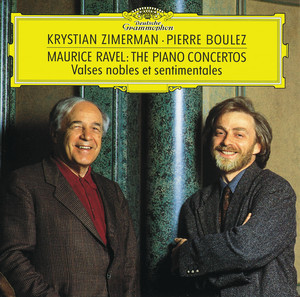 | Valses nobles et sentimentales, M. 61a: V. Presque lent, dans un sentiment intime | Maurice Ravel, The Cleveland Orchestra, Pierre Boulez | A♭ Minor | 0 | 1A | 76 BPM | |
 | Háry János Suite: IV. The Battle and Defeat of Napoleon | Zoltán Kodály, Neeme Järvi, Chicago Symphony Orchestra, Laurence Kaptain | F Major | 1 | 7B | 84 BPM | |
 | Concerto for Orchestra, Sz. 116: IV. Intermezzo interrotto. Allegretto | Béla Bartók, Berliner Philharmoniker, Herbert von Karajan | F Major | 0 | 7B | 96 BPM | |
 | Quatuor pour la fin du Temps: V. Louange à l'éternité de Jésus | Olivier Messiaen, Lucas Debargue, Torleif Thedéen | E Major | 0 | 12B | 81 BPM | |
| Valses nobles et sentimentales, M. 61a: VIII. Epilogue. Lent | Maurice Ravel, The Cleveland Orchestra, Pierre Boulez | G Major | 0 | 9B | 103 BPM | |
 | Symphony No.8 in E flat - "Symphony of a Thousand" / Part Two: Final scene from Goethe's "Faust": Poco adagio: "Waldung, sie schwankt heran" | Gustav Mahler, Wiener Singverein, Vienna State Opera Chorus, Chicago Symphony Orchestra, Sir Georg Solti | B♭ Minor | 0 | 3A | 75 BPM | |
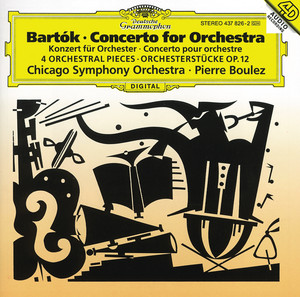 | 4 Orchestral Pieces, Sz. 51: IV. Marcia funebre. Maestoso | Béla Bartók, Chicago Symphony Orchestra, Pierre Boulez | D Major | 1 | 10B | 73 BPM | |
 | Symphony No. 8: III. Volante | Mihkel Kerem, Royal Liverpool Philharmonic Orchestra, Andrew Manze | A Major | 2 | 11B | 75 BPM | |
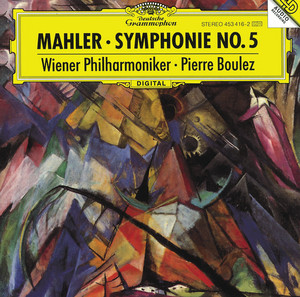 | Symphony No. 5: II. Stürmisch bewegt, mit größter Vehemenz | Gustav Mahler, Wiener Philharmoniker, Pierre Boulez | B♭ Minor | 2 | 3A | 82 BPM |
- ISRC
- DEF059204143
- Label
- L-M Records/RCA Records