- BPM
- 85
- Key
- G Major
- Camelot
- 9B
Variations And Fugue On A Theme By Ludwig van Beethoven, Op. 86: 2. Var. I: Un poco più lento by Max Reger, Bamberg Symphony, Horst Stein Song Details
"Variations And Fugue On A Theme By Ludwig van Beethoven, Op. 86: 2. Var. I: Un poco più lento" by Max Reger, Bamberg Symphony, Horst Stein had its release date on June 29, 2018. The duration of This song is about two minutes long, specifically at 2:10. This song does not appear to have any foul language. Variations And Fugue On A Theme By Ludwig van Beethoven, Op. 86: 2. Var. I: Un poco più lento's duration is considered a little bit shorter than the average duration of a typical track. The track order of this song in Max Reger, Various Artists's "Max Reger - Orchestral Edition - Variations, Suites, Romances" album is number 41 out of 56. On top of that, Germany appears to be the country where this track was created. Variations And Fugue On A Theme By Ludwig van Beethoven, Op. 86: 2. Var. I: Un poco più lento is unknown right now. In our opinion, the overall tone is not very danceable and projects negative sounds, such as being sad, depressed, or angry.
BPM and Tempo
We consider the tempo marking of Variations And Fugue On A Theme By Ludwig van Beethoven, Op. 86: 2. Var. I: Un poco più lento by Max Reger, Bamberg Symphony, Horst Stein to be Andante (at a walking pace) because the track has a tempo of 85 BPM, a half-time of 42BPM, and a double-time of 170 BPM. Based on that, the speed of the song's tempo is slow. Activities such as, yoga or pilates, can go well with this song. The time signature for this track is 4/4.
Music Key
This song is in the music key of G Major. This also means that this song has a camelot key of 9B. So, the perfect camelot match for 9B would be either 9B or 10A. While, 10B can give you a low energy boost. For moderate energy boost, you would use 6B and a high energy boost can either be 11B or 4B. Though, if you want a low energy drop, you should looking for songs with either a camelot key of 9A or 8B will give you a low energy drop, 12B would be a moderate one, and 7B or 2B would be a high energy drop. Lastly, 6A allows you to change the mood.
Want to find the BPM and music key for other songs? Check out our BPM and Key Finder page!
- Popularity
- 0%
- Loudness
- -27.085 dB
- Acousticness
- 98%
- Danceability
- 15%
- Energy
- 9%
- Instrumentalness
- 93%
- Liveness
- 16%
- Loudness
- 55%
- Speechiness
- 4%
- Valence
- 7%
Recommendations
| Track | Artist | Key | Energy | Camelot | BPM | ||
|---|---|---|---|---|---|---|---|
 | 6 Melodies, Op. 4 - 6 melodies, Op. 5: Lento appassionato | Fanny Mendelssohn, Beatrice Rauchs | B Major | 0 | 1B | 73 BPM | |
 | Ten Poems on Texts by Revolutionary Poets, Op. 88: No. 5: To Those Condemned to Death | Dmitri Shostakovich, Chorus of the Academy of Choral Arts, Victor Popov | A Major | 0 | 11B | 77 BPM | |
 | Villa-Lobos: Suíte infantil No. 1, W053: II. Nenê vai dormir | Heitor Villa-Lobos, Georges Pludermacher | B Minor | 0 | 10A | 71 BPM | |
 | Sæverud: Tunes and Dances from Siljustol, Book IV, Op. 25: No. 4, Tone's Cradle Song | Harald Sæverud, Leif Ove Andsnes | B Minor | 0 | 10A | 63 BPM | |
 | Das Sühnopfer des neuen Bundes, Pt. 1: No. 7, Larghetto con moto | Carl Loewe, L'Arpa Festante Baroque Orchestra, Thomas Gropper | G Major | 0 | 9B | 74 BPM | |
 | My Song Is Love Unknown (Arr. for Choir by Gregory M Pysh) | Gabriel Fauré, Craig Courtney, Beckenhorst Singers, Beckenhorst Orchestra, Dan Forrest | C Major | 0 | 8B | 138 BPM | |
 | Piano Concerto No. 4 in G Minor, Op. 40: II. Largo | Sergei Rachmaninoff, Bernd Glemser, Polish National Radio Symphony Orchestra, Antoni Wit | C Major | 0 | 8B | 76 BPM | |
 | Passione amorose: III. Allegretto (Orchestrated by G. Jardanyi) | Giovanni Bottesini, Gergely Jardanyi, Odon Racz, Budapest Chamber Symphony, János Ács | A Major | 0 | 11B | 179 BPM | |
 | 6 Chorale Preludes, BV B 50: Es ist ein Ros entsprungen, Op. 122/8 | Johannes Brahms, Ferruccio Busoni, Igor Levit | F Major | 0 | 7B | 69 BPM | |
 | Organ Concerto in G Minor, FP 93: IV. Tempo allegro. Molto agitato | Francis Poulenc, Philippe Lefebvre, Orchestre National de Lille, Jean-Claude Casadesus | B♭ Minor | 0 | 3A | 133 BPM | |
 | Variations & Fugue on a Theme by J.S. Bach, Op. 81: Var. 5. Vivace | Max Reger, Marc-André Hamelin | B♭ Major | 2 | 6B | 169 BPM | |
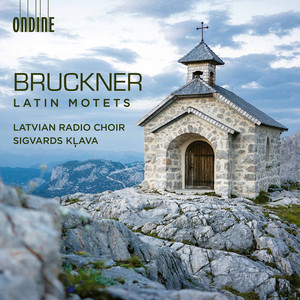 | Kronstorfer Messe in D Minor, WAB 146: II. Sanctus | Anton Bruckner, Latvian Radio Choir, Sigvards Kļava | D Minor | 1 | 7A | 83 BPM | |
 | Preludes, Op.31 (2003 - Remaster): No.13 (Cantique des cantiques) | Charles-Valentin Alkan, Ronald Smith | B♭ Minor | 0 | 3A | 88 BPM | |
 | 3 Pieces for cello and piano: No. 2. Sans vitesse et a l'aise | Nadia Boulanger, Nicolas Altstaedt, José Gallardo | F Major | 0 | 7B | 83 BPM | |
 | Suite en trio, Op. 59: II. Pastorale | Mel Bonis, Tatjana Ruhland, Florian Wiek, Stuttgart Radio Symphony Orchestra | E Major | 2 | 12B | 112 BPM | |
 | Dona nobis pacem: The Angel of Death has been abroad | Ralph Vaughan Williams, Christina Pier, Matthew Brook, The Bach Choir, Bournemouth Symphony Orchestra, David Hill | F Major | 2 | 7B | 88 BPM | |
 | Sonatine, M. 40: I. Modéré | Maurice Ravel, Hsiang Tu | C Major | 0 | 8B | 138 BPM | |
 | Eine Alpensinfonie, Op. 64, TrV 233: Nacht (2) | Richard Strauss, Finnish Radio Symphony Orchestra, Nicholas Collon | F♯ Minor | 3 | 11A | 129 BPM | |
 | Contes bleus, No. 2 Op. 122 | Cécile Chaminade, Eric Parkin | E♭ Major | 1 | 5B | 110 BPM | |
 | 9 Preludes, Op. 1: No. 7 in C Minor. Moderato | Karol Szymanowski, Krystian Zimerman | D♭ Major | 0 | 3B | 67 BPM | |
 | Fauré: Élégie, Op. 24 (Orchestral Version) | Gabriel Fauré, Paavo Järvi, Eric Picard, Orchestre de Paris | A♭ Major | 0 | 4B | 89 BPM | |
 | Prélude, Choral et Fugue, FWV 21: Prélude. Moderato | César Franck, Nikolai Lugansky | G Major | 0 | 9B | 68 BPM | |
 | Piano Trio in G Minor, Op. 17: II. Scherzo. Tempo di Menuetto | Clara Schumann, Ragna Schirmer, Iason Keramidis, Benedict Kloeckner | E♭ Major | 0 | 5B | 83 BPM | |
 | Variation 6: Sostenuto (quasi adagietto) | Max Reger, New Zealand Symphony Orchestra, Franz-Paul Decker | D Major | 1 | 10B | 74 BPM | |
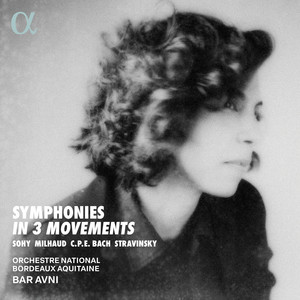 | Symphony in 3 Movements, K073: II. Andante Interlude | Igor Stravinsky, Orchestre National Bordeaux Aquitaine, Bar Avni | C Major | 0 | 8B | 138 BPM |
- ISRC
- DEN120504465
- Label
- L-M Records/RCA Records