- BPM
- 104
- Key
- G Major
- Camelot
- 9B
Humoresque by Antonín Dvořák, Andrzej Kowalski, Rudolf Lutz Song Details
"Humoresque" by Antonín Dvořák, Andrzej Kowalski, Rudolf Lutz had its release date on September 20, 1996. With this song being around four minutes long, at 3:30, the duration of this song is pretty average compared to other songs. This track is safe for children and doesn't appear to contain any foul language, since the "Explicit" tag was not present in this track. The song is number 8 out of 18 in Elgar: Salut D'amour by Andrzej Kowalski, Rudolf Lutz. In terms of popularity, Humoresque is currently not that popular. In our opinion, the overall tone is not very danceable and projects negative sounds, such as being sad, depressed, or angry.
BPM and Tempo
The tempo marking of Humoresque by Antonín Dvořák, Andrzej Kowalski, Rudolf Lutz is Andante (at a walking pace), since this song has a tempo of 104 BPM. With that information, we can conclude that the song has a slow tempo. The time signature for this track is 3/4.
Music Key
G Major is the music key of this track. This also means that this song has a camelot key of 9B. So, the perfect camelot match for 9B would be either 9B or 10A. While, 10B can give you a low energy boost. For moderate energy boost, you would use 6B and a high energy boost can either be 11B or 4B. Though, if you want a low energy drop, you should looking for songs with either a camelot key of 9A or 8B will give you a low energy drop, 12B would be a moderate one, and 7B or 2B would be a high energy drop. Lastly, 6A allows you to change the mood.
Want to find the BPM and music key for other songs? Check out our BPM and Key Finder page!
- Popularity
- 1%
- Loudness
- -22.988 dB
- Acousticness
- 96%
- Danceability
- 24%
- Energy
- 6%
- Instrumentalness
- 0%
- Liveness
- 7%
- Loudness
- 62%
- Speechiness
- 4%
- Valence
- 16%
Recommendations
| Track | Artist | Key | Energy | Camelot | BPM | ||
|---|---|---|---|---|---|---|---|
 | Après un Rêve Op.7, No.1 | Gabriel Fauré, Jules Eskin, Boston Symphony Orchestra, Seiji Ozawa | F Minor | 1 | 4A | 96 BPM | |
 | Concerto In G Minor R439 Op.10 No.2 "La Notte": 3. Il sonno. Largo - Allegro | Antonio Vivaldi, Andreas Blau, Berliner Philharmoniker, Herbert von Karajan | D Major | 2 | 10B | 98 BPM | |
 | Ma mère l'oye, M. 62: Apothéose. Le jardin féerique | Maurice Ravel, Orchestre National De Lyon, Leonard Slatkin | C Major | 0 | 8B | 62 BPM | |
 | Violin Concerto In D, Op.35, TH. 59: 2. Canzonetta (Andante) | Pyotr Ilyich Tchaikovsky, Janine Jansen, Mahler Chamber Orchestra, Daniel Harding | E♭ Major | 0 | 5B | 103 BPM | |
 | Le tombeau de Couperin: 3. Menuet (version for orchestra) | Maurice Ravel, フランス国立リヨン管弦楽団, レナード・スラットキン | A Major | 1 | 11B | 107 BPM | |
 | Haydn: Cello Concerto No. 1 in C Major, Hob. VIIb, 1: I. Moderato (Cadenza by Britten) | Franz Joseph Haydn, Mstislav Rostropovich, Academy of St. Martin in the Fields | C Major | 1 | 8B | 68 BPM | |
 | Symphony No. 40 in G Minor, K. 550: I. Allegro molto | Wolfgang Amadeus Mozart, Capella Istropolitana, Barry Wordsworth | D Minor | 2 | 7A | 122 BPM | |
 | Serenade in C Major, Op. 48: I. Pezzo in forma di Sonatina | Pyotr Ilyich Tchaikovsky, Vienna Chamber Orchestra, Philippe Entremont | C Major | 3 | 8B | 112 BPM | |
![Symphony No. 5 In C Sharp Minor: 1. Trauermarsch (In gemessenem Schritt. Streng. Wie ein Kondukt) [Symphony No.5 in C sharp minor / Part 1] by Gustav Mahler, Wiener Philharmoniker, Pierre Boulez](https://i.scdn.co/image/ab67616d00001e025e6aa0e42f447f00063084c2) | Symphony No. 5 In C Sharp Minor: 1. Trauermarsch (In gemessenem Schritt. Streng. Wie ein Kondukt) [Symphony No.5 in C sharp minor / Part 1] | Gustav Mahler, Wiener Philharmoniker, Pierre Boulez | D♭ Minor | 1 | 12A | 86 BPM | |
 | La forza del destino: Overture (Sinfonia) | Giuseppe Verdi, Berliner Philharmoniker, Claudio Abbado | E Minor | 2 | 9A | 80 BPM | |
 | Bach: Prelude in B minor, BWV 855a (Arr. by Alexander Siloti) | Johann Sebastian Bach, Khatia Buniatishvili | F♯ Major | 0 | 2B | 69 BPM | |
 | Slavonic Dances, Op. 72, B. 147: No. 2, Dumka | Antonín Dvořák, George Szell, The Cleveland Orchestra | C Major | 2 | 8B | 101 BPM | |
 | Orfeo ed Euridice, Wq. 30, Act II: Danse des champs-elysées "Mélodie" (Arr. for Piano by Ignaz Friedman) | Christoph Willibald Gluck, Joseph Banowetz | A Major | 0 | 11B | 72 BPM | |
 | Paganini: Cantabile in D Major, Op. 17 | Niccolò Paganini, Vilde Frang, Michail Lifits | A Major | 1 | 11B | 109 BPM | |
 | Romeo and Juliet, Op. 64 / Act 1: Dance Of The Knights | Sergei Prokofiev, The Cleveland Orchestra, Lorin Maazel | B♭ Major | 6 | 6B | 124 BPM | |
 | Saint-Saëns: Piano Concerto No. 5 in F Major, Op. 103 "Egyptian": II. Andante | Camille Saint-Saëns, Bertrand Chamayou, Emmanuel Krivine, Orchestre National De France | D Major | 1 | 10B | 129 BPM | |
 | Symphony No. 9 in E Minor, Op. 95, B. 178 "From the New World": I. Adagio – Allegro molto | Antonín Dvořák, Wiener Philharmoniker, Herbert von Karajan | E Minor | 1 | 9A | 115 BPM | |
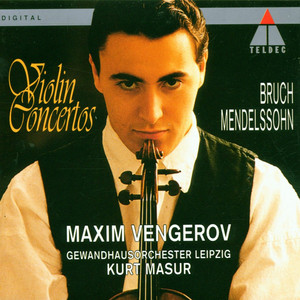 | Bruch : Violin Concerto No.1 in G minor Op.26 : III Finale - Allegro energico | Max Bruch, Maxim Vengerov, Kurt Masur, Gewandhausorchester Leipzig | G Major | 2 | 9B | 90 BPM | |
 | Prince Igor: Polovtsian Dances (Version for Chorus) | Alexander Borodin, Kiev Chamber Choir, Ukraine National Radio Symphony Orchestra, Theodore Kuchar | A Major | 2 | 11B | 110 BPM | |
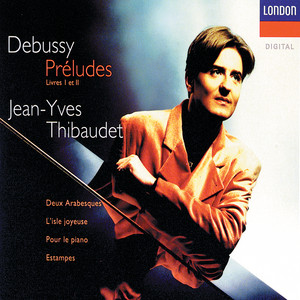 | Rêverie, L. 68: Rêverie | Claude Debussy, Jean-Yves Thibaudet | G Minor | 0 | 6A | 69 BPM | |
 | Poulenc: Concerto for Two Pianos in D Minor, FP 61: II. Larghetto | Francis Poulenc, James Conlon, François-René Duchâble, Jean-Philippe Collard, Rotterdam Philharmonic Orchestra | B♭ Major | 0 | 6B | 84 BPM | |
 | Polovetsian Dances from Prince Igor: Moderato alla breve | Alexander Borodin, George Szell, The Cleveland Orchestra | A Major | 2 | 11B | 108 BPM | |
 | Lyric Pieces, Book 5, Op. 54: Nocturne | Edvard Grieg, Alessio Bax | C Major | 0 | 8B | 72 BPM | |
| Polovetsian Dances from Prince Igor: Introduzione | Alexander Borodin, George Szell, The Cleveland Orchestra | A Major | 1 | 11B | 83 BPM | |
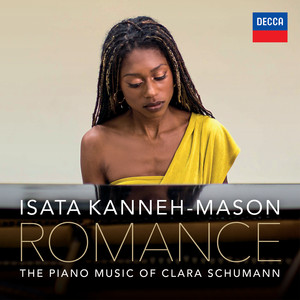 | Scherzo No. 2 in C Minor, Op. 14 | Clara Schumann, Isata Kanneh-Mason | C Minor | 1 | 5A | 69 BPM |
- ISRC
- This song does not have an ISRC.
- Label
- L-M Records/RCA Records