- BPM
- 79
- Key
- C Major
- Camelot
- 8B
Dido and Aeneas / Act 1: "Whence could so much virtue spring?...Fear no danger" by Henry Purcell, Jessye Norman, Marie McLaughlin, Elizabeth Gale, English Chamber Orchestra, Raymond Leppard Song Details
"Dido and Aeneas / Act 1: "Whence could so much virtue spring?...Fear no danger"" by Henry Purcell, Jessye Norman, Marie McLaughlin, Elizabeth Gale, English Chamber Orchestra, Raymond Leppard had its release date on January 1, 1986. With this song being around four minutes long, at 3:32, the duration of this song is pretty average compared to other songs. This track is safe for children and doesn't appear to contain any foul language, since the "Explicit" tag was not present in this track. There are a total of 16 in the song's album "Purcell: Dido and Aeneas". In this album, this song's track order is #4. Furthermore, we believe that the track originated from Netherlands. Dido and Aeneas / Act 1: "Whence could so much virtue spring?...Fear no danger" is not that popular right now. Although the tone can be danceable to some, this track does projects more of a negative sound rather than a postive one.
BPM and Tempo
With Dido and Aeneas / Act 1: "Whence could so much virtue spring?...Fear no danger" by Henry Purcell, Jessye Norman, Marie McLaughlin, Elizabeth Gale, English Chamber Orchestra, Raymond Leppard having a BPM of 79 with a half-time of 40 BPM and a double-time of 158 BPM, we would consider this track to have a Andante (at a walking pace) tempo marking. Because of this, we believe that the song has an overall slow tempo. The time signature for this track is 3/4.
Music Key
This song is in the music key of C Major. Or for those who are familiar with the camelot wheel, this song has a camelot key of 8B. So, the perfect camelot match for 8B would be either 8B or 9A. While, 9B can give you a low energy boost. For moderate energy boost, you would use 5B and a high energy boost can either be 10B or 3B. Though, if you want a low energy drop, you should looking for songs with either a camelot key of 8A or 7B will give you a low energy drop, 11B would be a moderate one, and 6B or 1B would be a high energy drop. Lastly, 5A allows you to change the mood.
Want to find the BPM and music key for other songs? Check out our BPM and Key Finder page!
- Popularity
- 17%
- Loudness
- -18.966 dB
- Acousticness
- 98%
- Danceability
- 40%
- Energy
- 8%
- Instrumentalness
- 0%
- Liveness
- 54%
- Loudness
- 68%
- Speechiness
- 8%
- Valence
- 8%
Recommendations
| Track | Artist | Key | Energy | Camelot | BPM | ||
|---|---|---|---|---|---|---|---|
 | Bach, JS: Johannes-Passion, BWV 245, Pt. 2: No. 30, Aria. "Es ist vollbracht" | Johann Sebastian Bach, Janet Baker, Sir Neville Marriner, Academy of St. Martin in the Fields | D Major | 3 | 10B | 99 BPM | |
 | Purcell : Dido & Aeneas : Act I "Grief increases by concealing" [Belinda, Dido] "When monarchs unite, how happy their state" [Chorus] | Henry Purcell, William Christie, Les Arts Florissants | F♯ Minor | 2 | 11A | 74 BPM | |
 | BWV82: Aria: Ich freue mich auf meinen Tod | Johann Sebastian Bach, Lorraine Hunt Lieberson | D♭ Minor | 1 | 12A | 82 BPM | |
 | Maddalena ai piedi di Cristo: No. 6 Aria Amor Celeste "La ragione, s'un'alma conseglia" | Antonio Caldara, René Jacobs, Schola Cantorum Basiliensis, Chiara Banchini, Andreas Scholl | E Major | 2 | 12B | 80 BPM | |
 | Orfeo ed Euridice: Act II, Scene 1, Orfeo: Mille pene, ombre moleste | Christoph Willibald Gluck, René Jacobs, Freiburger Barockorchester, RIAS Kammerchor, Bernarda Fink | F Minor | 0 | 4A | 81 BPM | |
 | Petite messe solennelle: Et resurrexit | Gioachino Rossini, Orchestre de chambre de Paris, Accentus, Ottavio Dantone, Julia Lezhneva, Delphine Galou, Michael Spyres, Alexander Vinogradov | E Major | 2 | 12B | 137 BPM | |
 | Semele, HWV 58 / Act 1: Turn, Hopeless Lover, Turn Thy Eyes | George Frideric Handel, Marilyn Horne, English Chamber Orchestra, John Nelson | E Minor | 1 | 9A | 77 BPM | |
 | Te Deum, H. 146: X. "In te Domine speravi" | Marc-Antoine Charpentier, Véronique Gens, Gilles Ragon, Jean-Paul Fouchécourt, Bernard Deletré, Les Arts Florissants, William Christie | D♭ Major | 3 | 3B | 97 BPM | |
 | L'Orfeo, Atto quarto: III. O dolcissimi lumi | Claudio Monteverdi, Jordi Savall, Furio Zanasi, Arianna Savall, Francesc Garrigosa, Iván García, Le Concert Des Nations | G Minor | 1 | 6A | 108 BPM | |
 | Where the Bee Sucks | Thomas Arne, Elin Manahan Thomas, Orchestra of the Age of Enlightenment, Harry Christophers | F♯ Major | 1 | 2B | 70 BPM | |
 | Vivaldi: Orlando furioso, RV 728, Act 3: "Poveri affetti miei siete innocenti" (Angelica) | Antonio Vivaldi, Victoria de los Ángeles, Claudio Scimone, I Solisti Veneti | E♭ Major | 1 | 5B | 94 BPM | |
 | Purcell : King Arthur : Act 3 "Tis I that have warm'd ye" [Soprano] "Tis love that has warm'd us" [Chorus] | William Christie | B♭ Major | 2 | 6B | 81 BPM | |
 | Magnificat, Wq. 215: Magnificat, Wq. 215: 3. Arie. Quia fecit mihi magna (T) | Carl Philipp Emanuel Bach, Lothar Odinius, Akademie für Alte Musik Berlin, Hans-Christoph Rademann | F♯ Major | 3 | 2B | 139 BPM | |
 | Couperin, F: Première leçon de ténèbres pour le Mercredi saint: II. Aleph | François Couperin, William Christie, Les Arts Florissants, Sophie Daneman | D♭ Minor | 2 | 12A | 93 BPM | |
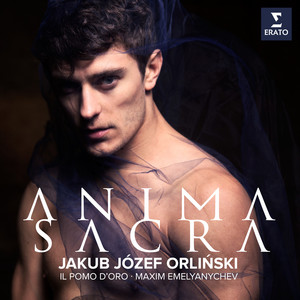 | Fago: Tam non splendet sol creatus: I. "Tam non splendet sol creatus" | Francesco Nicola Fago, Jakub Józef Orliński, Maxim Emelyanychev, Il Pomo D'oro | E Major | 3 | 12B | 120 BPM | |
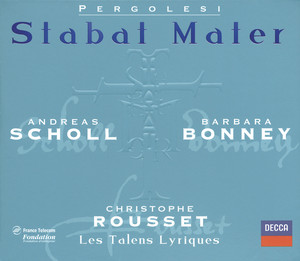 | Stabat Mater: 11. Inflammatus | Giovanni Battista Pergolesi, Barbara Bonney, Andreas Scholl, Les Talens Lyriques, Christophe Rousset | A Major | 1 | 11B | 109 BPM | |
 | Quel Sguardo Sdegnosetto (Scherzi Musicali), 1632 | Jordi Savall, Montserrat Figueras, Claudio Monteverdi | G Major | 1 | 9B | 87 BPM | |
 | Messiah, HWV 56: Part 2: All we like sheep have gone astray (Chorus) | Nikolaus Harnoncourt | E Major | 2 | 12B | 110 BPM | |
| Te Deum, H. 146: VII. "Aeterna fac cum sanctis tuis" | Marc-Antoine Charpentier, Véronique Gens, Gilles Ragon, Jean-Paul Fouchécourt, Bernard Deletré, Les Arts Florissants, William Christie | B♭ Minor | 1 | 3A | 81 BPM | |
 | Rameau : La Guirlande : "La flûte est des soupirs le plus tendre interprète" [Myrtil, Chorus] | Jean-Philippe Rameau, William Christie, Cappella Coloniensis des WDR, Frauke Lukas | E♭ Major | 4 | 5B | 65 BPM | |
 | Scarlatti, A: Ombre tacite e sole: IV. Aria. "Allor d’intorno a te" | Alessandro Scarlatti, Philippe Jaroussky, Artaserse | F♯ Major | 3 | 2B | 124 BPM | |
 | Missa pro defuncto Archiepiscopo Sigismundo, "Mass for the death of Archbishop Sigismund": Hostias | Michael Haydn, Ibolya Verebics, Judit Nemeth, Martin Kleitmann, József Moldvay, Hungarian Radio and Television Chorus, Franz Liszt Chamber Orchestra, Helmuth Rilling | G Minor | 1 | 6A | 99 BPM | |
 | Vier letzte Lieder, TrV 296: 2. September | Richard Strauss, Jessye Norman, Gewandhausorchester, Kurt Masur | D Major | 1 | 10B | 153 BPM | |
 | Magnificat in B flat major: Et misericordia | Francesco Durante, Bernhard Landauer, Thomas Hengelbrock | F♯ Minor | 0 | 11A | 78 BPM | |
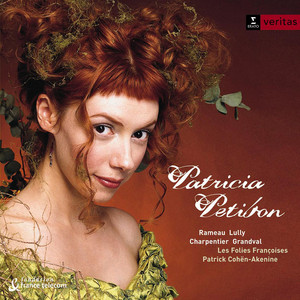 | Rameau: Les Indes galantes, Quatrième entrée "Les sauvages": Air. "Régnez, plaisirs et jeux !" (Zima) | Jean-Philippe Rameau, Patricia Petibon, Les Folies Françoises, Patrick Cohën-Akenine | A Minor | 0 | 8A | 136 BPM |
- ISRC
- NLA508323404
- Label
- L-M Records/RCA Records