- BPM
- 114
- Key
- C Major
- Camelot
- 8B
Verdi: Messa da Requiem: XIII. Hostias by Giuseppe Verdi, Riccardo Muti, Cheryl Studer, Dolora Zajic, Luciano Pavarotti, Samuel Ramey, Orchestra Del Teatro Alla Scala, Milano Song Details
"Verdi: Messa da Requiem: XIII. Hostias" by Giuseppe Verdi, Riccardo Muti, Cheryl Studer, Dolora Zajic, Luciano Pavarotti, Samuel Ramey, Orchestra Del Teatro Alla Scala, Milano had its release date on January 1, 1987. This song is about six minutes long, preciously at 6:14, making this song fairly long compared to other songs. This song is part of Verdi: Messa da Requiem by Giuseppe Verdi, Riccardo Muti, Orchestra Del Teatro Alla Scala, Milano. The song's track number on the album is #13 out of 19 tracks. Based on our data, United Kingdom was the country where this track was produced or recorded. In terms of popularity, Verdi: Messa da Requiem: XIII. Hostias is currently not that popular. In our opinion, the overall tone is not very danceable and projects negative sounds, such as being sad, depressed, or angry.
BPM and Tempo
Since Verdi: Messa da Requiem: XIII. Hostias by Giuseppe Verdi, Riccardo Muti, Cheryl Studer, Dolora Zajic, Luciano Pavarotti, Samuel Ramey, Orchestra Del Teatro Alla Scala, Milano has a tempo of 114 beats per a minute, the tempo markings of this song would be Moderato (at a moderate speed). With Verdi: Messa da Requiem: XIII. Hostias being at 114 BPM, the half-time would be 57 BPM with a double-time of 228 BPM.In addition, we consider the tempo speed to be pretty moderate for this song. The time signature for this track is 4/4.
Music Key
This song is in the music key of C Major. Or for those who are familiar with the camelot wheel, this song has a camelot key of 8B. So, the perfect camelot match for 8B would be either 8B or 9A. While, 9B can give you a low energy boost. For moderate energy boost, you would use 5B and a high energy boost can either be 10B or 3B. Though, if you want a low energy drop, you should looking for songs with either a camelot key of 8A or 7B will give you a low energy drop, 11B would be a moderate one, and 6B or 1B would be a high energy drop. Lastly, 5A allows you to change the mood.
Want to find the BPM and music key for other songs? Check out our BPM and Key Finder page!
- Popularity
- 2%
- Loudness
- -19.236 dB
- Acousticness
- 96%
- Danceability
- 24%
- Energy
- 22%
- Instrumentalness
- 1%
- Liveness
- 9%
- Loudness
- 68%
- Speechiness
- 5%
- Valence
- 8%
Recommendations
| Track | Artist | Key | Energy | Camelot | BPM | ||
|---|---|---|---|---|---|---|---|
 | Norma (1997 - Remaster), Act II, Scene 3: Deh! non volerli vittime (Coro/Norma/Pollione/Oroveso) | Vincenzo Bellini, Maria Callas, Franco Corelli, Nicola Zaccaria, Coro Del Teatro Alla Scala Di Milano, Noberto Mola, Tullio Serafin, Orchestra Del Teatro Alla Scala, Milano, Orchestra Del Teatro Alla Scala Di Milan | A Minor | 3 | 8A | 82 BPM | |
| Bellini: Norma, Act 1: "Me protegge, me difende" (Pollione) | Vincenzo Bellini, Orchestra Del Teatro Alla Scala, Milano, Tullio Serafin, Franco Corelli | E♭ Major | 3 | 5B | 74 BPM | |
 | Donizetti: Don Pasquale, Act 1: "Quel guardo il cavaliere" (Norina) | Gaetano Donizetti, Riccardo Muti, Mirella Freni, Philharmonia Orchestra | G Major | 1 | 9B | 111 BPM | |
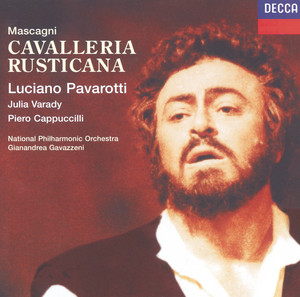 | Cavalleria rusticana: "Oh! Il Signore vi manda" (Duetto) | Pietro Mascagni, Julia Varady, Piero Cappuccilli, National Philharmonic Orchestra, Gianandrea Gavazzeni | D♭ Major | 2 | 3B | 64 BPM | |
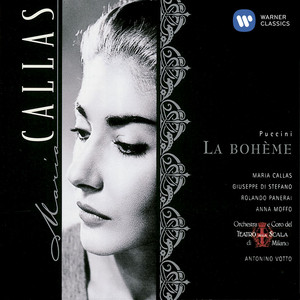 | Puccini: La bohème, Act 2: "Chi I'ha richiesto?....Vediam" (Colline/Schaunard/Rodolfo/Ragazzi/Marcello/Coro/Musetta) | Giacomo Puccini, Nicola Zaccaria, Antonino Votto, Orchestra Del Teatro Alla Scala, Milano | E♭ Major | 5 | 5B | 120 BPM | |
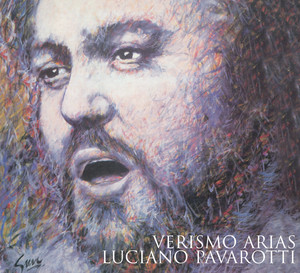 | Werther / Act 3: "Pourquoi me réveiller, ô souffle du printemps?" | Jules Massenet, Luciano Pavarotti, National Philharmonic Orchestra, Oliviero de Fabritiis | F♯ Minor | 2 | 11A | 80 BPM | |
 | La bohème, Act IV: O Mimì, tu più non torni – Che ora sia | Giacomo Puccini, Luciano Pavarotti, Rolando Panerai, Gianni Maffeo, Nicolai Ghiaurov, Berliner Philharmoniker, Herbert von Karajan | C Major | 2 | 8B | 77 BPM | |
 | Stabat Mater, Op. 58: II. Quis est homo, qui non fleret (Andante sostenuto) | Antonín Dvořák, Philippe Herreweghe, Royal Flemish Philharmonic, Ilse Eerens, Michaela Selinger, Maximilian Schmitt, Florian Boesch | A Major | 1 | 11B | 133 BPM | |
 | Puccini: La rondine, Act 1: "Chi il bel sogno di Doretta" (Magda, Yvette, Bianca, Prunier, Lisette, Suzy, Rambaldo, Périchaud, Gobin, Crébillon) | Giacomo Puccini, Angela Gheorghiu, Antonio Pappano, London Symphony Orchestra | B♭ Minor | 8 | 3A | 126 BPM | |
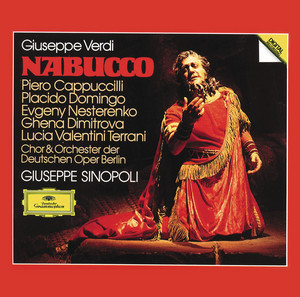 | Nabucco / Act 1: Sperate, o figli! | Giuseppe Verdi, Yevgeny Nesterenko, Orchester der Deutschen Oper Berlin, Giuseppe Sinopoli, Chor der Deutschen Oper Berlin | C Major | 1 | 8B | 137 BPM | |
 | Gounod: Faust, Act 4: "Seigneur, daignez permettre à votre humble servante" (Marguerite, Méphistophélès, Chœur) | Charles Gounod, Michel Plasson, Cheryl Studer, Chœur de l'Armée française, Choeur Du Capitole De Toulouse, José van Dam, Orchestre Du Capitole De Toulouse | A Minor | 1 | 8A | 94 BPM | |
 | Messa da Requiem, Sequenza: Ingemisco | Giuseppe Verdi, Antonio Pappano, Rolando Villazón, Orchestra dell' Accademia Nazionale di Santa Cecilia, Roma | C Major | 3 | 8B | 119 BPM | |
 | Tuba mirum | Giuseppe Verdi, Cesar Hernandez, Carlo Colombara, Hungarian State Opera Chorus, Hungarian State Opera Orchestra, Pier Giorgio Morandi | D♭ Minor | 3 | 12A | 91 BPM | |
 | Mascagni: Cavalleria rusticana: "Gli aranci olezzano" (Coro) | Pietro Mascagni, Riccardo Muti, Ambrosian Opera Chorus, Philharmonia Orchestra | A Major | 1 | 11B | 76 BPM | |
 | La bohème, Act III: Dunque è propio finita! | Giacomo Puccini, Luciano Pavarotti, Mirella Freni, Elizabeth Harwood, Rolando Panerai, Berliner Philharmoniker, Herbert von Karajan | A Major | 0 | 11B | 90 BPM | |
 | Stabat Mater: 4. Pro peccatis suae gentis | Gioachino Rossini, Ruggero Raimondi, Philharmonia Orchestra, Carlo Maria Giulini | C Major | 3 | 8B | 80 BPM | |
 | Fauré: Requiem, Op. 48: II. Offertoire | Gabriel Fauré, Matthias Goerne, Choeur de l'Orchestre de Paris, Orchestre de Paris, Paavo Järvi | D Major | 0 | 10B | 83 BPM | |
 | Wagner: Tannhäuser, Act 1: "Frau Holda kam aus dem Berg hervor" (Hirt) | Richard Wagner, Daniel Barenboim, Chor der Deutschen Staatsoper Berlin, Dorothea Röschmann, Staatskapelle Berlin | E Minor | 0 | 9A | 103 BPM | |
 | Les Contes d'Hoffmann / Act 4: "Belle nuit, ô nuit d'amour" | Jacques Offenbach, Anne Sofie von Otter, Francisco Araiza, Cheryl Studer, MDR Leipzig Radio Chorus, Staatskapelle Dresden, Jeffrey Tate | G Major | 3 | 9B | 140 BPM | |
 | Strauss, R: 8 Gedichte aus Letzte Blätter, Op. 10: No. 1, Zueignung (Version with Orchestra) | Richard Strauss, Elisabeth Schwarzkopf, George Szell, Deutsches Symphonie-Orchester Berlin | C Major | 2 | 8B | 81 BPM | |
 | Rossini: Petite messe solennelle: II. Gloria, 4. Domine Deus (Tenor). Allegro giusto | Gioachino Rossini, Antonio Pappano | F Major | 1 | 7B | 81 BPM | |
| La bohème, Act I: Si può – Chi è là? | Giacomo Puccini, Michel Sénéchal, Rolando Panerai, Luciano Pavarotti, Nicolai Ghiaurov, Gianni Maffeo, Berliner Philharmoniker, Herbert von Karajan | A Major | 2 | 11B | 115 BPM | |
 | Lakmé - Acte I : Blanche Dourga, Pâle Siva ! (Lakmé, Choeur, Nilakantha) - Remasterisé En 2002 | Léo Delibes, Alain Lombard, Roger Soyer, Paris Opera-Comique Orchestra, Mady Mesple, Choeur Du Théatre De L'Opéra | F Minor | 1 | 4A | 68 BPM | |
| Gounod: Faust, Act 3: "Je voudrais bien savoir" - Chanson. "Il était un roi de Thulé" (Marguerite) | Charles Gounod, Michel Plasson, Cheryl Studer, Orchestre Du Capitole De Toulouse | A Minor | 1 | 8A | 94 BPM | |
 | Lucia di Lammermoor / Act 3: "Tombe degli avi miei" | Gaetano Donizetti, Luciano Pavarotti, Orchestra of the Royal Opera House, Covent Garden, Richard Bonynge | G Minor | 1 | 6A | 111 BPM |
- ISRC
- GBAYC8700844
- Label
- L-M Records/RCA Records