- BPM
- 91
- Key
- F Major
- Camelot
- 7B
Somewhere (From "West Side Story") by Leonard Bernstein, Stephen Sondheim, Richard Stoltzman Song Details
"Somewhere (From "West Side Story")" by Leonard Bernstein, Stephen Sondheim, Richard Stoltzman had its release date on February 28, 1995. With this song being about 5 minutes long, at This song is fairly a long song compared to the average song length. This song does not have an "Explicit" tag, making it safe for all ages. This song is part of Visions by Richard Stoltzman. The song's track number on the album is #11 out of 16 tracks. Based on our data, United States was the country where this track was produced or recorded. In terms of popularity, Somewhere (From "West Side Story") is currently not that popular. In our opinion, the overall tone is not very danceable and projects negative sounds, such as being sad, depressed, or angry.
BPM and Tempo
Since Somewhere (From "West Side Story") by Leonard Bernstein, Stephen Sondheim, Richard Stoltzman has a tempo of 91 beats per a minute, the tempo markings of this song would be Andante (at a walking pace). With Somewhere (From "West Side Story") being at 91 BPM, the half-time would be 46 BPM with a double-time of 182 BPM.In addition, we consider the tempo speed to be pretty slow for this song. This makes this song perfect for activities such as, yoga or pilates. The time signature for this track is 4/4.
Music Key
This song is in the music key of F Major. Or for those who are familiar with the camelot wheel, this song has a camelot key of 7B. So, the perfect camelot match for 7B would be either 7B or 8A. While, 8B can give you a low energy boost. For moderate energy boost, you would use 4B and a high energy boost can either be 9B or 2B. Though, if you want a low energy drop, you should looking for songs with either a camelot key of 7A or 6B will give you a low energy drop, 10B would be a moderate one, and 5B or 12B would be a high energy drop. Lastly, 4A allows you to change the mood.
Want to find the BPM and music key for other songs? Check out our BPM and Key Finder page!
- Popularity
- 8%
- Loudness
- -16.806 dB
- Acousticness
- 99%
- Danceability
- 16%
- Energy
- 9%
- Instrumentalness
- 90%
- Liveness
- 8%
- Loudness
- 72%
- Speechiness
- 4%
- Valence
- 4%
Recommendations
| Track | Artist | Key | Energy | Camelot | BPM | ||
|---|---|---|---|---|---|---|---|
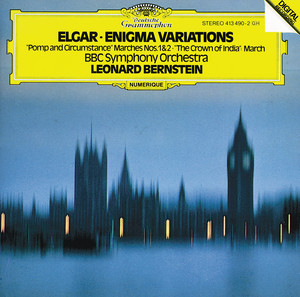 | Enigma Variations, Op. 36: Var. 5. Moderato "R.P.A." | Edward Elgar, BBC Symphony Orchestra, Leonard Bernstein | C Minor | 0 | 5A | 83 BPM | |
 | Nabucco: Overture | Giuseppe Verdi, Berliner Philharmoniker, Claudio Abbado | F Major | 2 | 7B | 100 BPM | |
 | Donna Diana: Overture | Emil Nikolaus von Reznicek, Leonard Bernstein, New York Philharmonic | A Major | 5 | 11B | 102 BPM | |
 | Chaminade: Flute Concertino, Op. 107 | Cécile Chaminade, Emmanuel Pahud, François Leleux, Orchestre de chambre de Paris | D Major | 1 | 10B | 83 BPM | |
| Enigma Variations, Op. 36: Var. 1. L'istesso tempo "C.A.E." | Edward Elgar, BBC Symphony Orchestra, Leonard Bernstein | G Minor | 0 | 6A | 81 BPM | |
 | Holst : The Planets Op.32 : IV Jupiter, the Bringer of Jollity | Giacomo Puccini, Gustav Holst, Royal Philharmonic Orchestra, Owain Arwel Hughes | B♭ Major | 1 | 6B | 132 BPM | |
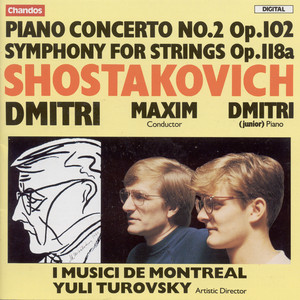 | Piano Concerto No. 2 in F Major, Op. 102: III. Allegro | Dmitri Shostakovich, I Musici de Montréal, Maxim Shostakovich | F Major | 3 | 7B | 164 BPM | |
| Variations On An Original Theme, Op.36 "Enigma": 11. G.R.S. (Allegro di molto) | Edward Elgar, BBC Symphony Orchestra, Leonard Bernstein | D Major | 3 | 10B | 85 BPM | |
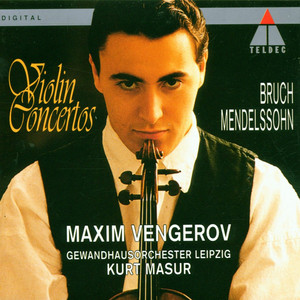 | Bruch : Violin Concerto No.1 in G minor Op.26 : III Finale - Allegro energico | Max Bruch, Maxim Vengerov, Kurt Masur, Gewandhausorchester Leipzig | G Major | 2 | 9B | 90 BPM | |
 | Symphony No. 7 in A Major, Op. 92: III. Presto. Trio I und II. Assai meno presto | Ludwig van Beethoven, Berliner Philharmoniker, Kirill Petrenko | D Major | 2 | 10B | 105 BPM | |
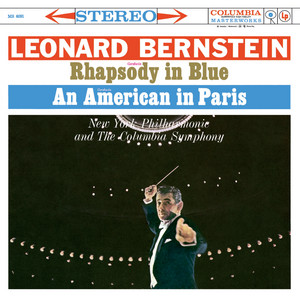 | Symphonic Suite (From the Film "On The Waterfront"): Andante (with dignity) - Presto barbaro Presto barbaro | Leonard Bernstein, New York Philharmonic | C Minor | 2 | 5A | 143 BPM | |
 | Simple Symphony, Op. 4: III. Sentimental Saraband | Benjamin Britten, English Chamber Orchestra | G Minor | 1 | 6A | 82 BPM | |
 | Fauré: Pavane, Op. 50 | Gabriel Fauré, San Francisco Symphony, Michael Tilson Thomas | F♯ Minor | 0 | 11A | 62 BPM | |
 | Prince Igor: Polovtsian Dances (Remastered): No. 17e, Moderato alla breve | Alexander Borodin, Leonard Bernstein, New York Philharmonic | A Major | 2 | 11B | 0 BPM | |
 | Peter and the Wolf, Op. 67: Andantino | Sergei Prokofiev, New York Philharmonic, Leonard Bernstein | G Major | 1 | 9B | 76 BPM | |
 | The Planets, Op. 32: IV. Jupiter, the Bringer of Jollity | Gustav Holst, Orchestre Symphonique de Montréal, Charles Dutoit | G Minor | 2 | 6A | 136 BPM | |
 | Symphony No. 2 in D Major, Op. 43: III. Vivacissimo | Jean Sibelius, Leonard Bernstein, New York Philharmonic | B♭ Major | 3 | 6B | 98 BPM | |
 | Pelléas et Mélisande, Op.80: 3. Sicilienne | Gabriel Fauré, Academy of St. Martin in the Fields, Sir Neville Marriner | G Minor | 0 | 6A | 111 BPM | |
| Peter and the Wolf, Op. 67: Moderato - Poco più mosso - Sostenuto - Poco più mosso | Sergei Prokofiev, New York Philharmonic, Leonard Bernstein | G Major | 1 | 9B | 114 BPM | |
 | Shéhérazade, Op. 35: I. The Sea and Sinbad's Ship | Nikolai Rimsky-Korsakov, Sergej Galaktionov, Gianandrea Noseda, Filarmonica Teatro Regio Torino | E Major | 1 | 12B | 136 BPM | |
 | Serenade in B flat, K.361 "Gran partita": 3. Adagio | Wolfgang Amadeus Mozart, Academy of St. Martin in the Fields Wind Ensemble, Sir Neville Marriner | E♭ Major | 4 | 5B | 89 BPM | |
 | The Planets, Op. 32: I. Mars, the Bringer of War | Gustav Holst, Berliner Philharmoniker, Herbert von Karajan | A♭ Major | 5 | 4B | 149 BPM | |
 | In the Steppes of Central Asia | Alexander Borodin, Royal Philharmonic Orchestra, Vladimir Ashkenazy | A Major | 0 | 11B | 69 BPM | |
 | Symphony No. 3: VIf. Langsam. Tempo I - Live | Gustav Mahler, New York Philharmonic, Leonard Bernstein | D Major | 0 | 10B | 111 BPM | |
 | Peer Gynt Suite No.1 op. 46 Anitra's Dance (Tempo di Mazurka) | Academy of St. Martin in the Fields | E Minor | 0 | 9A | 168 BPM |
- ISRC
- USBC19400493
- Label
- L-M Records/RCA Records