- BPM
- 128
- Key
- F Minor
- Camelot
- 4A
Handel: Keyboard Suite in G Minor, HWV 432: IV. Sarabande by George Frideric Handel, Andrei Gavrilov Song Details
On 1982, the song "Handel: Keyboard Suite in G Minor, HWV 432: IV. Sarabande" was released by George Frideric Handel, Andrei Gavrilov. With this song being about 5 minutes long, at This song is fairly a long song compared to the average song length. This song does not have an "Explicit" tag, making it safe for all ages. The track order of this song in George Frideric Handel, Andrei Gavrilov/Sviatoslav Richter's "Handel: Keyboard Suites Vol. I" album is number 12 out of 38. On top of that, United Kingdom appears to be the country where this track was created. Based on our statistics, Handel: Keyboard Suite in G Minor, HWV 432: IV. Sarabande's popularity is not that popular right now. The overall mood can be danceable to some, especially with it's high amount of postive energy.
BPM and Tempo
We consider the tempo marking of Handel: Keyboard Suite in G Minor, HWV 432: IV. Sarabande by George Frideric Handel, Andrei Gavrilov to be Allegro (fast, quick, and bright) because the track has a tempo of 128 BPM, a half-time of 64BPM, and a double-time of 256 BPM. Based on that, the speed of the song's tempo is fast. Activities such as, walking, can go well with this song. The time signature for this track is 1/4.
Music Key
This song is in the music key of F Minor. Because this track belongs in the F Minor key, the camelot key is 4A. So, the perfect camelot match for 4A would be either 4A or 3B. While, a low energy boost can consist of either 4B or 5A. For moderate energy boost, you would use 1A and a high energy boost can either be 6A or 11A. However, if you are looking for a low energy drop, finding a song with a camelot key of 3A would be a great choice. Where 7A would give you a moderate drop, and 2A or 9A would be a high energy drop. Lastly, 7B allows you to change the mood.
Want to find the BPM and music key for other songs? Check out our BPM and Key Finder page!
- Popularity
- 7%
- Loudness
- -23.495 dB
- Acousticness
- 99%
- Danceability
- 49%
- Energy
- 16%
- Instrumentalness
- 87%
- Liveness
- 12%
- Loudness
- 61%
- Speechiness
- 5%
- Valence
- 92%
Recommendations
| Track | Artist | Key | Energy | Camelot | BPM | ||
|---|---|---|---|---|---|---|---|
 | Overture (Suite) In G Minor, TWV 55: G4: III. Les Irresoluts | Cologne Chamber Orchestra, Georg Philipp Telemann | G Minor | 1 | 6A | 82 BPM | |
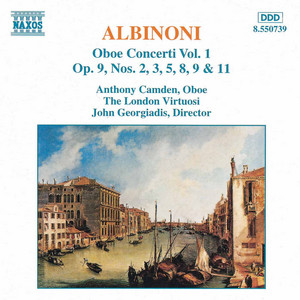 | Oboe Concerto in D Minor, Op. 9, No. 2: II. Adagio | Tomaso Albinoni, Anthony Camden, London Virtuosi, John Georgiadis | B♭ Major | 1 | 6B | 75 BPM | |
 | Le Bourgeois Gentilhomme - Comédie-Ballet, LWV 43: Ouverture | Jean-Baptiste Lully, Gustav Leonhardt, La Petite Bande, Sigiswald Kuijken | F♯ Minor | 1 | 11A | 106 BPM | |
 | Concerto Per Oboe, Archi E Continuo In Re Minore: II. Adagio | Alessandro Marcello, Venice Baroque Orchestra | D♭ Minor | 0 | 12A | 79 BPM | |
 | Overture No. 2 in F Major: III. Sarabande | Francesco Maria Veracini, Accademia I Filarmonici, Alberto Martini | F Major | 1 | 7B | 108 BPM | |
| Oboe Concerto in D Minor, Op. 9, No. 2: I. Allegro e non presto | Tomaso Albinoni, Anthony Camden, London Virtuosi, John Georgiadis | D Minor | 2 | 7A | 145 BPM | |
 | Overture (Suite) in G Major, TWV 55:G10, "Burlesque de Quixotte": IV. Les Soupirs amoureux apres la Princesse Dulcinee | Georg Philipp Telemann, Northern Chamber Orchestra, Nicholas Ward | C Major | 1 | 8B | 168 BPM | |
 | Musiche sacre: No. 23, Canzon à 3 | Francesco Cavalli, London Baroque | A♭ Minor | 1 | 1A | 122 BPM | |
 | Haydn: Mass in D Minor, Hob. XXII:11 "Nelson Mass": Kyrie | Joseph Haydn, Sir Neville Marriner, Hansjürgen Scholze, Margaret Marshall, MDR Leipzig Radio Chorus, Staatskapelle Dresden | G Minor | 3 | 6A | 115 BPM | |
 | Violin Concerto in D Minor, Op. 7 No. 1: I. Allegro | Jean-Marie Leclair, Fabio Biondi, Europa Galante | D♭ Minor | 2 | 12A | 88 BPM | |
 | Symphony in C Major, Op. 1, No. 6 (Callen 6): I. Allegro | Franz Ignaz Beck, New Zealand Chamber Orchestra, Donald Armstrong | G Major | 2 | 9B | 143 BPM | |
 | Les Indes galantes, RCT 44, Nouvelle entrée, Les sauvages, Scène VI: Rondeau - Duo et choeur "Forêts paisibles" | Jean-Philippe Rameau, Teodor Currentzis | F♯ Minor | 3 | 11A | 98 BPM | |
 | The Old Bachelor, Z.607: Rondeau - Menuet - Boree - March - Jig | Henry Purcell, Academy of Ancient Music, Christopher Hogwood | B Major | 2 | 1B | 120 BPM | |
 | Symphony No. 2 in A Major, Op. 2 "Birthday Ode": III. Presto Allegro | William Boyce, Aradia Ensemble, Kevin Mallon | A♭ Major | 1 | 4B | 181 BPM | |
 | Overture No. 6 in B-Flat Major: I. Allegro | Francesco Maria Veracini, L'Arte dell' Arco, Federico Guglielmo | F♯ Minor | 3 | 11A | 178 BPM | |
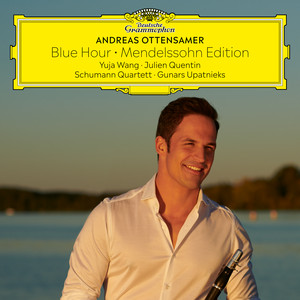 | Lieder ohne Worte I, Op. 19b: VI. Andante sostenuto "Venetian Gondola Song", MWV U78 (Arr. Ottensamer for Clarinet & Strings) | Felix Mendelssohn, Andreas Ottensamer, Schumann Quartett, Gunars Upatnieks | G Minor | 0 | 6A | 84 BPM | |
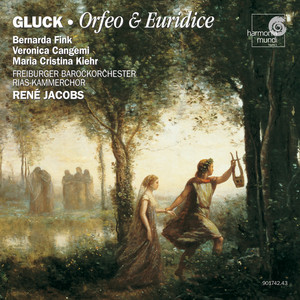 | Orfeo ed Euridice: Overtura | Christoph Willibald Gluck, René Jacobs, Freiburger Barockorchester | G Major | 2 | 9B | 76 BPM | |
 | Concerto For Oboe In D Minor - Presto | Tafelmusik Baroque Orchestra | D♭ Minor | 3 | 12A | 104 BPM | |
 | Symphony in D Major, Op. 3, No. 2: II. Andantino | Johann Stamitz, New Zealand Chamber Orchestra, Donald Armstrong | G Major | 0 | 9B | 113 BPM | |
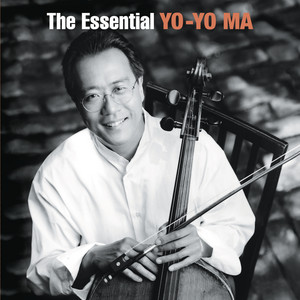 | Wachet auf, ruft uns die Stimme, BWV 645 | Yo-Yo Ma, Ton Koopman, Amsterdam Baroque Orchestra | D Major | 0 | 10B | 79 BPM | |
 | Concerto grosso No. 1 in D Major, Op. 6: II. Largo - Allegro | Arcangelo Corelli, Gli Incogniti, Amandine Beyer, Helena Zemanova | D♭ Major | 2 | 3B | 146 BPM | |
 | Capriol Suite: 5. Pied-en- l'air | Peter Warlock, Academy of St. Martin in the Fields, Nicholas Kraemer, Sir Neville Marriner | G Major | 1 | 9B | 113 BPM | |
 | Symphony No. 1 in E Major: II. Andantino | John Abraham Fisher, Czech Philharmonic Chamber Orchestra, Petra Žďárská, Michael Halasz | A Major | 0 | 11B | 112 BPM | |
 | Sonata in D Minor, K. 9 | Domenico Scarlatti, Ivo Pogorelich | D Minor | 0 | 7A | 94 BPM | |
 | Adagio in G Minor "Albinoni's Adagio" | Remo Giazotto, Leon Spierer, David Bell, Berliner Philharmoniker, Herbert von Karajan | G Major | 0 | 9B | 62 BPM |
- ISRC
- GBAYC9602375
- Label
- L-M Records/RCA Records