- BPM
- 124
- Key
- A♭ Major
- Camelot
- 4B
Eight Concert Etudes, Op. 40: II. Reverie: Moderato by Nikolai Kapustin, Yeol Eum Son Song Details
"Eight Concert Etudes, Op. 40: II. Reverie: Moderato" by Nikolai Kapustin, Yeol Eum Son had its release date on July 23, 2021. With this song being around four minutes long, at 3:43, the duration of this song is pretty average compared to other songs. This track is safe for children and doesn't appear to contain any foul language, since the "Explicit" tag was not present in this track. The track order of this song in Nikolai Kapustin, Yeol Eum Son's "Kapustin: Eight Concert Etudes, Piano Sonata No. 2, Sonatina, Variations & Moon Rainbow" album is number 2 out of 15. On top of that, United Kingdom appears to be the country where this track was created. Based on our statistics, Eight Concert Etudes, Op. 40: II. Reverie: Moderato's popularity is not that popular right now. In our opinion, the overall tone is not very danceable and projects negative sounds, such as being sad, depressed, or angry.
BPM and Tempo
We consider the tempo marking of Eight Concert Etudes, Op. 40: II. Reverie: Moderato by Nikolai Kapustin, Yeol Eum Son to be Allegro (fast, quick, and bright) because the track has a tempo of 124 BPM, a half-time of 62BPM, and a double-time of 248 BPM. Based on that, the speed of the song's tempo is fast. Activities such as, walking, can go well with this song. The time signature for this track is 3/4.
Music Key
This song has a musical key of A♭ Major. This also means that this song has a camelot key of 4B. So, the perfect camelot match for 4B would be either 4B or 5A. While, 5B can give you a low energy boost. For moderate energy boost, you would use 1B and a high energy boost can either be 6B or 11B. Though, if you want a low energy drop, you should looking for songs with either a camelot key of 4A or 3B will give you a low energy drop, 7B would be a moderate one, and 2B or 9B would be a high energy drop. Lastly, 1A allows you to change the mood.
Want to find the BPM and music key for other songs? Check out our BPM and Key Finder page!
- Popularity
- 13%
- Loudness
- -19.571 dB
- Acousticness
- 98%
- Danceability
- 26%
- Energy
- 25%
- Instrumentalness
- 96%
- Liveness
- 9%
- Loudness
- 67%
- Speechiness
- 3%
- Valence
- 14%
Recommendations
| Track | Artist | Key | Energy | Camelot | BPM | ||
|---|---|---|---|---|---|---|---|
 | The Garden of Folies: V. Regarding Crystals | Andrew Norman, Kyeong Ham, Yeol Eum Son | D♭ Minor | 0 | 12A | 136 BPM | |
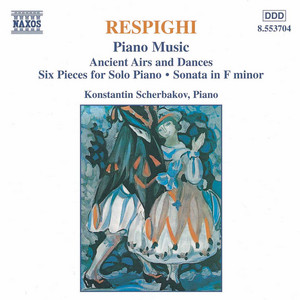 | 6 Pezzi, P. 44: No. 1. Valse Caressante | Ottorino Respighi, Konstantin Scherbakov | E♭ Major | 1 | 5B | 70 BPM | |
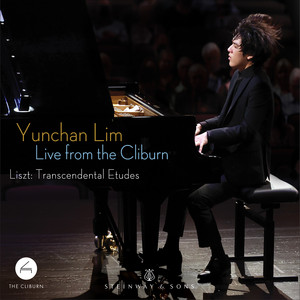 | Transcendental Etudes, S. 139: No. 3, Paysage - Live | Franz Liszt, Yunchan Lim | D Minor | 3 | 7A | 96 BPM | |
| The Garden of Folies: IV. The Fourth Act | Andrew Norman, Kyeong Ham, Yeol Eum Son | B♭ Major | 0 | 6B | 100 BPM | |
 | 3 Ghost Rags: No. 1, Graceful Ghost Rag | William Bolcom, Marc-André Hamelin | E♭ Major | 0 | 5B | 73 BPM | |
 | Roman Sketches, Op. 7: III. The Fountain of the Acqua Paola | Charles Griffes, Emanuele Torquati | A♭ Major | 1 | 4B | 70 BPM | |
 | Trois pièces: Hymne | Francis Poulenc, Alexandre Tharaud | E♭ Major | 1 | 5B | 71 BPM | |
 | Piano Concerto No.1 In G Minor, Op.25, MWV O7: 2. Andante | Felix Mendelssohn, Jean-Yves Thibaudet, Gewandhausorchester, Herbert Blomstedt | A Major | 2 | 11B | 103 BPM | |
| Antiche Danze Ed Arie Per Liuto (Ancient Airs And Dances), P. 114: II. Villanella (Quadro III | Ottorino Respighi, Konstantin Scherbakov | B Minor | 0 | 10A | 136 BPM | |
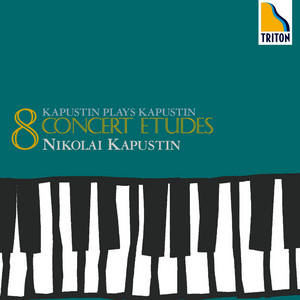 | Variations Op. 41 | Nikolai Kapustin | D♭ Major | 4 | 3B | 121 BPM | |
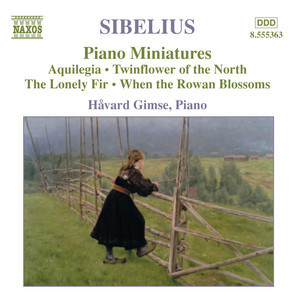 | 6 Pieces, Op. 94: No. 4 Berger et bergerette (Shepherd and Shepherdess) | Jean Sibelius, Håvard Gimse | E♭ Major | 0 | 5B | 72 BPM | |
 | 7 Preludes, Op. 17: No. 3 in D-Flat Major | Alexander Scriabin, Maria Lettberg | B Major | 0 | 1B | 72 BPM | |
 | 8 Concert Etudes, Op. 40: No. 7, Intermezzo | Nikolai Kapustin, Catherine Gordeladze | E Minor | 3 | 9A | 153 BPM | |
 | Balakirev: Berceuse in D-Flat Major | Mily Balakirev, Bertrand Chamayou | D♭ Major | 1 | 3B | 70 BPM | |
 | Lyrical Pieces, Op. 43: No. 6, To Spring | Edvard Grieg, Denis Kozhukhin | F♯ Major | 1 | 2B | 138 BPM | |
 | Die Meistersinger von Nürnberg (the Mastersingers of Nuremberg), Act III Scene 5: Aufzug der Meistersinger | Richard Wagner, Sofia Symphony Orchestra, Vassil Kazandjiev | B Major | 0 | 1B | 78 BPM | |
 | Respighi Notturno | Roberto Plano | F♯ Major | 0 | 2B | 62 BPM | |
 | Hungarian Rhapsody No. 10 in E Major, S. 244/10 | Franz Liszt, Marc-André Hamelin | B Major | 2 | 1B | 64 BPM | |
 | Kandinsky's Circle | Laura Ballestrino | G Minor | 2 | 6A | 125 BPM | |
| Sonate: II. Sehr langsam | Paul Hindemith, Kyeong Ham, Yeol Eum Son | B♭ Minor | 1 | 3A | 116 BPM | |
 | No. 1, Allegro con espressione | Nikolai Medtner, Yevgeny Sudbin | B♭ Minor | 2 | 3A | 122 BPM | |
| 6 Pezzi, P. 44: No. 4. Minuetto | Ottorino Respighi, Konstantin Scherbakov | G Major | 0 | 9B | 132 BPM | |
 | Piano Sonata No. 16 in C Major, K. 545: I. Allegro | Wolfgang Amadeus Mozart, Yeol Eum Son | E♭ Major | 1 | 5B | 85 BPM | |
 | Nocturne No.4 in E Flat Major, Op.36 | Gabriel Fauré, Pascal Rogé | A Minor | 0 | 8A | 76 BPM | |
 | Rachmaninov: 8 Études-tableaux, Op. 33: No. 2 in C Major | Sergei Rachmaninoff, Hélène Grimaud | F Major | 0 | 7B | 73 BPM |
- ISRC
- GBPCP2100038
- Label
- L-M Records/RCA Records