- BPM
- 91
- Key
- C Minor
- Camelot
- 5A
The Tsar's Bride - original version Tsarskaya Nevesta by Lev Mey - Act 4: Scene 2 "Bol'shoy poklon boyarinu" by Nikolai Rimsky-Korsakov, Dmitri Hvorostovsky, Gennadi Bezzubenkov, Marina Shaguch, Irina Loskutova, Mariinsky Chorus, Mariinsky Orchestra, Valery Gergiev Song Details
"The Tsar's Bride - original version Tsarskaya Nevesta by Lev Mey - Act 4: Scene 2 "Bol'shoy poklon boyarinu"" by Nikolai Rimsky-Korsakov, Dmitri Hvorostovsky, Gennadi Bezzubenkov, Marina Shaguch, Irina Loskutova, Mariinsky Chorus, Mariinsky Orchestra, Valery Gergiev had its release date on January 1, 1999. The duration of This song is about 3 minutes long, at 3:15. Based on our data, This song appears to be safe for all ages and is not considered explicit. This track is about the average length of a typical track. There are a total of 35 in the song's album "Rimsky-Korsakov: The Tsar's Bride". In this album, this song's track order is #18. Furthermore, we believe that the track originated from Netherlands. In terms of popularity, The Tsar's Bride - original version Tsarskaya Nevesta by Lev Mey - Act 4: Scene 2 "Bol'shoy poklon boyarinu" is currently unknown. In our opinion, the overall tone is not very danceable and projects negative sounds, such as being sad, depressed, or angry.
BPM and Tempo
With The Tsar's Bride - original version Tsarskaya Nevesta by Lev Mey - Act 4: Scene 2 "Bol'shoy poklon boyarinu" by Nikolai Rimsky-Korsakov, Dmitri Hvorostovsky, Gennadi Bezzubenkov, Marina Shaguch, Irina Loskutova, Mariinsky Chorus, Mariinsky Orchestra, Valery Gergiev having a BPM of 91 with a half-time of 46 BPM and a double-time of 182 BPM, we would consider this track to have a Andante (at a walking pace) tempo marking. Because of this, we believe that the song has an overall slow tempo. Looking at the BPM of this song, this song might go great with yoga or pilates. The time signature for this track is 4/4.
Music Key
This song has a musical key of C Minor. Which also means that the camelot key for this song is 5A. So, the perfect camelot match for 5A would be either 5A or 4B. While, a low energy boost can consist of either 5B or 6A. For moderate energy boost, you would use 2A and a high energy boost can either be 7A or 12A. However, if you are looking for a low energy drop, finding a song with a camelot key of 4A would be a great choice. Where 8A would give you a moderate drop, and 3A or 10A would be a high energy drop. Lastly, 8B allows you to change the mood.
Want to find the BPM and music key for other songs? Check out our BPM and Key Finder page!
- Popularity
- 0%
- Loudness
- -16.172 dB
- Acousticness
- 95%
- Danceability
- 29%
- Energy
- 21%
- Instrumentalness
- 0%
- Liveness
- 26%
- Loudness
- 73%
- Speechiness
- 5%
- Valence
- 6%
Recommendations
| Track | Artist | Key | Energy | Camelot | BPM | ||
|---|---|---|---|---|---|---|---|
 | Lalo: Cello Concerto in D Minor: II. Intermezzo - Allegro presto | Édouard Lalo, André Navarra, Charles Münch, Orchestre des Concerts Lamoureux | C Minor | 1 | 5A | 75 BPM | |
 | Má vlast, JB 1:112: II. Vltava "The Moldau" | Bedřich Smetana, Chicago Symphony Orchestra, Daniel Barenboim | G Major | 1 | 9B | 142 BPM | |
 | La damnation de Faust, Op. 24, Pt. III, Minuet of the Wills-o'-the-Wisp: La damnation de Faust, Op. 24, Pt. II: Ballet des syphes (Dance of the Spirits) | Hector Berlioz, Hungarian National Philharmonic, Ádám Fischer | D Major | 0 | 10B | 79 BPM | |
 | Violin Concerto No. 2 in B Minor, Op. 7, "La campanella": III. Rondo | Niccolò Paganini, Netherlands Symphony Orchestra, Rudolf Koelman, Jan Willem de Vriend | B Minor | 2 | 10A | 105 BPM | |
 | Le carnaval des animaux, R. 125: Le cygne | Camille Saint-Saëns, Mischa Maisky, Orpheus Chamber Orchestra | C Major | 0 | 8B | 83 BPM | |
 | El sombrero de tres picos, Pt. 1: III. Danza de la molinera | Manuel de Falla, Carlos Miguel Prieto, The Orchestra of the Americas | D Major | 1 | 10B | 121 BPM | |
 | A Midsummer Night's Dream, Incidental Music, Op.61, MWV M 13: No.1 Scherzo | Felix Mendelssohn, Judi Dench, Boston Symphony Orchestra, Seiji Ozawa | G Minor | 2 | 6A | 123 BPM | |
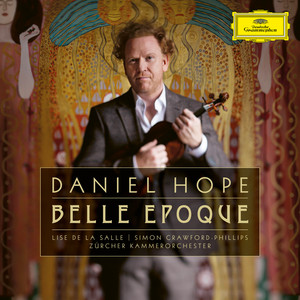 | Notturno for Strings and Harp | Arnold Schoenberg, Daniel Hope, Zürcher Kammerorchester, Jane Berthe | A♭ Major | 1 | 4B | 75 BPM | |
 | Sorochintsi Fair, Act I: Gopak (Hopak) | Modest Mussorgsky, Slovak Philharmonic, Kenneth Jean | G Major | 2 | 9B | 127 BPM | |
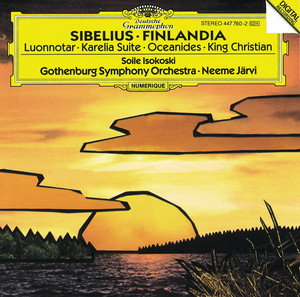 | Andante Festivo | Jean Sibelius, Gothenburg Symphony Orchestra, Neeme Järvi | G Major | 1 | 9B | 86 BPM | |
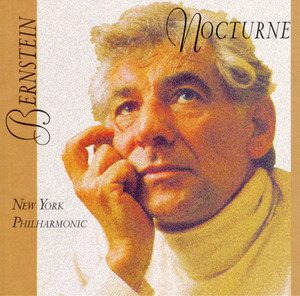 | Sir John in Love: Fantasia on Greensleeves | Ralph Vaughan Williams, Leonard Bernstein, New York Philharmonic, David Nadien | C Minor | 1 | 5A | 105 BPM | |
 | The Rite of Spring: Part One: Adoration of the Earth: The Augurs of Spring - Dance of the Young Girls | Igor Stravinsky, Teodor Currentzis, musicAeterna | B♭ Major | 3 | 6B | 120 BPM | |
 | Ruslan and Ludmila: Overture | Mikhail Glinka, The USSR Bolshoy Theatre Orchestra, Yevgeny Svetlanov | F Major | 3 | 7B | 81 BPM | |
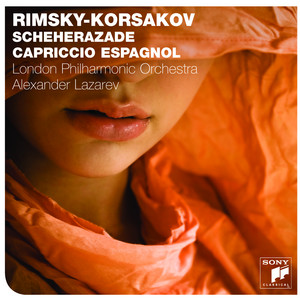 | Capriccio Espagnol: Alborada | Nikolai Rimsky-Korsakov, London Philharmonic Orchestra, Alexander Lazarev, Lars Hjalmar Joakim | A Major | 4 | 11B | 126 BPM | |
 | Piazzolla: Libertango (Arr. Milone for Trumpet and Orchestra) | Alison Balsom | A Minor | 3 | 8A | 150 BPM | |
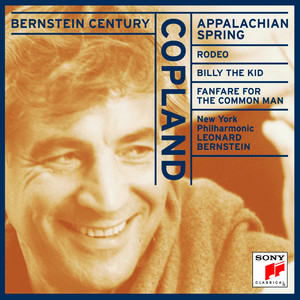 | Appalachian Spring: VII. Doppio movimento | Aaron Copland, Leonard Bernstein, New York Philharmonic | D♭ Major | 1 | 3B | 78 BPM | |
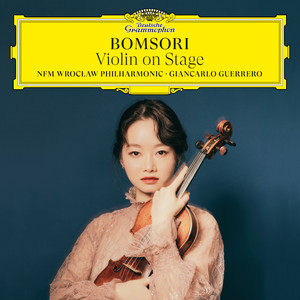 | Thaïs: Méditation | Jules Massenet, Bomsori, NFM Wrocław Philharmonic, Giancarlo Guerrero | D Major | 0 | 10B | 84 BPM | |
 | Dance of the goblins | Razvan Stoica | C Major | 4 | 8B | 177 BPM | |
 | Mahler: Blumine | Gustav Mahler, San Francisco Symphony, Michael Tilson Thomas | C Major | 1 | 8B | 100 BPM | |
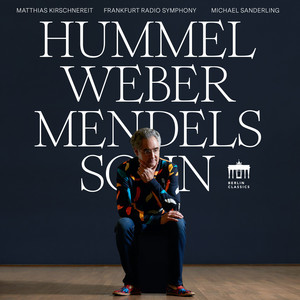 | Capriccio brillant, Op. 22: Andante | Felix Mendelssohn, Matthias Kirschnereit, Michael Sanderling, Frankfurt Radio Symphony Orchestra | B Major | 0 | 1B | 91 BPM | |
 | Prince Igor: Polovtsian Dances (Remastered): No. 17a, Polovtsian Dance. Introduzione. Andantino | Alexander Borodin, Leonard Bernstein, New York Philharmonic | A Major | 1 | 11B | 78 BPM | |
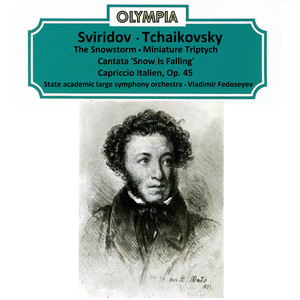 | The Snowstorm: II. Waltz | Georgy Sviridov, Vladimir Fedoseyev, State Academic Large Symphony Orchestra | A Major | 2 | 11B | 70 BPM | |
 | Don Quixote: Act I: Quiteria and Basilio | Ludwig Minkus, Sofia National Opera Orchestra, Nayden Todorov | E Minor | 0 | 9A | 178 BPM | |
 | Sarasate: Zigeunerweisen, Op. 20 | Pablo de Sarasate, Itzhak Perlman, Abbey Road Ensemble | C Minor | 1 | 5A | 83 BPM | |
 | Symphonie espagnole, Op. 21: I. Allegro non troppo | Édouard Lalo, Itzhak Perlman, Orchestre de Paris, Daniel Barenboim | D Minor | 1 | 7A | 75 BPM |
- ISRC
- NLA509700432
- Label
- L-M Records/RCA Records