- BPM
- 65
- Key
- C Major
- Camelot
- 8B
Battle of Britain Suite: II. March Introduction - March and Siegfried Music by William Walton, Sir Neville Marriner, Academy of St. Martin in the Fields Song Details
"Battle of Britain Suite: II. March Introduction - March and Siegfried Music" by William Walton, Sir Neville Marriner, Academy of St. Martin in the Fields had its release date on August 1, 1990. With this song being about 5 minutes long, at This song is fairly a long song compared to the average song length. This song does not have an "Explicit" tag, making it safe for all ages. This song is part of Walton: Film Music, Vol. 2 by William Walton, Sir Neville Marriner, Academy of St. Martin in the Fields. The song's track number on the album is #18 out of 18 tracks. Based on our data, United Kingdom was the country where this track was produced or recorded. Battle of Britain Suite: II. March Introduction - March and Siegfried Music is not that popular right now. In our opinion, the overall tone is not very danceable and projects negative sounds, such as being sad, depressed, or angry.
BPM and Tempo
Since Battle of Britain Suite: II. March Introduction - March and Siegfried Music by William Walton, Sir Neville Marriner, Academy of St. Martin in the Fields has a tempo of 65 beats per a minute, the tempo markings of this song would be Larghetto (rather broadly). With Battle of Britain Suite: II. March Introduction - March and Siegfried Music being at 65 BPM, the half-time would be 32 BPM with a double-time of 130 BPM.In addition, we consider the tempo speed to be pretty slow for this song. The time signature for this track is 4/4.
Music Key
The music key of this track is C Major. Or for those who are familiar with the camelot wheel, this song has a camelot key of 8B. So, the perfect camelot match for 8B would be either 8B or 9A. While, 9B can give you a low energy boost. For moderate energy boost, you would use 5B and a high energy boost can either be 10B or 3B. Though, if you want a low energy drop, you should looking for songs with either a camelot key of 8A or 7B will give you a low energy drop, 11B would be a moderate one, and 6B or 1B would be a high energy drop. Lastly, 5A allows you to change the mood.
Want to find the BPM and music key for other songs? Check out our BPM and Key Finder page!
- Popularity
- 12%
- Loudness
- -15.944 dB
- Acousticness
- 91%
- Danceability
- 14%
- Energy
- 26%
- Instrumentalness
- 90%
- Liveness
- 7%
- Loudness
- 73%
- Speechiness
- 4%
- Valence
- 14%
Recommendations
| Track | Artist | Key | Energy | Camelot | BPM | ||
|---|---|---|---|---|---|---|---|
 | Les biches Suite, FP 36b: III. Rag-Mazurka | Francis Poulenc, RTÉ National Symphony Orchestra, Jean-Luc Tingaud | E♭ Major | 0 | 5B | 69 BPM | |
 | Innuendo | Brass Band Willebroek, Frans Violet, Robby Boone, Simon Binon | E♭ Major | 3 | 5B | 101 BPM | |
 | Middlemarch | Stanley Myers | F Major | 2 | 7B | 87 BPM | |
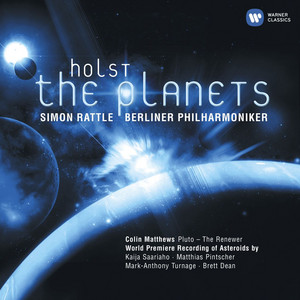 | The Planets - Suite for large orchestra, Op.32: I. Mars, the Bringer of War (Allegro) | Sir Simon Rattle, Berliner Philharmoniker | C Major | 3 | 8B | 153 BPM | |
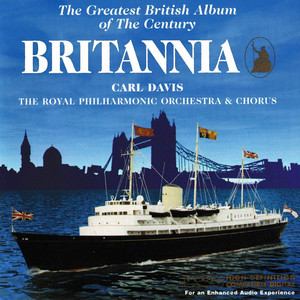 | Crown Imperial: Coronation March | William Walton, Royal Philharmonic Orchestra, Carl Davis | C Major | 5 | 8B | 112 BPM | |
 | Children's March "Over the Hills and Far Away" (Version for Wind Ensemble) | Percy Grainger, Royal Norwegian Navy Band, Bjarte Engeset | C Major | 2 | 8B | 99 BPM | |
 | Wagner: Die Meistersinger von Nürnberg: Vorspiel | Richard Wagner, Bavarian State Orchestra, Wolfgang Sawallisch | A♭ Major | 1 | 4B | 91 BPM | |
 | And the Band Played On | The Regimental Band of the Coldstream Guards, Major Graham O. Jones | E♭ Major | 4 | 5B | 131 BPM | |
 | Battle of Britain Suite: II. March Introduction - March and Siegfried Music | William Walton, Sir Neville Marriner, Academy of St. Martin in the Fields | C Major | 3 | 8B | 65 BPM | |
 | The Blue Danube Waltz | US Marine Band | E♭ Major | 2 | 5B | 108 BPM | |
 | The Pig and the Farmer | Melbourne Symphony Orchestra, Nigel Westlake | A♭ Major | 1 | 4B | 95 BPM | |
 | Void Whisper | Astrid Voix | D Major | 6 | 10B | 98 BPM | |
 | Holberg Suite, Op. 40: I. Praeludium. Allegro vivace | Edvard Grieg, Academy of St. Martin in the Fields, Sir Neville Marriner | G Major | 2 | 9B | 71 BPM | |
 | Fastnachts-Sinfonie: Tranquillo non troppo sostenuto (1) | Richard Flury, BBC Symphony Orchestra, Paul Mann | B♭ Major | 7 | 6B | 114 BPM | |
| The Planets - Suite for large orchestra, Op.32: VI. Uranus, the Magician (Allegro) | Sir Simon Rattle, Berliner Philharmoniker | C Major | 2 | 8B | 114 BPM | |
 | American Overture | Joseph Willcox Jenkins, Lone Star Wind Orchestra, Eugene Migliaro Corporon | F Major | 3 | 7B | 132 BPM | |
 | Variations on a theme by Haydn, Op. 56a "St. Anthony Variations": Finale | Johannes Brahms, Pittsburgh Symphony Orchestra, Marek Janowski | C Major | 1 | 8B | 60 BPM | |
 | I. The River | Johan de Meij, Danish Concert Band | G Minor | 3 | 6A | 109 BPM | |
 | Delius / Arr. Fenby: Koanga, Act II: La Calinda | Frederick Delius, Sir John Barbirolli, Hallé | E Minor | 4 | 9A | 116 BPM | |
 | The Land of the Mountain and the Flood, Op. 3 | Hamish MacCunn, Royal Ballet Sinfonia, John Wilson | B Major | 1 | 1B | 108 BPM | |
 | Gayaneh: Gayaneh's Adagio | Aram Khachaturian, Wiener Philharmoniker | A♭ Major | 0 | 4B | 82 BPM | |
 | Symphony No. 1 in E Minor: III. Juba Dance | Florence Beatrice Price, Fort Smith Symphony, John Jeter | F Major | 2 | 7B | 111 BPM | |
 | Waterloo: Andante alla marcia - Mosso, non troppo - | Nino Rota, Gianluigi Gelmetti, Monte-Carlo Philharmonic Orchestra | D Minor | 3 | 7A | 129 BPM | |
 | Symphony No. 1, RO 255 "La nuit des tropiques": II. Allegro moderato | Louis Moreau Gottschalk, Vienna State Opera Orchestra, Igor Buketoff | G Major | 1 | 9B | 117 BPM | |
 | Sibelius: Finlandia, Op. 26 | Jean Sibelius, Herbert von Karajan, Philharmonia Orchestra | A♭ Major | 2 | 4B | 109 BPM |
- ISRC
- GBLWD9007718
- Label
- L-M Records/RCA Records