- BPM
- 88
- Key
- F♯ Major
- Camelot
- 2B
Amusement de Bellone: Les Dolgelsheim by Esprit Philippe Chédeville, Françoise Bois-Poteur, Mario Raskin, André Gabriel Song Details
On May 15, 1988, the song "Amusement de Bellone: Les Dolgelsheim" was released by Esprit Philippe Chédeville, Françoise Bois-Poteur, Mario Raskin, André Gabriel. The duration of This song is about two minutes long, specifically at 2:10. This song does not appear to have any foul language. Amusement de Bellone: Les Dolgelsheim's duration is considered a little bit shorter than the average duration of a typical track. The track order of this song in Françoise Bois-Poteur, Mario Raskin, André Gabriel's "La vielle à roue baroque" album is number 3 out of 29. On top of that, France appears to be the country where this track was created. Amusement de Bellone: Les Dolgelsheim is unknown right now. The mood doesn't appear to be that danceable, but it still produces a high amount of positive energy.
BPM and Tempo
We consider the tempo marking of Amusement de Bellone: Les Dolgelsheim by Esprit Philippe Chédeville, Françoise Bois-Poteur, Mario Raskin, André Gabriel to be Andante (at a walking pace) because the track has a tempo of 88 BPM, a half-time of 44BPM, and a double-time of 176 BPM. Based on that, the speed of the song's tempo is slow. Activities such as, yoga or pilates, can go well with this song. The time signature for this track is 4/4.
Music Key
F♯ Major is the music key of this track. This also means that this song has a camelot key of 2B. So, the perfect camelot match for 2B would be either 2B or 3A. While, 3B can give you a low energy boost. For moderate energy boost, you would use 11B and a high energy boost can either be 4B or 9B. Though, if you want a low energy drop, you should looking for songs with either a camelot key of 2A or 1B will give you a low energy drop, 5B would be a moderate one, and 12B or 7B would be a high energy drop. Lastly, 11A allows you to change the mood.
Want to find the BPM and music key for other songs? Check out our BPM and Key Finder page!
- Popularity
- 0%
- Loudness
- -12.926 dB
- Acousticness
- 96%
- Danceability
- 26%
- Energy
- 69%
- Instrumentalness
- 88%
- Liveness
- 13%
- Loudness
- 78%
- Speechiness
- 4%
- Valence
- 97%
Recommendations
| Track | Artist | Key | Energy | Camelot | BPM | ||
|---|---|---|---|---|---|---|---|
 | Il primo libro de balli: Pass'e mezzo Moderno | Giorgio Mainerio, Paul Beier, Galatea | C Major | 1 | 8B | 120 BPM | |
 | Sonata II In G Minor: I. Grave (Muffat) | Georg Muffat, Masques, Olivier Fortin | F♯ Minor | 0 | 11A | 132 BPM | |
 | Passamezzo moderno: Recercada tercera | Diego Ortiz, Mika Suihkonen, Ballo della Battalia | E Major | 3 | 12B | 126 BPM | |
 | Bibliothèque municipale de Tournus: Prélude in D Minor, Page 2 | Monsieur de Sainte-Colombe, Friederike Heumann | B♭ Minor | 0 | 3A | 97 BPM | |
 | Guillims Dumpe | Anonymous, The Musicians of Swanne Alley | F♯ Major | 0 | 2B | 133 BPM | |
 | Acceso mio cuore (Ciaconna) | Francesco Manelli, Capella De La Torre, Katharina Bauml | C Major | 0 | 8B | 109 BPM | |
 | L’Eroica | Andrea Falconieri, United Continuo Ensemble, Jan Van Elsacker | G Major | 3 | 9B | 117 BPM | |
 | Concerto grosso No. 2 in G Major: I. Largo (After D. Scarlatti) | Charles Avison, Avison Ensemble, Pavlo Beznosiuk | F♯ Major | 1 | 2B | 87 BPM | |
 | Diferencias sobre la Gallarda Milanesa (Arr. For instrumental ensemble) | Antonio de Cabezón, Accentus Ensemble, Thomas Wimmer | D♭ Minor | 0 | 12A | 42 BPM | |
 | In convertendo Dominus | Sébastien de Brossard, Ensemble Baroque De Limoges, Christophe Coin | A Major | 2 | 11B | 151 BPM | |
 | Love's Goddess Sure Was Blind "Birthday Ode for Queen Mary", Z. 331: May Her Blest Example Chase - Tune "Hey Boys, up Go We: Jig - Suite for Strings in G Major, Z. 770: Borry | Henry Purcell, Les Musiciens De Saint-Julien, François Lazarevitch | D♭ Minor | 3 | 12A | 93 BPM | |
 | Concerto No. 1 in D Major, SF 936 "La Cetra": II. Larghetto | Alessandro Marcello, Gruppo Instrumentale di Roma, Giorgio Sasso | D♭ Major | 1 | 3B | 106 BPM | |
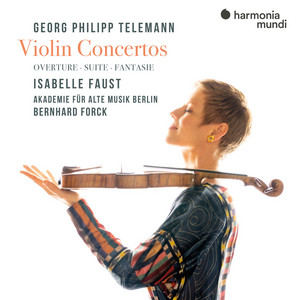 | Violin Concerto in A Major, TWV 51:A4 "Die Relinge": III. Menuet - Alternativement | Georg Philipp Telemann, Isabelle Faust, Akademie für Alte Musik Berlin, Bernhard Forck | D♭ Major | 3 | 3B | 140 BPM | |
 | Concerto in E Minor for Violin, Flute and Strings, TWV 52:E3: II. Adagio | Georg Philipp Telemann, Florilegium, Ashley Solomon, Rachel Podger | F Major | 2 | 7B | 176 BPM | |
 | Atys, LWV 53, Prologue: Deuxième air pour la suite de Flore (I) | Jean-Baptiste Lully, Les Ambassadeurs ~ La Grande Écurie, Alexis Kossenko | F Major | 2 | 7B | 176 BPM | |
 | Sonata & Suite in B-Dur, BuxWV 273: Sonata & Suite in B-Dur, BuxWV 273: II. Adagio-Allegro-Poco adagio-Allegro | Dietrich Buxtehude, La Rêveuse, Benjamin Perrot, Florence Bolton, Sébastien Wonner | A Major | 2 | 11B | 100 BPM | |
 | Sinfonie a cinque per due violini, alto, tenore, violoncello e basso, Op. 2. Sonata a cinque in C Major, No. 2: III. Grave | Tomaso Albinoni, Ensemble 415, Chiara Banchini | A♭ Major | 3 | 4B | 132 BPM | |
 | Viola da gamba Sonata in G Minor, A2:56a: III. Tempo di minuet | Carl Friedrich Abel, Paolo Pandolfo, Amelie Chemin, Andrea Buccarella, Thomas Boysen | F♯ Minor | 2 | 11A | 150 BPM | |
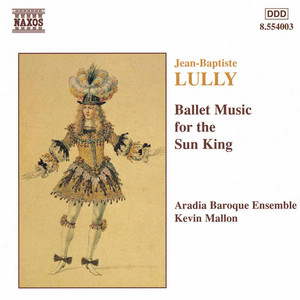 | Intermedes de Xerxes: Air pour les Paysans et Paysanes | Jean-Baptiste Lully, Mary Enid Haines, Sharla Nafziger, Aradia Ensemble, Kevin Mallon | D♭ Major | 0 | 3B | 67 BPM | |
 | Mystery Sonata No. 9 "Jesus Carries the Cross": I. Sonata | Heinrich Ignaz Franz von Biber, Sirkka-Liisa Kaakinen-Pilch, Battalia | A♭ Minor | 1 | 1A | 110 BPM | |
 | String Sonata à 5 in G Minor, Op. 2 No. 11: III. Grave | Tomaso Albinoni, Ensemble Masques, Olivier Fortin, Sophie Gent, Kathleen Kajioka | F♯ Major | 2 | 2B | 122 BPM | |
 | Sonatille No. 3 in C Minor, Op. 6 No. 3 (Version for Oboe & Continuo): IV. Gigue | Esprit Philippe Chédeville, Jacques Vandeville, William Christie, Mariijke Verberne | F Major | 2 | 7B | 176 BPM | |
 | Suite in G Minor: I. Allemande | Monsieur de Sainte-Colombe, François Joubert-Caillet, L'Achéron | E♭ Minor | 1 | 2A | 114 BPM | |
 | Recercada sobre tenore | Diego Ortiz, Hille Perl | G Major | 1 | 9B | 139 BPM | |
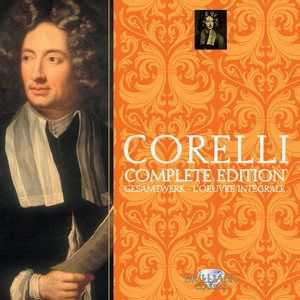 | Sonata No. 2 in E Minor, Op. 1: III. Adagio | Arcangelo Corelli, Rémy Baudet, Sayuri Yamagata, Albert Brüggen, Mike Fentross, Pieter-Jan Belder | D Minor | 1 | 7A | 140 BPM |
- ISRC
- FRZ178702720
- Label
- L-M Records/RCA Records