- BPM
- 80
- Key
- F Major
- Camelot
- 7B
Appalachian Spring Suite: II. Allegro by Aaron Copland, Los Angeles Philharmonic, Zubin Mehta Song Details
"Appalachian Spring Suite: II. Allegro" by Aaron Copland, Los Angeles Philharmonic, Zubin Mehta had its release date on January 1, 1996. The duration of This song is about two minutes long, specifically at 2:49. This song does not appear to have any foul language. Appalachian Spring Suite: II. Allegro's duration is considered a little bit shorter than the average duration of a typical track. The song is number 3 out of 30 in Copland: Appalachian Spring; Lincoln Portrait; Fanfare; Rodeo, etc. by Aaron Copland, Zubin Mehta, Antal Doráti, Traditional, Sir Neville Marriner. Going off of the ISRC code of this track, we detected that the origin of this track is from United Kingdom. Appalachian Spring Suite: II. Allegro is not that popular right now. In our opinion, the overall tone is not very danceable and projects negative sounds, such as being sad, depressed, or angry.
BPM and Tempo
The tempo marking of Appalachian Spring Suite: II. Allegro by Aaron Copland, Los Angeles Philharmonic, Zubin Mehta is Andante (at a walking pace), since this song has a tempo of 80 BPM. With that information, we can conclude that the song has a slow tempo. The time signature for this track is 4/4.
Music Key
F Major is the music key of this track. This also means that this song has a camelot key of 7B. So, the perfect camelot match for 7B would be either 7B or 8A. While, 8B can give you a low energy boost. For moderate energy boost, you would use 4B and a high energy boost can either be 9B or 2B. Though, if you want a low energy drop, you should looking for songs with either a camelot key of 7A or 6B will give you a low energy drop, 10B would be a moderate one, and 5B or 12B would be a high energy drop. Lastly, 4A allows you to change the mood.
Want to find the BPM and music key for other songs? Check out our BPM and Key Finder page!
- Popularity
- 14%
- Loudness
- -17.313 dB
- Acousticness
- 92%
- Danceability
- 39%
- Energy
- 18%
- Instrumentalness
- 84%
- Liveness
- 20%
- Loudness
- 71%
- Speechiness
- 5%
- Valence
- 15%
Recommendations
| Track | Artist | Key | Energy | Camelot | BPM | ||
|---|---|---|---|---|---|---|---|
 | Symphony No. 1 in D Major, Op. 25 "Classical Symphony": IV. Finale. Molto vivace | Sergei Prokofiev, Chamber Orchestra of Europe, Claudio Abbado | D Major | 2 | 10B | 84 BPM | |
 | Copland: Symphony No. 3: III. Andantino quasi allegretto - | Aaron Copland, San Francisco Symphony, Michael Tilson Thomas | E Minor | 0 | 9A | 71 BPM | |
 | Symphony No. 1, "Afro-american": Iii. Humor (Animato) | William Grant Still, Fort Smith Symphony | A♭ Major | 2 | 4B | 127 BPM | |
 | Respighi: Pini di Roma, P. 141: IV. I pini della Via Appia | Ottorino Respighi, Riccardo Muti, Philadelphia Orchestra | B Major | 2 | 1B | 87 BPM | |
 | Two Songs Without Words, Op. 22: I. Country Song | Gustav Holst, Richard Hickox, City of London Sinfonia | G Major | 0 | 9B | 82 BPM | |
 | Symphony No. 2 in B Minor: I. Allegro | Alexander Borodin, Carlos Kleiber, Radio Sinfonieorchester Stuttgart des SWR | G Major | 3 | 9B | 137 BPM | |
 | Menuet antique, M. 7 (Version for Orchestra) | Maurice Ravel, フランス国立リヨン管弦楽団, レナード・スラットキン | D♭ Minor | 0 | 12A | 73 BPM | |
 | The Planets, Op. 32: VII. Neptune, the Mystic | Gustav Holst, Los Angeles Master Chorale, Los Angeles Philharmonic, Zubin Mehta | F Major | 4 | 7B | 89 BPM | |
 | Holberg Suite, Op. 40: III. Gavotte. Allegretto | Edvard Grieg, Academy of St. Martin in the Fields, Sir Neville Marriner | G Major | 1 | 9B | 79 BPM | |
 | Concerto for Orchestra, Sz. 116: V. Finale. Pesante – Presto | Béla Bartók, Chicago Symphony Orchestra, Pierre Boulez | A♭ Major | 2 | 4B | 127 BPM | |
 | Hungarian Dance No. 1 in G Minor, WoO 1/1. Allegro molto (Orch. by Brahms) | Johannes Brahms, Chicago Symphony Orchestra, Daniel Barenboim | G Minor | 2 | 6A | 65 BPM | |
 | Romance | Gerald Finzi, Royal Ballet Sinfonia, David Lloyd-Jones | A♭ Major | 1 | 4B | 106 BPM | |
 | The Planets, Op. 32: VII. Neptune, the Mystic | Gustav Holst, SWR Vokalensemble Stuttgart, Staatsopernchor Stuttgart, Radio Sinfonieorchester Stuttgart des SWR, Sir Roger Norrington | E Major | 0 | 12B | 176 BPM | |
 | VII. Finale | Igor Stravinsky, Brussels Philharmonic, Alexander Rahbari | D♭ Minor | 3 | 12A | 81 BPM | |
 | Nocturnes, L. 91: No. 1, Nuages | Claude Debussy, Esa-Pekka Salonen, Los Angeles Philharmonic | C Major | 0 | 8B | 91 BPM | |
 | The Firebird Suite (1919 Version): I. Introduction | Igor Stravinsky, Leonard Bernstein, New York Philharmonic | C Minor | 0 | 5A | 87 BPM | |
 | Petite Suite (Orchestrated by Glazunov): II. Intermezzo | Alexander Borodin, Gennady Rozhdestvensky, Royal Stockholm Philharmonic Orchestra | A Major | 4 | 11B | 80 BPM | |
 | Sibelius: Symphony No. 1 in E Minor, Op. 39: III. Scherzo. Allegro | Jean Sibelius, Paavo Berglund, Helsinki Philharmonic Orchestra | C Major | 2 | 8B | 109 BPM | |
 | Symphony No. 3: II. Allegro molto | Aaron Copland, New York Philharmonic, Leonard Bernstein | G Minor | 1 | 6A | 65 BPM | |
 | Scheherazade: Calm - the triumph of Scheherazade | Nikolai Rimsky-Korsakov, Lars Hjalmar Joakim | E Minor | 0 | 9A | 68 BPM | |
| The Planets, Op. 32: VI. Uranus, the Magician | Gustav Holst, Los Angeles Philharmonic, Zubin Mehta | C Major | 3 | 8B | 58 BPM | |
 | Symphony No.3 In D Minor / Part 1: 1. - Tempo I - Live | Gustav Mahler, New York Philharmonic, Leonard Bernstein | F Major | 0 | 7B | 117 BPM | |
| The Firebird Suite (1919 Version): VII. Finale | Igor Stravinsky, Leonard Bernstein, New York Philharmonic | D♭ Minor | 2 | 12A | 73 BPM | |
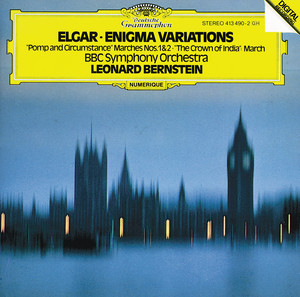 | Variations On An Original Theme, Op.36 "Enigma": 10. Intermezzo: Dorabella (Allegretto) | Edward Elgar, BBC Symphony Orchestra, Leonard Bernstein | G Major | 0 | 9B | 73 BPM | |
 | Lyric Suite, Op. 54: II. Gangar (Norwegian March): Allegretto marciale | Edvard Grieg, Bergen Philharmonic Orchestra, Ole Kristian Ruud | D Major | 0 | 10B | 83 BPM |
- ISRC
- GBF077610372
- Label
- L-M Records/RCA Records