- BPM
- 106
- Key
- A♭ Major
- Camelot
- 4B
Die Nachtigall, Op.59, No.4 by Felix Mendelssohn, Dresdner Kreuzchor, Roderich Kreile Song Details
"Die Nachtigall, Op.59, No.4" by Felix Mendelssohn, Dresdner Kreuzchor, Roderich Kreile had its release date on January 1, 2001. With This song being less than two minutes long, at 1:44, we are fairly confident that this song is not explicit and is safe for all ages. Based on the duration of this song, this song duration is much smaller than the average song duration. There are a total of 25 in the song's album "O Musica - Madrigale & Volkslieder". In this album, this song's track order is #22. Furthermore, we believe that the track originated from Germany. In terms of popularity, Die Nachtigall, Op.59, No.4 is currently not that popular. In our opinion, the overall tone is not very danceable and projects negative sounds, such as being sad, depressed, or angry.
BPM and Tempo
With Die Nachtigall, Op.59, No.4 by Felix Mendelssohn, Dresdner Kreuzchor, Roderich Kreile having a BPM of 106 with a half-time of 53 BPM and a double-time of 212 BPM, we would consider this track to have a Andante (at a walking pace) tempo marking. Because of this, we believe that the song has an overall slow tempo. The time signature for this track is 4/4.
Music Key
A♭ Major is the music key of this track. Or for those who are familiar with the camelot wheel, this song has a camelot key of 4B. So, the perfect camelot match for 4B would be either 4B or 5A. While, 5B can give you a low energy boost. For moderate energy boost, you would use 1B and a high energy boost can either be 6B or 11B. Though, if you want a low energy drop, you should looking for songs with either a camelot key of 4A or 3B will give you a low energy drop, 7B would be a moderate one, and 2B or 9B would be a high energy drop. Lastly, 1A allows you to change the mood.
Want to find the BPM and music key for other songs? Check out our BPM and Key Finder page!
- Popularity
- 2%
- Loudness
- -30.714 dB
- Acousticness
- 99%
- Danceability
- 28%
- Energy
- 2%
- Instrumentalness
- 0%
- Liveness
- 10%
- Loudness
- 49%
- Speechiness
- 5%
- Valence
- 8%
Recommendations
| Track | Artist | Key | Energy | Camelot | BPM | ||
|---|---|---|---|---|---|---|---|
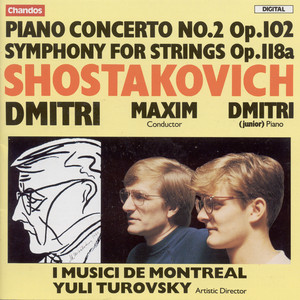 | Piano Concerto No. 2 in F Major, Op. 102: I. Allegro | Dmitri Shostakovich, I Musici de Montréal, Maxim Shostakovich | B♭ Major | 3 | 6B | 160 BPM | |
 | Carnaval, Op. 9: XII. Chopin | Robert Schumann, Daniil Trifonov | E Major | 0 | 12B | 68 BPM | |
 | II. Dumka (Arr. P. Breiner for Piano) | Antonín Dvořák, Peter Breiner | B Minor | 0 | 10A | 71 BPM | |
 | Piano Concerto No. 3 in D Minor, Op. 30: II. Intermezzo - Adagio | Sergei Rachmaninoff, Khatia Buniatishvili, Paavo Järvi, Czech Philharmonic | D♭ Major | 0 | 3B | 69 BPM | |
 | Thaïs: Méditation | Jules Massenet, Bomsori, NFM Wrocław Philharmonic, Giancarlo Guerrero | D Major | 0 | 10B | 84 BPM | |
 | Nocturnes, Op. 27: No. 2 in D-Flat Major | Frédéric Chopin, Arthur Rubinstein | D♭ Major | 0 | 3B | 77 BPM | |
 | Etude-fantasie in E-Flat Major, Op. 4, "Les Vagues" | Vladimir Horowitz, Valery Kuleshov | G Minor | 1 | 6A | 67 BPM | |
 | Zdes' khorosho ('How Fair This Spot'), Op. 21, No. 7 | Sergei Rachmaninoff, Pablo Ferrandez, Denis Kozhukhin | A Major | 0 | 11B | 87 BPM | |
 | Myrthen, Op. 25 - Version for Cello and Piano: XXIV. Du bist wie eine Blume | Robert Schumann, Kian Soltani, Aaron Pilsan | F Major | 0 | 7B | 116 BPM | |
 | Piano Sonata No.8 In C Minor, Op.13 -"Pathétique": 2. Adagio cantabile | Ludwig van Beethoven, Daniel Barenboim | A♭ Major | 0 | 4B | 179 BPM | |
 | 8 Pièces brèves, Op. 84: No. 5, Improvisation in C-Sharp Minor | Gabriel Fauré, Christine Croshaw | F♯ Minor | 0 | 11A | 70 BPM | |
 | Piano Concerto in A Minor, Op. 7: Romanze. Andante non troppo con grazia | Clara Schumann, Francesco Nicolosi, Alma Mahler Sinfonietta, Stefania Rinaldi | A♭ Major | 0 | 4B | 74 BPM | |
 | Saint-Saëns: Piano Concerto No. 2 in G Minor, Op. 22: II. Allegro scherzando | Camille Saint-Saëns, Bertrand Chamayou, Emmanuel Krivine, Orchestre National De France | F♯ Minor | 0 | 11A | 84 BPM | |
 | 3 Études de Concert, S. 144: No. 3 in D-Flat Major "Un sospiro" | Franz Liszt, Daniil Trifonov | D♭ Major | 1 | 3B | 76 BPM | |
 | Elgar: Salut d'amour, Op. 12 | Edward Elgar, Min Kym, Gordon Back | E Major | 1 | 12B | 86 BPM | |
 | Orfeo ed Euridice, Wq. 30: Dance of the Blessed Spirits "Melody" (Arr. Sgambati for Piano) | Christoph Willibald Gluck, Yuja Wang | D Minor | 0 | 7A | 70 BPM | |
 | 3 Romances sans paroles, Op. 17: No. 3 in A-Flat Major (Arr. P. Gouin for Cello & Piano) | Gabriel Fauré, Jesper Svedberg, Simon Crawford-Phillips | A Major | 0 | 11B | 79 BPM | |
 | Prelude & Fugue in C Minor (Well-Tempered Clavier, Book I, No. 2), BWV 847: I. Prelude | Johann Sebastian Bach, Víkingur Ólafsson | C Minor | 2 | 5A | 65 BPM | |
 | Songs Without Words, Book VI Opus 67: No. 2 in F-Sharp Minor | Felix Mendelssohn, Bertrand Chamayou | F♯ Minor | 1 | 11A | 69 BPM | |
 | 6 Violin Sonatas, Op. 10b No. 3 in D Minor, J. 101: I. Air russe. Allegretto moderato | Carl Maria von Weber, Nino Gvetadze, Frederieke Saeijs | D Minor | 1 | 7A | 113 BPM | |
 | Scottish Fantasy for Violin and Orchestra, Op. 46: I. Introduction: Grave, Adagio cantabile | Max Bruch, Joshua Bell, Academy of St. Martin in the Fields | E♭ Major | 2 | 5B | 60 BPM | |
 | Pavane, Op. 50 (Version for Piano) | Gabriel Fauré, Jorge Federico Osorio | F♯ Minor | 0 | 11A | 75 BPM | |
 | Mahler: Symphony No. 5 in C-Sharp Minor: IV. Adagietto. Sehr langsam | Gustav Mahler, Daniel Barenboim, Chicago Symphony Orchestra | F Major | 1 | 7B | 82 BPM | |
 | The Well-Tempered Clavier, Book 1: Prelude & Fugue No. 2 in C Minor, BWV 847 | Johann Sebastian Bach, András Schiff | C Minor | 3 | 5A | 90 BPM | |
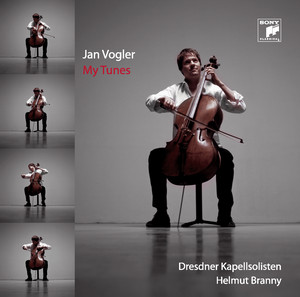 | Kol Nidrei, Op. 47 | Max Bruch, Jan Vogler, Helmut Branny | D Major | 1 | 10B | 136 BPM |
- ISRC
- DEF059831922
- Label
- L-M Records/RCA Records