- BPM
- 94
- Key
- G Minor
- Camelot
- 6A
Variations for Piano, Violin and Violoncello on "Ich bin der Schneider Kakadu" in G Major, Op. 121a: Variation IX by Isaac Stern, Leonard Rose, Eugene Istomin Song Details
"Variations for Piano, Violin and Violoncello on "Ich bin der Schneider Kakadu" in G Major, Op. 121a: Variation IX" by Isaac Stern, Leonard Rose, Eugene Istomin had its release date on 1965. The duration of This song is about two minutes long, specifically at 2:12. This song does not appear to have any foul language. Variations for Piano, Violin and Violoncello on "Ich bin der Schneider Kakadu" in G Major, Op. 121a: Variation IX's duration is considered a little bit shorter than the average duration of a typical track. The track order of this song in Isaac Stern's "Isaac Stern plays Beethoven - Sony Classical Masters" album is number 14 out of 103. In terms of popularity, Variations for Piano, Violin and Violoncello on "Ich bin der Schneider Kakadu" in G Major, Op. 121a: Variation IX is currently not that popular. In our opinion, the overall tone is not very danceable and projects negative sounds, such as being sad, depressed, or angry.
BPM and Tempo
We consider the tempo marking of Variations for Piano, Violin and Violoncello on "Ich bin der Schneider Kakadu" in G Major, Op. 121a: Variation IX by Isaac Stern, Leonard Rose, Eugene Istomin to be Andante (at a walking pace) because the track has a tempo of 94 BPM, a half-time of 47BPM, and a double-time of 188 BPM. Based on that, the speed of the song's tempo is slow. Activities such as, yoga or pilates, can go well with this song. The time signature for this track is 4/4.
Music Key
This song is in the music key of G Minor. Because this track belongs in the G Minor key, the camelot key is 6A. So, the perfect camelot match for 6A would be either 6A or 5B. While, a low energy boost can consist of either 6B or 7A. For moderate energy boost, you would use 3A and a high energy boost can either be 8A or 1A. However, if you are looking for a low energy drop, finding a song with a camelot key of 5A would be a great choice. Where 9A would give you a moderate drop, and 4A or 11A would be a high energy drop. Lastly, 9B allows you to change the mood.
Want to find the BPM and music key for other songs? Check out our BPM and Key Finder page!
- Popularity
- 2%
- Loudness
- -25.104 dB
- Acousticness
- 96%
- Danceability
- 30%
- Energy
- 7%
- Instrumentalness
- 88%
- Liveness
- 38%
- Loudness
- 58%
- Speechiness
- 3%
- Valence
- 12%
Recommendations
| Track | Artist | Key | Energy | Camelot | BPM | ||
|---|---|---|---|---|---|---|---|
 | Jazz Suite No. 1: I. Waltz | Dmitri Shostakovich, Russian State Symphony Orchestra, Dmitry Yablonsky | E♭ Major | 1 | 5B | 173 BPM | |
 | Cello Concerto No. 1 in A Minor, Op. 33: I. Allegro non troppo | Camille Saint-Saëns, Mischa Maisky, Orpheus Chamber Orchestra | F Major | 2 | 7B | 131 BPM | |
 | Violin Concerto No. 1 in G Minor, Op. 26: II. Adagio | Max Bruch, Itzhak Perlman, Bernard Haitink, Royal Concertgebouw Orchestra | E♭ Major | 1 | 5B | 87 BPM | |
 | Prélude in C-Sharp Minor, Op. 3, No. 2 | Sergei Rachmaninoff | F♯ Minor | 1 | 11A | 115 BPM | |
 | Sorochintsi Fair, Act I: Gopak (Hopak) | Modest Mussorgsky, Slovak Philharmonic, Kenneth Jean | G Major | 2 | 9B | 127 BPM | |
 | Sonata for Fortepiano, Flute and Violin in C Major Wf VIII/3: II. Andante | Johann Christoph Friedrich Bach, Jean-Pierre Rampal, John Steele Ritter, Isaac Stern | G Major | 2 | 9B | 114 BPM | |
| Musical Offering, Op. 6, BWV 1079: Trio Sonata for Flute, Violin and Basso continuo in C Minor: I. Largo | Johann Sebastian Bach, Jean-Pierre Rampal, John Steele Ritter, Isaac Stern, Leslie Parnas | C Minor | 2 | 5A | 168 BPM | |
 | Salut d'Amour, Op. 12 | Edward Elgar, Yo-Yo Ma, Kathryn Stott | D Major | 0 | 10B | 73 BPM | |
 | String Quintet in E Major, G. 275: III. Minuetto - Trio | Luigi Boccherini, Cuarteto Casals, Eckart Runge | A Major | 0 | 11B | 127 BPM | |
 | Die Walküre, Act III: Ride of the Valkyries | Richard Wagner, Budapest Symphony Orchestra, György Lehel | D♭ Major | 1 | 3B | 72 BPM | |
 | Solfeggio in C Minor, Wq. 117/2, H. 220 | Carl Philipp Emanuel Bach, Matthias Veit | F Minor | 1 | 4A | 73 BPM | |
 | Cantabile, MS 109/Op. 17 (Arr. for Cello and Guitar) | Niccolò Paganini, Jan Vogler | D Major | 3 | 10B | 124 BPM | |
 | Violin Concerto No. 2 in B Minor, Op. 7 La Campanella: III. Rondo à la clochette | Niccolò Paganini, Philippe Quint, Dmitriy Cogan | B Minor | 2 | 10A | 113 BPM | |
 | Carmen Suite No. 2: IV. Chanson du toréador (Act II) | Georges Bizet, Orchestre Symphonique de Montréal, Charles Dutoit | F Major | 2 | 7B | 116 BPM | |
 | Chopin: Piano Sonata No. 2 in B-Flat Minor, Op. 35 "Funeral March": III. Marche funèbre. Lento | Frédéric Chopin, Leif Ove Andsnes | D♭ Major | 0 | 3B | 66 BPM | |
 | Fantasie-impromptu in C-Sharp Minor, Op. 66 No. 4 | Frédéric Chopin, Arthur Rubinstein | D♭ Major | 1 | 3B | 82 BPM | |
 | Dvorák: Violin Concerto in A Minor, Op. 53, B. 108: I. Allegro, ma non troppo | Antonín Dvořák, Itzhak Perlman, Daniel Barenboim, London Philharmonic Orchestra | A Minor | 2 | 8A | 103 BPM | |
 | Sonata for Violin and Piano in F Major, Op. 24 "Spring": II. Adagio molto espressivo | Isaac Stern | B♭ Major | 0 | 6B | 84 BPM | |
 | Elgar: Cello Concerto in E Minor, Op. 85: I. Adagio - Moderato | Edward Elgar, Jacqueline du Pré, London Symphony Orchestra, Sir John Barbirolli | E Minor | 1 | 9A | 96 BPM | |
 | Symphony No. 10 in E Minor, Op. 93: II. Allegro | Dmitri Shostakovich, Royal Liverpool Philharmonic Orchestra, Vasily Petrenko | B♭ Minor | 6 | 3A | 89 BPM | |
 | Gayane Suite No. 2: VI. Sabre Dance | Aram Khachaturian, St. Petersburg State Symphony Orchestra, Andre Anichanov | E♭ Major | 8 | 5B | 91 BPM | |
 | 6 Consolations, S. 172: No. 3 in D-Flat Major (Lento, placido) | Franz Liszt, Daniel Barenboim | D♭ Major | 0 | 3B | 69 BPM | |
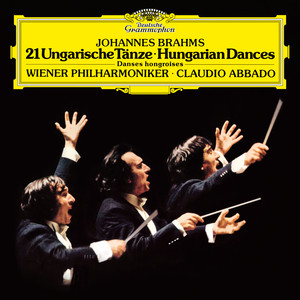 | 21 Hungarian Dances, WoO 1: Hungarian Dance No. 3 in F Major. Allegretto (Orch. Brahms) | Johannes Brahms, Wiener Philharmoniker, Claudio Abbado | F Major | 0 | 7B | 77 BPM | |
 | Strauss Jr., J.: Frühlingsstimmen, Op. 410 (Excerpt) | Johann Strauss II, Wiener Johann Strauss Orchester, Willi Boskovsky | B♭ Major | 1 | 6B | 112 BPM | |
 | Orfeo ed Euridice, Wq. 30: Dance Of The Furies | Christoph Willibald Gluck, Orpheus Chamber Orchestra | D Minor | 4 | 7A | 150 BPM |
- ISRC
- This song does not have an ISRC.
- Label
- L-M Records/RCA Records