- BPM
- 93
- Key
- A Minor
- Camelot
- 8A
Nobilissima Visione: I. Einleitung und Rondo by Paul Hindemith, Berliner Philharmoniker, Claudio Abbado Song Details
"Nobilissima Visione: I. Einleitung und Rondo" by Paul Hindemith, Berliner Philharmoniker, Claudio Abbado had its release date on January 1, 1995. Since This song is still less than 10 minute long, it is still considered a pretty long duration song compared to the average song length. This song does not appear to be explicit due to the lack of the "E" tag. The track order of this song in Paul Hindemith, Berliner Philharmoniker, Claudio Abbado's "Hindemith: "Mathis der Maler"; Nobilissima Visione; Symphonic Metamorphoses" album is number 4 out of 10. In terms of popularity, Nobilissima Visione: I. Einleitung und Rondo is currently not that popular. In our opinion, the overall tone is not very danceable and projects negative sounds, such as being sad, depressed, or angry.
BPM and Tempo
We consider the tempo marking of Nobilissima Visione: I. Einleitung und Rondo by Paul Hindemith, Berliner Philharmoniker, Claudio Abbado to be Andante (at a walking pace) because the track has a tempo of 93 BPM, a half-time of 46BPM, and a double-time of 186 BPM. Based on that, the speed of the song's tempo is slow. Activities such as, yoga or pilates, can go well with this song. The time signature for this track is 4/4.
Music Key
This song has a musical key of A Minor. Because this track belongs in the A Minor key, the camelot key is 8A. So, the perfect camelot match for 8A would be either 8A or 7B. While, a low energy boost can consist of either 8B or 9A. For moderate energy boost, you would use 5A and a high energy boost can either be 10A or 3A. However, if you are looking for a low energy drop, finding a song with a camelot key of 7A would be a great choice. Where 11A would give you a moderate drop, and 6A or 1A would be a high energy drop. Lastly, 11B allows you to change the mood.
Want to find the BPM and music key for other songs? Check out our BPM and Key Finder page!
- Popularity
- 3%
- Loudness
- -28.265 dB
- Acousticness
- 94%
- Danceability
- 11%
- Energy
- 4%
- Instrumentalness
- 88%
- Liveness
- 8%
- Loudness
- 53%
- Speechiness
- 4%
- Valence
- 5%
Recommendations
| Track | Artist | Key | Energy | Camelot | BPM | ||
|---|---|---|---|---|---|---|---|
 | Symphonic Metamorphosis of Themes by Carl Maria von Weber: I. Allegro | Paul Hindemith, WDR Sinfonieorchester Köln, Marek Janowski | E Minor | 3 | 9A | 119 BPM | |
 | Suite, Op. 157b: II. Divertissement | Darius Milhaud, Jean-Marc Fessard, Frédéric Pélassy, Eliane Reyes | F♯ Major | 0 | 2B | 82 BPM | |
 | Violin Sonata No. 3 in C Minor, Op. 45: III. Allegro animato | Edvard Grieg, Frederic Chiu, Pierre Amoyal | D Minor | 2 | 7A | 148 BPM | |
 | Poulenc: Concerto for Two Pianos in D Minor, FP 61: I. Allegro ma non troppo | Francis Poulenc, James Conlon, Rotterdam Philharmonic Orchestra | E♭ Major | 1 | 5B | 103 BPM | |
 | Le roi d'Ys, Act III: Vainement, ma bien-aimiee, "Aubade" (arr. J. Szigeti for violin) | Joseph Szigeti, Édouard Lalo, Livia Sohn, Benjamin Loeb | D Major | 0 | 10B | 82 BPM | |
 | Der Schwanendreher · Konzert nach alten Volksliedern für Viola und kleines Orchester: III. Variationen über "Seid ihr nicht der Schwanendreher" | Paul Hindemith, Tabea Zimmermann, David Shallon, Bayerischer Rundfunk, Bavarian Radio Symphony Orchestra | C Major | 1 | 8B | 90 BPM | |
 | Langsamer Satz | Anton Webern, Leonkoro Quartet | A♭ Major | 0 | 4B | 133 BPM | |
 | Románc (Arr. for Cello & String Orchestra by Mariusz Smolij) | Eugene Zador, Richard Rozsa, MÁV Symphony Orchestra, Budapest, Mariusz Smolij | F Major | 2 | 7B | 93 BPM | |
 | The Dream of Gerontius, Op. 38, Pt. 2: Introduction | Edward Elgar, The Orchestra Of Opera North, Martyn Brabbins | A♭ Major | 0 | 4B | 133 BPM | |
 | Contes bleus, No. 2 Op. 122 | Cécile Chaminade, Eric Parkin | E♭ Major | 1 | 5B | 110 BPM | |
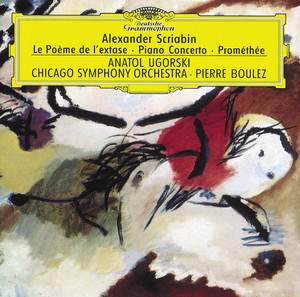 | Piano Concerto in F-Sharp Minor, Op. 20: III. Allegro | Alexander Scriabin, Anatol Ugorski, Chicago Symphony Orchestra, Pierre Boulez | F♯ Minor | 1 | 11A | 80 BPM | |
 | Piano Quintet in C Minor: I. Andante | Alexander Borodin, Ilona Prunyi, New Budapest Quartet | C Minor | 1 | 5A | 68 BPM | |
 | String Quartet No. 8 in C Minor, Op. 110 (Arr. B. Giltburg for Piano): IV. Largo | Dmitri Shostakovich, Boris Giltburg | A♭ Major | 0 | 4B | 70 BPM | |
 | Sextet for Wind Quintet & Piano, FP 100: II. Divertissement: Andantino | Francis Poulenc, Philippe Bernold, Olivier Doise, Ronald Van Spaendonck, Laurent Lefèvre, Hervé Joulain, Alexandre Tharaud | D Major | 1 | 10B | 72 BPM | |
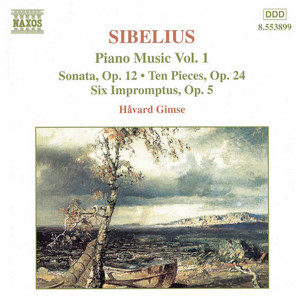 | 10 Pieces, Op. 24: 4. Romance | Jean Sibelius, Håvard Gimse | B♭ Major | 0 | 6B | 68 BPM | |
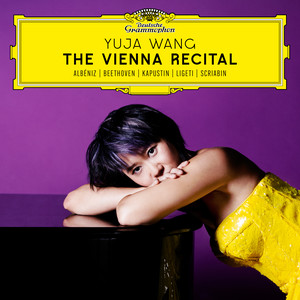 | Iberia, T. 105 / Book 3: No. 9, Lavapiés | Isaac Albéniz, Yuja Wang | D♭ Minor | 0 | 12A | 131 BPM | |
 | Piano Quintet in F-Sharp Minor, Op. 67: II. Adagio espressivo | Amy Beach, Ambache | D♭ Major | 0 | 3B | 60 BPM | |
 | Summer Music, Op. 31: III. Faster | Samuel Barber, Ensemble Ouranos | A♭ Major | 1 | 4B | 196 BPM | |
 | Remember Me (Arr. Hough for Piano) - From "Coco" | Stephen Hough | A♭ Major | 0 | 4B | 133 BPM | |
 | Symphony No. 1, Op. 9: III. Andante tranquillo | Samuel Barber, Leonard Slatkin, St. Louis Symphony | B♭ Major | 3 | 6B | 93 BPM | |
 | Simple Symphony, Op. 4: Frolicsome Finale | Benjamin Britten, Royal Northern Sinfonia, Steuart Bedford | G Major | 2 | 9B | 155 BPM | |
 | Violin Sonata in E Minor, P. 85: IV. Giga. Vivace assai (After J.S. Bach's BWV 1023) | Ottorino Respighi, Ilkka Talvi, Seattle Symphony Orchestra, Gerard Schwarz | E Minor | 0 | 9A | 121 BPM | |
 | Suite No. 1, "Orientale": I. Okenstamning: Adagio | Kurt Atterberg, Ferenc Balogh, Gyorgy Kertesz, Andras Kiss, Ilona Prunyi | B Minor | 1 | 10A | 61 BPM | |
 | Suite No. 3, Op. 19 No. 1: II. Pantomim: Moderato | Kurt Atterberg, Henning Kraggerud, Dalasinfoniettan, Bjarte Engeset | E Minor | 1 | 9A | 76 BPM | |
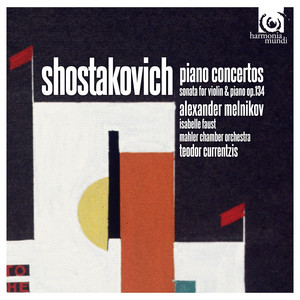 | Piano Concerto No. 2 Op. 102 in F Major: I. Allegro | Dmitri Shostakovich, Alexander Melnikov, Mahler Chamber Orchestra, Teodor Currentzis | B♭ Major | 2 | 6B | 73 BPM |
- ISRC
- This song does not have an ISRC.
- Label
- L-M Records/RCA Records