- BPM
- 106
- Key
- F Major
- Camelot
- 7B
Graduation Ball - Arranged by A. Dorati from various Strauss works: Divertimenti: 4. Virtuoso Polka by Johann Strauss II, Wiener Philharmoniker, Antal Doráti Song Details
Johann Strauss II, Wiener Philharmoniker, Antal Doráti's 'Graduation Ball - Arranged by A. Dorati from various Strauss works: Divertimenti: 4. Virtuoso Polka' had a release date set for January 1, 2013. With This song being less than two minutes long, at 1:20, we are fairly confident that this song is not explicit and is safe for all ages. Based on the duration of this song, this song duration is much smaller than the average song duration. The track order of this song in Johann Strauss II, Wiener Philharmoniker, Antal Doráti, National Philharmonic Orchestra, Richard Bonynge's "Johann Strauss II: Graduation Ball; Le Beau Danube" album is number 7 out of 17. On top of that, United Kingdom appears to be the country where this track was created. In terms of popularity, Graduation Ball - Arranged by A. Dorati from various Strauss works: Divertimenti: 4. Virtuoso Polka is currently not that popular. In our opinion, the overall tone is not very danceable and projects negative sounds, such as being sad, depressed, or angry.
BPM and Tempo
We consider the tempo marking of Graduation Ball - Arranged by A. Dorati from various Strauss works: Divertimenti: 4. Virtuoso Polka by Johann Strauss II, Wiener Philharmoniker, Antal Doráti to be Andante (at a walking pace) because the track has a tempo of 106 BPM, a half-time of 53BPM, and a double-time of 212 BPM. Based on that, the speed of the song's tempo is slow. The time signature for this track is 4/4.
Music Key
This song is in the music key of F Major. This also means that this song has a camelot key of 7B. So, the perfect camelot match for 7B would be either 7B or 8A. While, 8B can give you a low energy boost. For moderate energy boost, you would use 4B and a high energy boost can either be 9B or 2B. Though, if you want a low energy drop, you should looking for songs with either a camelot key of 7A or 6B will give you a low energy drop, 10B would be a moderate one, and 5B or 12B would be a high energy drop. Lastly, 4A allows you to change the mood.
Want to find the BPM and music key for other songs? Check out our BPM and Key Finder page!
- Popularity
- 14%
- Loudness
- -21.853 dB
- Acousticness
- 91%
- Danceability
- 35%
- Energy
- 14%
- Instrumentalness
- 73%
- Liveness
- 24%
- Loudness
- 64%
- Speechiness
- 4%
- Valence
- 26%
Recommendations
| Track | Artist | Key | Energy | Camelot | BPM | ||
|---|---|---|---|---|---|---|---|
 | The Sleeping Beauty, Op. 66, Prologue: No. 1, March. Entrance of King and Court | Pyotr Ilyich Tchaikovsky, Royal Concertgebouw Orchestra, Antal Doráti | A Major | 2 | 11B | 126 BPM | |
 | Walzer (a la Paganini), Op. 11 | Johann Strauss I, Slovak Sinfonietta, Zilina, Christian Pollack | D Major | 1 | 10B | 164 BPM | |
 | Harlequinade: Pas de deux: Female Variation | Riccardo Eugenio Drigo, Charles Mathews | A Major | 1 | 11B | 105 BPM | |
 | Chrétien Polka | Hans Christian Lumbye, Tivoli Symphony Orchestra | A Major | 2 | 11B | 161 BPM | |
 | Ballet Suite No. 1 (arr. L. Atovmyan): Romance (The Limpid Stream) | Lev Atovmyan, Dmitri Shostakovich, Russian Philharmonic Orchestra, Dmitry Yablonsky | F Major | 1 | 7B | 90 BPM | |
 | Casse-noisette : danse arabe | Wiener Philharmoniker, Herbert von Karajan | F Minor | 2 | 4A | 106 BPM | |
 | Dance of the Hours from Act III of "La Gioconda" | Amilcare Ponchielli, Philadelphia Orchestra, Eugene Ormandy | E Major | 1 | 12B | 130 BPM | |
 | Plié 3/4: ¡Hola Casita! | Daniel Fifield | B Major | 2 | 1B | 120 BPM | |
 | Hungarian Dance No.20 In E Minor | Johannes Brahms, Wiener Philharmoniker, Claudio Abbado | E Minor | 1 | 9A | 76 BPM | |
 | 3 Marches militaires, D. 733: Marche Militaire in D Major, Op. 51, No. 1 (Arr. Weninger) | Franz Schubert, Wiener Philharmoniker, Hans Knappertsbusch | D Major | 7 | 10B | 138 BPM | |
 | Hérold & Lanchbery: La fille mal gardée, Act 1: No. 16d, Pas de deux de Fanny Elssler. Man's Solo | Ferdinand Hérold, John Lanchbery, Royal Liverpool Philharmonic Orchestra, Barry Wordsworth | B♭ Major | 2 | 6B | 128 BPM | |
 | Carmen Ballet Suite (after Bizet): II. Dance | Rodion Shchedrin, Slovenian Symphony Orchestra, Anton Nanut | D Major | 4 | 10B | 124 BPM | |
 | La Sylphide: Act II: Forest Scene: James and the Sylphide | Herman Severin Løvenskiold, Kim Sjøgren, Royal Danish Orchestra, David Garforth | B♭ Major | 0 | 6B | 120 BPM | |
 | Symphony No. 2 in C minor - "Resurrection" / 5th Movement: Ritenuto | Gustav Mahler, Wiener Philharmoniker, Gilbert Kaplan | B♭ Major | 3 | 6B | 112 BPM | |
 | Gruss an Wien, Op. 225: Gruss an Wien, Polka francaise, Op. 225 | Johann Strauss II, ORF Radio-Symphonieorchester Wien, Peter Guth | C Major | 1 | 8B | 87 BPM | |
 | Raymonda, Act III: Pas Classique Hongrois | Alexander Glazunov, Kivov Orchestra, Viktor Fedotov | F Minor | 0 | 4A | 139 BPM | |
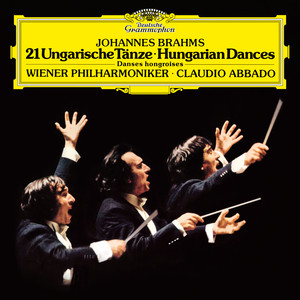 | 21 Hungarian Dances, WoO 1: Hungarian Dance No. 7 in F Major. Allegretto (Orch. Schmeling) | Johannes Brahms, Wiener Philharmoniker, Claudio Abbado | F Major | 1 | 7B | 81 BPM | |
 | Cupid Variation - Don Quixote Act 2 | Galina Bezuglaya | D Major | 1 | 10B | 108 BPM | |
 | The Sleeping Beauty, Ballet Suite, Op. 66a: V. Valse | Pyotr Ilyich Tchaikovsky, Christoph Eschenbach, Wiener Philharmoniker | B♭ Major | 1 | 6B | 180 BPM | |
 | La bayadère, Act II: "Variazione Solor" | Silvano Belfiore | D Major | 4 | 10B | 77 BPM | |
 | Transactionen, Walzer, Op. 184 | Josef Strauss, Riccardo Muti, Wiener Philharmoniker | A Minor | 1 | 8A | 87 BPM | |
 | Ohne Bremse - Polka schnell, Op.238 - Live | Eduard Strauss, Wiener Philharmoniker, Willi Boskovsky | B♭ Major | 2 | 6B | 101 BPM | |
 | Grande tarantelle, Op. 67, D. 66 | Louis Moreau Gottschalk, Joel Fan, Northwest Sinfonietta, Christophe Chagnard | D Minor | 1 | 7A | 146 BPM | |
 | Casse-noisette : Danses de Casse-noisette | Wiener Philharmoniker, Herbert von Karajan | D Major | 2 | 10B | 128 BPM | |
 | Le Corsaire: Pas de Trois - Ali Variation | Yuly Gerber, English National Ballet Philharmonic, Gavin Sutherland | A♭ Major | 1 | 4B | 85 BPM |
- ISRC
- GBF077744307
- Label
- L-M Records/RCA Records