- BPM
- 112
- Key
- B♭ Major
- Camelot
- 6B
Symphony No. 2 in C minor - "Resurrection" / 5th Movement: Ritenuto by Gustav Mahler, Wiener Philharmoniker, Gilbert Kaplan Song Details
Gustav Mahler, Wiener Philharmoniker, Gilbert Kaplan's 'Symphony No. 2 in C minor - "Resurrection" / 5th Movement: Ritenuto' had a release date set for January 1, 2003. With this song being about 5 minutes long, at This song is fairly a long song compared to the average song length. This song does not have an "Explicit" tag, making it safe for all ages. The track order of this song in Gustav Mahler, Latonia Moore, Nadja Michael, Wiener Philharmoniker, Gilbert Kaplan, Wiener Singverein, Johannes Prinz's "Mahler: Symphony No. 2" album is number 22 out of 42. On top of that, Germany appears to be the country where this track was created. In terms of popularity, Symphony No. 2 in C minor - "Resurrection" / 5th Movement: Ritenuto is currently below average in popularity. In our opinion, the overall tone is not very danceable and projects negative sounds, such as being sad, depressed, or angry.
BPM and Tempo
We consider the tempo marking of Symphony No. 2 in C minor - "Resurrection" / 5th Movement: Ritenuto by Gustav Mahler, Wiener Philharmoniker, Gilbert Kaplan to be Moderato (at a moderate speed) because the track has a tempo of 112 BPM, a half-time of 56BPM, and a double-time of 224 BPM. Based on that, the speed of the song's tempo is moderate. The time signature for this track is 4/4.
Music Key
This song is in the music key of B♭ Major. This also means that this song has a camelot key of 6B. So, the perfect camelot match for 6B would be either 6B or 7A. While, 7B can give you a low energy boost. For moderate energy boost, you would use 3B and a high energy boost can either be 8B or 1B. Though, if you want a low energy drop, you should looking for songs with either a camelot key of 6A or 5B will give you a low energy drop, 9B would be a moderate one, and 4B or 11B would be a high energy drop. Lastly, 3A allows you to change the mood.
Want to find the BPM and music key for other songs? Check out our BPM and Key Finder page!
- Popularity
- 26%
- Loudness
- -11.377 dB
- Acousticness
- 84%
- Danceability
- 37%
- Energy
- 33%
- Instrumentalness
- 92%
- Liveness
- 13%
- Loudness
- 81%
- Speechiness
- 3%
- Valence
- 30%
Recommendations
| Track | Artist | Key | Energy | Camelot | BPM | ||
|---|---|---|---|---|---|---|---|
 | Le carnaval romain, Overture, H. 95 | Hector Berlioz, Berliner Philharmoniker, Claudio Abbado | A Major | 2 | 11B | 83 BPM | |
 | Variations on a Theme by Haydn, Op. 56a: Var. 7. Grazioso | Johannes Brahms, Wiener Philharmoniker, Carlo Maria Giulini | A Major | 4 | 11B | 98 BPM | |
 | Ein Heldenleben, Op. 40: IV. Des Helden Walstatt "Battle Scene" | Richard Strauss, Berliner Philharmoniker, Herbert von Karajan | E♭ Major | 6 | 5B | 70 BPM | |
 | Aladdin Suite, Op. 34, FS 89: IV. Chinese Dance | Carl Nielsen, South Jutland Symphony Orchestra, Niklas Willen | E Minor | 1 | 9A | 96 BPM | |
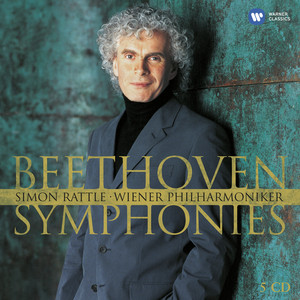 | Beethoven: Symphony No. 8 in F Major, Op. 93: IV. Allegro vivace | Ludwig van Beethoven, Wiener Philharmoniker, Sir Simon Rattle | F Major | 2 | 7B | 140 BPM | |
 | Symphony No.8 In G, Op.88, B. 163: 4. Allegro ma non troppo | Antonín Dvořák, Berliner Philharmoniker, Rafael Kubelík | G Major | 2 | 9B | 141 BPM | |
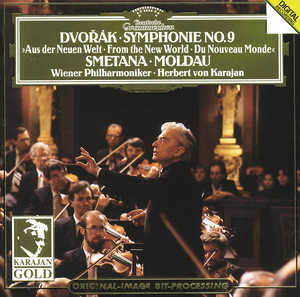 | Má vlast, JB 1:112: II. Vltava "The Moldau" | Bedřich Smetana, Wiener Philharmoniker, Herbert von Karajan | E Minor | 1 | 9A | 78 BPM | |
 | Symphony No.2 in C minor - "Resurrection" / 2nd Movement - Andante moderato: Nicht eilen. Sehr gemächlich | Gustav Mahler, Wiener Philharmoniker, Gilbert Kaplan | A♭ Minor | 1 | 1A | 143 BPM | |
 | Ma mère l'oye, ballet, M. 62: 3. Les Entretiens de la Belle et de la Bête.Mouvement de Valse modéré | Maurice Ravel, Berliner Philharmoniker, Pierre Boulez | G Minor | 0 | 6A | 89 BPM | |
 | Japanese Suite, Op. 33, H. 126: II. Ceremonial Dance | Gustav Holst, Ulster Orchestra, Joann Falletta | C Minor | 3 | 5A | 103 BPM | |
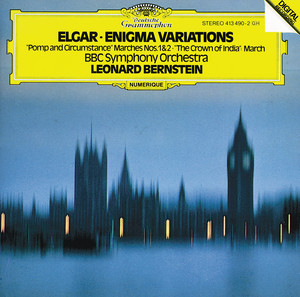 | Enigma Variations, Op. 36: Var. 5. Moderato "R.P.A." | Edward Elgar, BBC Symphony Orchestra, Leonard Bernstein | C Minor | 0 | 5A | 83 BPM | |
 | Symphony No. 4, Op. 29 "The Inextinguishable": III. Poco adagio quasi andante | Carl Nielsen, Danish National Symphony Orchestra, Fabio Luisi | D♭ Major | 3 | 3B | 95 BPM | |
| Enigma Variations, Op. 36: Var. 8. Allegretto "W.N." | Edward Elgar, BBC Symphony Orchestra, Leonard Bernstein | G Major | 0 | 9B | 84 BPM | |
 | Symphony No. 3 in D Minor, WAB 103 (1873 Version): III. Scherzo. Ziemlich schnell – Trio. Gleiches Zeitmaß – Scherzo da capo | Anton Bruckner, Berliner Philharmoniker, Herbert Blomstedt | F Major | 2 | 7B | 136 BPM | |
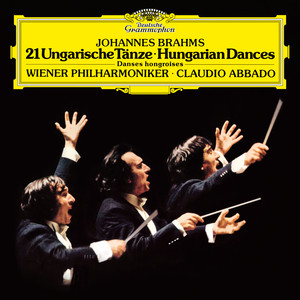 | 21 Hungarian Dances, WoO 1: Hungarian Dance No. 11 in D Minor. Poco andante (Orch. Parlow) | Johannes Brahms, Wiener Philharmoniker, Claudio Abbado | A Minor | 0 | 8A | 151 BPM | |
 | Pictures At An Exhibition (Orch. Ravel): 8a. Catacombae (Sepulchrum Romanum) | Modest Mussorgsky, Wiener Philharmoniker, Gustavo Dudamel | B Minor | 0 | 10A | 71 BPM | |
 | Ma mère l'oye, Ballet, M. 62: I. Prélude | Maurice Ravel, Berliner Philharmoniker, Pierre Boulez | G Major | 0 | 9B | 90 BPM | |
 | Horn Concerto No. 1 in E Flat Major, Op. 11, TrV. 117: III. Allegro-Rondo (Allegro) | Richard Strauss, Lars-Michael Stransky, Wiener Philharmoniker, André Previn | A♭ Major | 4 | 4B | 103 BPM | |
| Symphony No.2 in C minor - "Resurrection" / 5th Movement: Im Anfang sehr zurückgehalten | Gustav Mahler, Wiener Philharmoniker, Gilbert Kaplan | D♭ Major | 1 | 3B | 105 BPM | |
 | Die Walküre, Act I Scene 1: Prelude - 2012 Remaster | Richard Wagner, Wiener Philharmoniker, Sir Georg Solti | C Minor | 6 | 5A | 103 BPM | |
 | The Rite of Spring, K15, Pt. 1: IV. Spring Rounds | Igor Stravinsky, Berliner Philharmoniker, Herbert von Karajan | C Minor | 6 | 5A | 103 BPM | |
 | Symphony No. 4 In D Minor, Op. 120: 1. Ziemlich langsam - Lebhaft | Robert Schumann, Wiener Philharmoniker, Herbert von Karajan | G Major | 2 | 9B | 141 BPM | |
 | Symphony No. 9 in E-Flat Major, Op. 70: I. Allegro | Dmitri Shostakovich, Berliner Philharmoniker, Kirill Petrenko | B♭ Major | 4 | 6B | 136 BPM | |
 | Symphony No. 5 in B-Flat Major, Op. 100: III. Adagio | Sergei Prokofiev, Berliner Philharmoniker, Herbert von Karajan | C Major | 2 | 8B | 138 BPM | |
 | Symphony No.8 in E flat - "Symphony of a Thousand" / Part One: Hymnus "Veni creator spiritus": "Gloria sit Patri Domino" | Gustav Mahler, Heather Harper, Lucia Popp, Helen Watts, Yvonne Minton, René Kollo, John Shirley-Quirk, Martti Talvela, Wiener Singverein, Vienna Boys' Choir, Vienna State Opera Chorus, Chicago Symphony Orchestra, Sir Georg Solti | E♭ Major | 5 | 5B | 102 BPM |
- ISRC
- DEN960231636
- Label
- L-M Records/RCA Records