- BPM
- 134
- Key
- F Major
- Camelot
- 7B
Carmina Burana: XIV. In taberna quando sumus by Carl Orff, Chor der Deutschen Oper Berlin, Orchester der Deutschen Oper Berlin, Eugen Jochum Song Details
Carl Orff, Chor der Deutschen Oper Berlin, Orchester der Deutschen Oper Berlin, Eugen Jochum's ' "Carmina Burana: XIV. In taberna quando sumus" was released on its scheduled release date, January 1, 1988. The duration of This song is about 3 minutes long, at 3:05. Based on our data, This song appears to be safe for all ages and is not considered explicit. This track is about the average length of a typical track. There are a total of 25 in the song's album "Orff: Carmina Burana". In this album, this song's track order is #14. Furthermore, we believe that the track originated from Germany. Based on our statistics, Carmina Burana: XIV. In taberna quando sumus's popularity is not that popular right now. Since there is more of a neutral sound being played, this makes the track somewhat danceable.
BPM and Tempo
With Carmina Burana: XIV. In taberna quando sumus by Carl Orff, Chor der Deutschen Oper Berlin, Orchester der Deutschen Oper Berlin, Eugen Jochum having a BPM of 134 with a half-time of 67 BPM and a double-time of 268 BPM, we would consider this track to have a Allegro (fast, quick, and bright) tempo marking. Because of this, we believe that the song has an overall fast tempo. Looking at the BPM of this song, this song might go great with walking. The time signature for this track is 4/4.
Music Key
F Major is the music key of this track. Or for those who are familiar with the camelot wheel, this song has a camelot key of 7B. So, the perfect camelot match for 7B would be either 7B or 8A. While, 8B can give you a low energy boost. For moderate energy boost, you would use 4B and a high energy boost can either be 9B or 2B. Though, if you want a low energy drop, you should looking for songs with either a camelot key of 7A or 6B will give you a low energy drop, 10B would be a moderate one, and 5B or 12B would be a high energy drop. Lastly, 4A allows you to change the mood.
Want to find the BPM and music key for other songs? Check out our BPM and Key Finder page!
- Popularity
- 8%
- Loudness
- -17.324 dB
- Acousticness
- 84%
- Danceability
- 42%
- Energy
- 36%
- Instrumentalness
- 0%
- Liveness
- 16%
- Loudness
- 71%
- Speechiness
- 6%
- Valence
- 45%
Recommendations
| Track | Artist | Key | Energy | Camelot | BPM | ||
|---|---|---|---|---|---|---|---|
 | Caucasian Sketches, Suite No. 1, Op. 10: IV. Procession of the Sardar | Mikhail Ippolitov-Ivanov, Borusan Istanbul Philharmonic Orchestra, Sascha Goetzel | A Major | 3 | 11B | 103 BPM | |
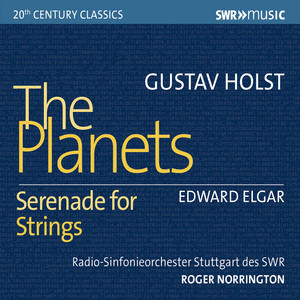 | The Planets, Op. 32: I. Mars, the Bringer of War | Gustav Holst, Radio Sinfonieorchester Stuttgart des SWR, Sir Roger Norrington | G Major | 4 | 9B | 133 BPM | |
 | Carmina Burana: VII. Floret silva nobilis | Carl Orff, Brighton Festival Chorus, Royal Philharmonic Orchestra, Antal Doráti | G Major | 0 | 9B | 94 BPM | |
 | 歌劇「妖精ヴィッリ」: 妖精たちの踊り | Giacomo Puccini, Bratislava CSR Symphony Orchestra, Ondrej Lenard | D Major | 2 | 10B | 61 BPM | |
 | Vier letzte Lieder, TrV 296: 2. September | Richard Strauss, Jessye Norman, Gewandhausorchester, Kurt Masur | D Major | 1 | 10B | 153 BPM | |
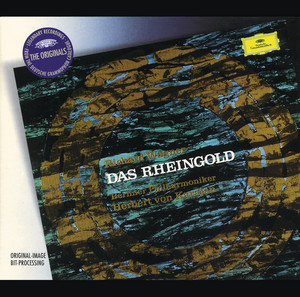 | Das Rheingold, Scene 4: Rheingold! Rheingold! Reines Gold! | Richard Wagner, Helen Donath, Edda Moser, Anna Reynolds, Gerhard Stolze, Dietrich Fischer-Dieskau, Berliner Philharmoniker, Herbert von Karajan | D♭ Major | 2 | 3B | 110 BPM | |
 | Carmina Burana: XXII. Tempus est iocundum | Carl Orff, Gundula Janowitz, Dietrich Fischer-Dieskau, Schöneberger Sängerknaben, Orchester der Deutschen Oper Berlin, Eugen Jochum | F♯ Major | 7 | 2B | 138 BPM | |
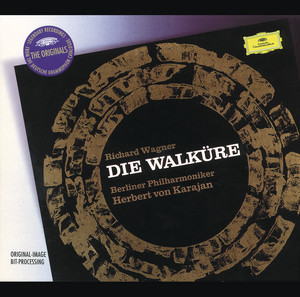 | Die Walküre, WWV 86B / Act III: "Hojotoho! Heiaha!" | Richard Wagner, Liselotte Rebmann, Danica Mastilovic, Ingrid Steger, Lilo Brockhaus, Carlotta Ordassy, Barbro Ericson, Cvetka Ahlin, Helga Jenckel, Berliner Philharmoniker, Herbert von Karajan | G Major | 4 | 9B | 93 BPM | |
 | L'Arlésienne Suite No. 2: IV. Farandole. Allegro deciso (Tempo di Marcia) - Allegro vivo e deciso | Georges Bizet, Leonard Bernstein, New York Philharmonic | D Major | 6 | 10B | 93 BPM | |
| Carmina Burana / 2. In Taberna: "Estuans interius" | Carl Orff, John Shirley-Quirk, Royal Philharmonic Orchestra, Antal Doráti | A Minor | 3 | 8A | 87 BPM | |
 | Also sprach Zarathustra, Op. 30: IV. Von den Freuden und Leidenschaften | Richard Strauss, Berliner Philharmoniker, Herbert von Karajan | F Major | 1 | 7B | 65 BPM | |
 | Die Fledermaus: Overture | Johann Strauss II, Bavarian State Orchestra, Carlos Kleiber | G Major | 1 | 9B | 100 BPM | |
 | Glinka: Overture from Ruslan and Ludmilla | Mikhail Glinka, Budapest Philharmonic Orchestra, Rico Saccani | D Major | 3 | 10B | 76 BPM | |
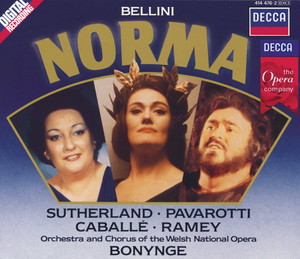 | Norma: Sinfonia | Vincenzo Bellini, Welsh National Opera Orchestra, Richard Bonynge | G Major | 1 | 9B | 140 BPM | |
 | Orff: Carmina Burana, Pt. 2, In Taberna: In taberna quando sumus | Carl Orff, Michel Plasson, Orfeon Donostiarra, Orchestre Du Capitole De Toulouse | D Minor | 0 | 7A | 141 BPM | |
| Carmina Burana / Uf dem Anger: "Were diu werlt alle min" | Carl Orff, Chor der Deutschen Oper Berlin, Orchester der Deutschen Oper Berlin, Eugen Jochum | D Minor | 4 | 7A | 68 BPM | |
 | Madrigal, Op. 35 | Gabriel Fauré, Netherlands Chamber Choir, Limburg Symphony Orchestra, Ed Spanjaard | D Minor | 0 | 7A | 134 BPM | |
 | Symphony No. 9 in E Minor, Op. 95 "From the New World": Adagio; Allegro molto | Antonín Dvořák, Fritz Reiner | E Minor | 1 | 9A | 124 BPM | |
 | Eljen a Magyar, Op. 332 | Johann Strauss II, Berliner Philharmoniker, Herbert von Karajan | E Minor | 2 | 9A | 142 BPM | |
 | Symphony No. 10 in E Minor, Op. 93: II. Allegro | Dmitri Shostakovich, Royal Liverpool Philharmonic Orchestra, Vasily Petrenko | B♭ Minor | 6 | 3A | 89 BPM | |
 | Symphony No.8 in E flat - "Symphony of a Thousand" / Part One: Hymnus "Veni creator spiritus": "Accende lumen sensibus" | Gustav Mahler, Heather Harper, Lucia Popp, Yvonne Minton, Helen Watts, René Kollo, John Shirley-Quirk, Martti Talvela, Vienna Boys' Choir, Wiener Singverein, Vienna State Opera Chorus, Chicago Symphony Orchestra, Sir Georg Solti | E Major | 5 | 12B | 70 BPM | |
| Carmina Burana: VIII. Chramer, gip die varwe mir | Carl Orff, Chor der Deutschen Oper Berlin, Orchester der Deutschen Oper Berlin, Eugen Jochum | C Major | 0 | 8B | 152 BPM | |
 | Salome, Op. 54: Dance of the Seven Veils | Richard Strauss, Berliner Philharmoniker, Herbert von Karajan | F Major | 1 | 7B | 65 BPM | |
 | Tchaikovsky: Symphony No. 4 in F Minor, Op. 36: IV. Finale (Allegro con fuoco) | Pyotr Ilyich Tchaikovsky, San Francisco Symphony, Michael Tilson Thomas | F Minor | 4 | 4A | 80 BPM | |
 | Puccini: Turandot, Act 3: "Nessun dorma" (Calaf) | Giacomo Puccini, Plácido Domingo, Nello Santi, Orchester der Deutschen Oper Berlin | D Major | 4 | 10B | 134 BPM |
- ISRC
- DEF056730117
- Label
- L-M Records/RCA Records