- BPM
- 74
- Key
- G Major
- Camelot
- 9B
Panis Angelicus, Op. 12 by César Franck, Katherine Jenkins, Nicholas Dodd, Rodolfus Choir Song Details
"Panis Angelicus, Op. 12" by César Franck, Katherine Jenkins, Nicholas Dodd, Rodolfus Choir had its release date on January 1, 2008. The duration of This song is about two minutes long, specifically at 2:40. This song does not appear to have any foul language. Panis Angelicus, Op. 12's duration is considered a little bit shorter than the average duration of a typical track. There are a total of 12 in the song's album "Sacred Arias". In this album, this song's track order is #7. Panis Angelicus, Op. 12 is not that popular right now. In our opinion, the overall tone is not very danceable and projects negative sounds, such as being sad, depressed, or angry.
BPM and Tempo
With Panis Angelicus, Op. 12 by César Franck, Katherine Jenkins, Nicholas Dodd, Rodolfus Choir having a BPM of 74 with a half-time of 37 BPM and a double-time of 148 BPM, we would consider this track to have a Adagio (slowly with great expression) tempo marking. Because of this, we believe that the song has an overall slow tempo. The time signature for this track is 4/4.
Music Key
G Major is the music key of this track. Or for those who are familiar with the camelot wheel, this song has a camelot key of 9B. So, the perfect camelot match for 9B would be either 9B or 10A. While, 10B can give you a low energy boost. For moderate energy boost, you would use 6B and a high energy boost can either be 11B or 4B. Though, if you want a low energy drop, you should looking for songs with either a camelot key of 9A or 8B will give you a low energy drop, 12B would be a moderate one, and 7B or 2B would be a high energy drop. Lastly, 6A allows you to change the mood.
Want to find the BPM and music key for other songs? Check out our BPM and Key Finder page!
- Popularity
- 14%
- Loudness
- -13.046 dB
- Acousticness
- 99%
- Danceability
- 20%
- Energy
- 26%
- Instrumentalness
- 2%
- Liveness
- 16%
- Loudness
- 78%
- Speechiness
- 4%
- Valence
- 10%
Recommendations
| Track | Artist | Key | Energy | Camelot | BPM | ||
|---|---|---|---|---|---|---|---|
 | Adagio from Violin Sonata in G Minor, Op. 5 No. 5 (Arr. Leopold Stokowski) | Arcangelo Corelli, Matthias Bamert, BBC Philharmonic | G Minor | 0 | 6A | 175 BPM | |
 | Liebestraum, S. 541, No. 3 | Franz Liszt, Evgeny Kissin | E♭ Major | 0 | 5B | 75 BPM | |
 | Violin Sonata in D major, Op.1, No.13, HWV 371 - arr. by Mischa Maisky for Cello and Piano: 3. Larghetto | George Frideric Handel, Mischa Maisky, Pavel Gililov | A Minor | 1 | 8A | 85 BPM | |
 | Massenet: Élégie (Version for Cello and Piano) | Jules Massenet, Edgar Moreau, Pierre-Yves Hodique | E Minor | 0 | 9A | 73 BPM | |
 | Valse triste, Op. 44 No. 1 | Jean Sibelius, Gothenburg Symphony Orchestra, Neeme Järvi | D♭ Major | 0 | 3B | 67 BPM | |
 | Thaïs / Act II: Méditation (Arr. for Violin and Piano by Martin Marsick, Adapted for Cello and Piano by Mischa Maisky) | Jules Massenet, Mischa Maisky, Lily Maisky | D Major | 1 | 10B | 70 BPM | |
 | Piano Sonata in G Minor: I. Allegro molto agitato | Fanny Mendelssohn, Heather Schmidt | B Minor | 3 | 10A | 87 BPM | |
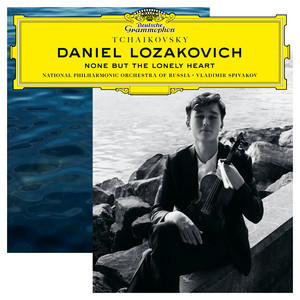 | Souvenir d'un lieu cher, Op. 42: Ib. Méditation (Orch. Glazunov) | Pyotr Ilyich Tchaikovsky, Daniel Lozakovich, National Philharmonic Orchestra of Russia, Vladimir Spivakov | B♭ Major | 2 | 6B | 99 BPM | |
 | Myrthen, Op. 25 - Version for Cello and Piano: XXIV. Du bist wie eine Blume | Robert Schumann, Kian Soltani, Aaron Pilsan | F Major | 0 | 7B | 116 BPM | |
 | Die sieben Worte Christi am Kreuz für Soli, Chor und Orchester: Mulier, ecce filius tuus | César Franck, Chor Der Philharmonie Schwäbisch Gmünd, Edith Wiens, Hubert Beck, Ivo Ingram, Philharmonie Schwäbisch Gmünd, Raimundo Mettre, Thomas Pfeiffer | F Major | 1 | 7B | 75 BPM | |
 | Orfeo ed Euridice, Wq. 30 / Act II: Dance of the Blessed Spirits (Arr. by Mathieu Herzog for Cello and Strings) | Christoph Willibald Gluck, Camille Thomas, Brussels Philharmonic, Mathieu Herzog | B Minor | 1 | 10A | 87 BPM | |
 | F-A-E Sonata, WoO 22: II. Intermezzo (Arr. G. Schwabe for Cello & Piano) | Robert Schumann, Gabriel Schwabe, Nicholas Rimmer | F Major | 1 | 7B | 86 BPM | |
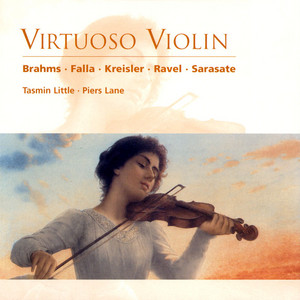 | Fibich: Moods, Impressions and Souvenirs, Op. 41: No. 4, Poème (Arr. for Violin and Piano by Jan Kubelik) | Zdeněk Fibich, Tasmin Little, Piers Lane | D♭ Major | 0 | 3B | 85 BPM | |
| Die sieben Worte Christi am Kreuz für Soli, Chor und Orchester: Amen, dico tibi | César Franck, Chor Der Philharmonie Schwäbisch Gmünd, Edith Wiens, Hubert Beck, Ivo Ingram, Philharmonie Schwäbisch Gmünd, Raimundo Mettre, Thomas Pfeiffer | F Major | 1 | 7B | 75 BPM | |
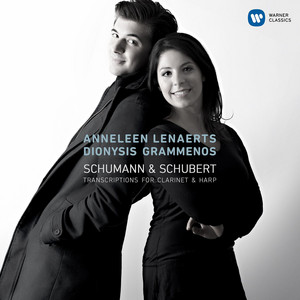 | Schumann: 12 Gedichte aus Liebesfrühling, Op. 37: No. 4: Liebst du um Schönheit | Clara Schumann, Anneleen Lenaerts, Dionysis Grammenos | D♭ Major | 0 | 3B | 91 BPM | |
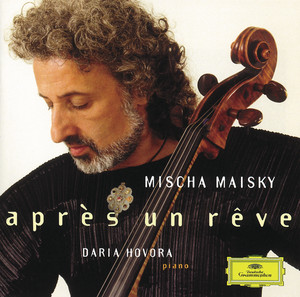 | Elégie | Jules Massenet, Mischa Maisky, Daria Hovora | G Minor | 0 | 6A | 70 BPM | |
| Gluck: Orfeo ed Euridice, Wq. 30, Act 2: Dance of the Blessed Spirits (Transcr. Kreisler & Moreau for Cello and Piano) | Christoph Willibald Gluck, Edgar Moreau, Pierre-Yves Hodique | B Major | 0 | 1B | 64 BPM | |
 | Romance for Violin and Piano, Op. 23 | Amy Beach, Esther Abrami, Iyad Sughayer | A Major | 2 | 11B | 87 BPM | |
 | Recueil de chants, Op. 65: No. 6, Barcarolle | Charles-Valentin Alkan, Bruce Liu | G Minor | 0 | 6A | 70 BPM | |
 | Vocalise, Op. 34, No. 14 (Arr. for Cello and Piano) | Sergei Rachmaninoff, Lynn Harrell, Vladimir Ashkenazy | D♭ Minor | 0 | 12A | 93 BPM | |
 | Norma / Act I: "Casta Diva" (Arr. by Mathieu Herzog for Cello and Orchestra) | Vincenzo Bellini, Camille Thomas, Brussels Philharmonic, Mathieu Herzog | F Major | 1 | 7B | 91 BPM | |
 | Prélude, Fugue et Variation, Op. 18: IV. Andantino (Arr. pour piano) | César Franck, Nikolai Lugansky | B Minor | 0 | 10A | 69 BPM | |
 | Carmen Fantasy, Op. 25: Introduction. Allegro moderato | Pablo de Sarasate, Hilary Hahn, Frankfurt Radio Symphony Orchestra, Andrés Orozco-Estrada | C Major | 3 | 8B | 135 BPM | |
 | 6 Consolations, S. 172: No. 3 in D flat major (Lento, placido) | Franz Liszt, Nelson Freire | A♭ Major | 0 | 4B | 75 BPM | |
 | Sicilienne (Arr. by Söllscher) | Maria Theresia von Paradis, Jian Wang, Göran Söllscher | F Major | 0 | 7B | 112 BPM |
- ISRC
- This song does not have an ISRC.
- Label
- L-M Records/RCA Records