- BPM
- 88
- Key
- E♭ Major
- Camelot
- 5B
Strauss, R: An Alpine Symphony, Op. 64: IX. In a Mountain Pasture by Richard Strauss, Rudolf Kempe, Staatskapelle Dresden Song Details
"Strauss, R: An Alpine Symphony, Op. 64: IX. In a Mountain Pasture" by Richard Strauss, Rudolf Kempe, Staatskapelle Dresden had its release date on 2013. The duration of This song is about two minutes long, specifically at 2:13. This song does not appear to have any foul language. Strauss, R: An Alpine Symphony, Op. 64: IX. In a Mountain Pasture's duration is considered a little bit shorter than the average duration of a typical track. There are a total of 103 in the song's album "Strauss, Richard: Complete Orchestral Works". In this album, this song's track order is #28. Furthermore, we believe that the track originated from United Kingdom. Strauss, R: An Alpine Symphony, Op. 64: IX. In a Mountain Pasture is not that popular right now. In our opinion, the overall tone is not very danceable and projects negative sounds, such as being sad, depressed, or angry.
BPM and Tempo
With Strauss, R: An Alpine Symphony, Op. 64: IX. In a Mountain Pasture by Richard Strauss, Rudolf Kempe, Staatskapelle Dresden having a BPM of 88 with a half-time of 44 BPM and a double-time of 176 BPM, we would consider this track to have a Andante (at a walking pace) tempo marking. Because of this, we believe that the song has an overall slow tempo. Looking at the BPM of this song, this song might go great with yoga or pilates. The time signature for this track is 3/4.
Music Key
This song has a musical key of E♭ Major. Or for those who are familiar with the camelot wheel, this song has a camelot key of 5B. So, the perfect camelot match for 5B would be either 5B or 6A. While, 6B can give you a low energy boost. For moderate energy boost, you would use 2B and a high energy boost can either be 7B or 12B. Though, if you want a low energy drop, you should looking for songs with either a camelot key of 5A or 4B will give you a low energy drop, 8B would be a moderate one, and 3B or 10B would be a high energy drop. Lastly, 2A allows you to change the mood.
Want to find the BPM and music key for other songs? Check out our BPM and Key Finder page!
- Popularity
- 1%
- Loudness
- -18.094 dB
- Acousticness
- 84%
- Danceability
- 16%
- Energy
- 29%
- Instrumentalness
- 36%
- Liveness
- 60%
- Loudness
- 70%
- Speechiness
- 3%
- Valence
- 14%
Recommendations
| Track | Artist | Key | Energy | Camelot | BPM | ||
|---|---|---|---|---|---|---|---|
 | Scottish Fantasy for Violin and Orchestra, Op. 46: I. Introduction: Grave, Adagio cantabile | Max Bruch, Joshua Bell, Academy of St. Martin in the Fields | E♭ Major | 2 | 5B | 60 BPM | |
 | La Damnation de Faust, Op. 24, H 111 / Pt. 1: Marche hongroise | Hector Berlioz, Chicago Symphony Orchestra, Sir Georg Solti | A Major | 2 | 11B | 93 BPM | |
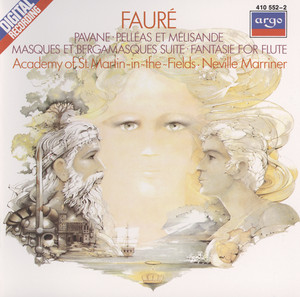 | Pelléas et Mélisande, Op.80: 3. Sicilienne | Gabriel Fauré, Academy of St. Martin in the Fields, Sir Neville Marriner | G Minor | 0 | 6A | 111 BPM | |
 | Symphony No. 3 in E Flat Major, Op. 97 "Rhenish": I. Lebhaft | Robert Schumann, Staatskapelle Berlin, Daniel Barenboim | E Minor | 2 | 9A | 90 BPM | |
 | Romeo and Juliette, Op. 64 (Arr. for Viola and Piano by Vadim Borisovsky, Orchestration for Viola and String Orchestra by François Vallières): Introduction | Sergei Prokofiev, Elvira Misbakhova, I Musici de Montréal, Jean-François Rivest | D Major | 1 | 10B | 99 BPM | |
 | Symphony No. 1 in D Major: 2. Kräftig bewegt - Live | Gustav Mahler, Berliner Philharmoniker, Claudio Abbado | A Major | 1 | 11B | 96 BPM | |
 | Symphony No. 3 In C Minor, Op. 78 "Organ Symphony": 1. Adagio - Allegro moderato - Poco adagio | Camille Saint-Saëns, Simon Preston, Berliner Philharmoniker, James Levine | A♭ Major | 1 | 4B | 118 BPM | |
 | The Tempest Suite No. 1, Op. 109, No. 2: I. The Oak Tree | Jean Sibelius, Lahti Symphony Orchestra, Okko Kamu | B♭ Major | 0 | 6B | 86 BPM | |
 | The Moldau (Vltava), JB 1:112/2 | Bedřich Smetana, Leopold Stokowski | G Major | 2 | 9B | 98 BPM | |
 | Carnaval, Op. 9: XII. Chopin | Robert Schumann, Daniil Trifonov | E Major | 0 | 12B | 68 BPM | |
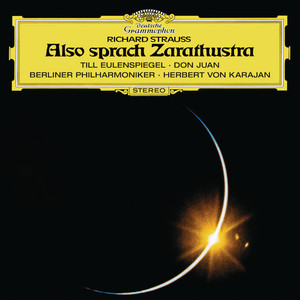 | Also sprach Zarathustra, Op. 30: III. Von der großen Sehnsucht | Richard Strauss, Berliner Philharmoniker, Herbert von Karajan | G Major | 1 | 9B | 105 BPM | |
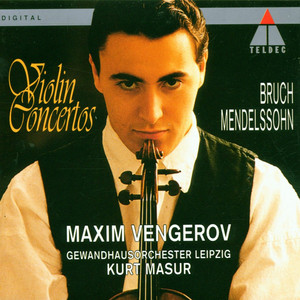 | Bruch: Violin Concerto No. 1 in G Minor, Op. 26: I. Prelude. Allegro moderato | Max Bruch, Maxim Vengerov, Kurt Masur, Gewandhausorchester | E♭ Major | 1 | 5B | 113 BPM | |
 | La forza del destino: Overture (Sinfonia) | Giuseppe Verdi, Berliner Philharmoniker, Claudio Abbado | E Minor | 2 | 9A | 80 BPM | |
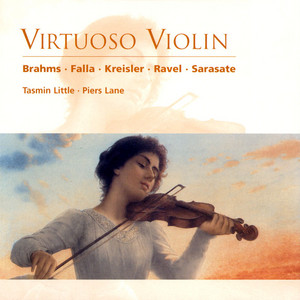 | Shostakovich / Arr. Atovmyan: Suite from the Gadfly, Op. 97a: VIII. Romance | Dmitri Shostakovich, Tasmin Little, Piers Lane | C Major | 1 | 8B | 175 BPM | |
 | Symphony No. 1 in E Major, Op. 26: I. Lento | Alexander Scriabin, Danish National Symphony Orchestra, Fabio Luisi | B♭ Minor | 2 | 3A | 86 BPM | |
 | Cäcilie, Op. 27 No. 2 (Version with Orchestra) | Richard Strauss, Jessye Norman, Gewandhausorchester, Kurt Masur | E♭ Minor | 3 | 2A | 97 BPM | |
 | Violin Concerto No. 1 in G Minor, Op. 26: III. Allegro energico | Max Bruch, Itzhak Perlman, Bernard Haitink, Royal Concertgebouw Orchestra | G Major | 3 | 9B | 97 BPM | |
 | Serenade for String Orchestra in C Minor, Op. posth.: III. Allegro | Max Bruch, George Hanson, Sinfonieorchester Wuppertal | A Minor | 1 | 8A | 88 BPM | |
 | Mahler: Blumine | Gustav Mahler, San Francisco Symphony, Michael Tilson Thomas | C Major | 1 | 8B | 100 BPM | |
 | Violin Concerto in D Minor, Op. 47: II. Adagio di molto | Jean Sibelius, Anne-Sophie Mutter, Staatskapelle Dresden, André Previn | B♭ Major | 1 | 6B | 173 BPM | |
 | Piano Concerto in A Minor, Op. 16: I. Allegro molto moderato - Live | Edvard Grieg, Alice Sara Ott, Symphonieorchester des Bayerischen Rundfunks, Esa-Pekka Salonen | D Major | 2 | 10B | 121 BPM | |
 | Piano Concerto No. 2 in C Minor, Op. 18: I. Moderato | Sergei Rachmaninoff, Yuja Wang, Los Angeles Philharmonic, Gustavo Dudamel | G Minor | 3 | 6A | 97 BPM | |
 | Prince Igor: Polovtsian Dances (Version for Chorus) | Alexander Borodin, Kiev Chamber Choir, Ukraine National Radio Symphony Orchestra, Theodore Kuchar | A Major | 2 | 11B | 110 BPM | |
 | Symphony No. 5 In C Sharp Minor: 4. Adagietto (Sehr langsam) | Gustav Mahler, Gyeonggi Philharmonic Orchestra, Shi-Yeon Sung | F Major | 0 | 7B | 82 BPM | |
 | Liebesträume, S. 541: No. 3, O lieb, so lang du lieben kannst! | Franz Liszt, Daniel Barenboim | A♭ Major | 0 | 4B | 139 BPM |
- ISRC
- GBAYC1201654
- Label
- L-M Records/RCA Records