- BPM
- 74
- Key
- D♭ Major
- Camelot
- 3B
Gasparone: Dialog 4 (Fremder) by Carl Millöcker, Josef Metternich Song Details
"Gasparone: Dialog 4 (Fremder)" by Carl Millöcker, Josef Metternich had its release date on September 5, 2014. With This song being less than two minutes long, at 1:54, we are fairly confident that this song is not explicit and is safe for all ages. Based on the duration of this song, this song duration is much smaller than the average song duration. The track order of this song in Carl Millöcker, Kölner Rundfunkorchester, Franz Marszalek, Anny Schlemm, Josef Metternich's "Millöcker: Gasparone" album is number 11 out of 35. On top of that, Germany appears to be the country where this track was created. Gasparone: Dialog 4 (Fremder) is unknown right now. In our opinion, the overall tone is not very danceable and projects negative sounds, such as being sad, depressed, or angry.
BPM and Tempo
We consider the tempo marking of Gasparone: Dialog 4 (Fremder) by Carl Millöcker, Josef Metternich to be Adagio (slowly with great expression) because the track has a tempo of 74 BPM, a half-time of 37BPM, and a double-time of 148 BPM. Based on that, the speed of the song's tempo is slow. The time signature for this track is 3/4.
Music Key
D♭ Major is the music key of this track. This also means that this song has a camelot key of 3B. So, the perfect camelot match for 3B would be either 3B or 4A. While, 4B can give you a low energy boost. For moderate energy boost, you would use 12B and a high energy boost can either be 5B or 10B. Though, if you want a low energy drop, you should looking for songs with either a camelot key of 3A or 2B will give you a low energy drop, 6B would be a moderate one, and 1B or 8B would be a high energy drop. Lastly, 12A allows you to change the mood.
Want to find the BPM and music key for other songs? Check out our BPM and Key Finder page!
- Popularity
- 0%
- Loudness
- -17.127 dB
- Acousticness
- 97%
- Danceability
- 18%
- Energy
- 15%
- Instrumentalness
- 0%
- Liveness
- 7%
- Loudness
- 71%
- Speechiness
- 3%
- Valence
- 7%
Recommendations
| Track | Artist | Key | Energy | Camelot | BPM | ||
|---|---|---|---|---|---|---|---|
 | Der Bettelstudent: Akt I: "Die Welt hat das genialste Streben" | Carl Millöcker, Karl-Friedrich Hölzke, Peter Schreier, Rundfunk-Sinfonieorchester Leipzig, Günther Herbig | C Major | 4 | 8B | 68 BPM | |
 | The Merry Widow (Die lustige Witwe) / Act 2: Vilja-Lied | Franz Lehár, Ingeborg Hallstein, Grosses Operetten Orchester, Franz Marszalek | G Major | 3 | 9B | 77 BPM | |
 | Luftig und duftig, OP. 206 | Eduard Strauss, Wiener Johann Strauss Orchester, Franz Bauer-Theussl | D Major | 4 | 10B | 78 BPM | |
 | Die schöne Galathée (The Beautiful Galatea): Ouverture | Franz von Suppé, Jörg Dürmüller, Marianne Beate Kielland, Klaus Hager, Eleonore Marguerre, Christian Brückner, Ruhr ChorWerk, Cappella Coloniensis, Bruno Weil | D Major | 1 | 10B | 119 BPM | |
 | Der Bettelstudent, Act I: Und da soll man noch galant sein | Carl Millöcker, Kurt Böhme, Symphonieorchester des Bayerischen Rundfunks, Werner Schmidt-Boelcke | F Major | 4 | 7B | 100 BPM | |
 | The Gypsy Princess (Die Csárdásfürstin): "Ganz ohne Weiber geht die Chose nicht" | Emmerich Kálmán, Willy Hofmann, Renate Holm, Grosses Operetten Orchester, Franz Marszalek | C Major | 5 | 8B | 115 BPM | |
 | Fächer-Polonaise op. 525 | Das Orchester der Wiener Staatsoper | G Major | 2 | 9B | 74 BPM | |
 | Isabella: Overture | Franz von Suppé, Neeme Järvi, Royal Scottish National Orchestra | D Major | 2 | 10B | 93 BPM | |
 | Fatinitza Marsch | Johann Strauss Orchester | G Major | 4 | 9B | 123 BPM | |
 | Wien bleibt Wien, Marsch | Johann Schrammel, Budapest Strauss Ensemble, Istvan Bogar | D Major | 4 | 10B | 122 BPM | |
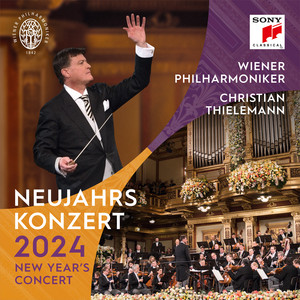 | Die Hochquelle, Polka mazur, Op. 114 | Eduard Strauss, Christian Thielemann, Wiener Philharmoniker | D Major | 4 | 10B | 85 BPM | |
 | Wagner: Tannhäuser, Act 2: "O Himmel! Laß dich jetzt erflehen!" (Wolfram, Tannhäuser) | Richard Wagner, Daniel Barenboim, Chor der Deutschen Staatsoper Berlin, Peter Seiffert, Staatskapelle Berlin, Thomas Hampson | A Minor | 1 | 8A | 99 BPM | |
 | Gounod: Faust, Act 2: Invocation. "Avant de quitter ces lieux" (Valentin) | Charles Gounod, Michel Plasson, Thomas Hampson, Orchestre Du Capitole De Toulouse | A Minor | 1 | 8A | 94 BPM | |
 | Die Dubarry: Wie schön ist alles | Theo Mackeben, Carl Millöcker, Fritz Wunderlich, Hans Moltkau, Munich Radio Orchestra | D Major | 2 | 10B | 108 BPM | |
 | Donau Wellen (Wave Of The Danube) | Ion Ivanovici, Andrew Davis | C Major | 1 | 8B | 199 BPM | |
 | Ohne Bremse, Op. 238: Ohne Bremse, Polka schnell, Op. 238 | Eduard Strauss, Slovak State Philharmonic Orchestra, Mika Eichenholz | D Major | 4 | 10B | 145 BPM | |
 | Gold And Silver Waltz (Gold und Silber/L'or et l'argent) | Franz Lehár, Strauss Festival Orchestra, Peter Guth | C Major | 2 | 8B | 175 BPM | |
 | Wiener Blut (operetta): Stoß an! | Johann Strauss II, Rita Bartos, Sandor Konya, Herta Talmar, Willy Hofmann, Peter Alexander, Chor, Franz Marszalek, Kölner Rundfunkorchester | E♭ Major | 4 | 5B | 175 BPM | |
 | Act II, ii, 9 Grand pas Classique: Corps de Ballet (Minkus) | Ludwig Minkus, Evergreen Symphony Orchestra, Anna-Marie Holmes, Kevin Galiè | A Major | 2 | 11B | 68 BPM | |
 | Don Carlo*: Act II Scene 1: Dio, che nell'alma infondere (Don Carlos, Rodrigo, Old Monk, Monks) | Giuseppe Verdi, Lars Cleveman, Klas Hedlund, Hilde Leidland, Hillevi Martinpelto, Peter Mattei, Bengt Rundgren, Iwa Sorenson, Martti Wallèn, Jaakko Ryhänen, Ingrid Tobiasson, Royal Swedish Opera Chorus, Royal Swedish Opera Orchestra, Alberto Hold-Garrido | C Major | 3 | 8B | 133 BPM | |
 | "Im Prater blühn wieder die Bäume" | Robert Stolz, Fritz Wunderlich, Wiener Staatsopernchor, Vienna Volksoper Orchestra | F Major | 3 | 7B | 80 BPM | |
 | Die Göttin der Vernunft: Overture | Johann Strauss II, Veronika Groiss, Manfred Equiluz, Kirlianit Cortes, Franz Fodinger, Isabella Ma-Zach, Wolfgang Veith, Eva-Maria Kumpfmuller, Andreas Mittermeier, Nicolas Legoux, Vienna Private University Conservatory Students, Slovak Sinfonietta, Zilina, Christian Pollack | D Major | 1 | 10B | 110 BPM | |
 | 4 Lieder, Op. 27, TrV 170 (Version for Voice & Orchestra): No. 2, Cäcilie | Richard Strauss, Louise Alder, Finnish Radio Symphony Orchestra, Nicholas Collon | E♭ Major | 1 | 5B | 78 BPM | |
 | H.M.S. Pinafore: Overture | Arthur Sullivan, Sir Charles Mackerras, Welsh National Opera Orchestra | C Major | 1 | 8B | 100 BPM | |
 | Bellini: I puritani: "All’erta!" (Bruno, Coro) | Vincenzo Bellini, Dresdner Philharmonie, Riccardo Frizza | D Major | 5 | 10B | 136 BPM |
- ISRC
- DEHB51286745
- Label
- L-M Records/RCA Records