- BPM
- 105
- Key
- E♭ Minor
- Camelot
- 2A
Concertino No. 2, Op. 13 - II. Andante by André Mathieu, Alain Lefèvre, Matthias Bamert, London Mozart Players Song Details
"Concertino No. 2, Op. 13 - II. Andante" by André Mathieu, Alain Lefèvre, Matthias Bamert, London Mozart Players had its release date on April 20, 2010. With this song being about 5 minutes long, at This song is fairly a long song compared to the average song length. This song does not have an "Explicit" tag, making it safe for all ages. The track order of this song in Alain Lefèvre, Orchestre Symphonique de Montréal, Tucson Symphony Orchestra, Orchestre Symphonique De Québec's "L'enfant prodige: L'incroyable destinée d'André Mathieu (musique du film)" album is number 11 out of 13. On top of that, Canada appears to be the country where this track was created. In terms of popularity, Concertino No. 2, Op. 13 - II. Andante is currently not that popular. In our opinion, the overall tone is not very danceable and projects negative sounds, such as being sad, depressed, or angry.
BPM and Tempo
We consider the tempo marking of Concertino No. 2, Op. 13 - II. Andante by André Mathieu, Alain Lefèvre, Matthias Bamert, London Mozart Players to be Andante (at a walking pace) because the track has a tempo of 105 BPM, a half-time of 52BPM, and a double-time of 210 BPM. Based on that, the speed of the song's tempo is slow. The time signature for this track is 4/4.
Music Key
E♭ Minor is the music key of this track. Because this track belongs in the E♭ Minor key, the camelot key is 2A. So, the perfect camelot match for 2A would be either 2A or 1B. While, a low energy boost can consist of either 2B or 3A. For moderate energy boost, you would use 11A and a high energy boost can either be 4A or 9A. However, if you are looking for a low energy drop, finding a song with a camelot key of 1A would be a great choice. Where 5A would give you a moderate drop, and 12A or 7A would be a high energy drop. Lastly, 5B allows you to change the mood.
Want to find the BPM and music key for other songs? Check out our BPM and Key Finder page!
- Popularity
- 3%
- Loudness
- -27.242 dB
- Acousticness
- 98%
- Danceability
- 19%
- Energy
- 3%
- Instrumentalness
- 94%
- Liveness
- 10%
- Loudness
- 55%
- Speechiness
- 4%
- Valence
- 11%
Recommendations
| Track | Artist | Key | Energy | Camelot | BPM | ||
|---|---|---|---|---|---|---|---|
 | Four Songs For Choir And Orchestra, If You Think | André Mathieu, Alain Lefèvre, George Hanson, Tucson Symphony Orchestra | D♭ Major | 3 | 3B | 112 BPM | |
 | Piano Quartet No. 2 in G Minor, Op. 45: III. Adagio non troppo | Gabriel Fauré, Trio Wanderer, Antoine Tamestit | B♭ Major | 2 | 6B | 104 BPM | |
 | Variations on a Theme of Chopin, Op. 22: Variation 22 | Sergei Rachmaninoff, Park Eun Shik | B♭ Major | 0 | 6B | 78 BPM | |
 | Piano Trio in E-Flat Major, Op. 100, D. 929: II. Andante con moto | Franz Schubert, Borodin Trio | C Minor | 0 | 5A | 79 BPM | |
 | Impromptu No. 2 in G Major | Milenna Jovic | D Minor | 0 | 7A | 71 BPM | |
 | Piano Concerto in C Major, Op. 39: II. Pezzo giocoso. Vivacemente, ma senza fretta - Live | Ferruccio Busoni, Boston Symphony Orchestra, Sakari Oramo, Kirill Gerstein | F♯ Minor | 2 | 11A | 100 BPM | |
 | 3 Songs, Op. 7: No. 1, Après un rêve (Arr. for cello and piano by Pablo Casals) | Gabriel Fauré, Sasha Neustroev, Wendy Waterman | B♭ Major | 0 | 6B | 77 BPM | |
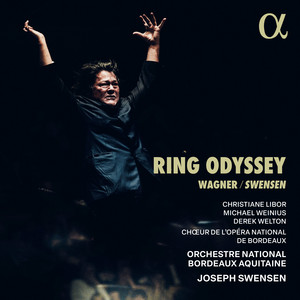 | Die Walküre, WWV 86B, Act I: Prelude - Thunderstorm, Sieglinde offers Shelter to Siegmund (Reworked by Joseph Swensen) | Richard Wagner, Orchestre National Bordeaux Aquitaine, Joseph Swensen | B♭ Major | 0 | 6B | 131 BPM | |
 | Valses poeticos: No. 3. Slow Waltz | Enrique Granados, Douglas Riva | E♭ Major | 0 | 5B | 78 BPM | |
 | Piano Concerto in A Minor, Op. 7: III. Finale. Allegro non troppo - Allegro molto | Clara Schumann, Veronica Jochum, Bamberg Symphony, Joseph Silverstein | F Minor | 1 | 4A | 103 BPM | |
 | Sonata in G Minor for Cello and Piano, Op. 19: IV. Allegro mosso | Sergei Rachmaninoff, Pablo Ferrandez, Denis Kozhukhin | G Major | 1 | 9B | 79 BPM | |
 | Saint-Saëns: Carnival of the Animals: XIII. The Swan | Camille Saint-Saëns, Antonio Pappano, Martha Argerich, Orchestra dell'Accademia Nazionale di Santa Cecilia | G Major | 0 | 9B | 87 BPM | |
 | On an Overgrown Path, Book 1, JW VIII/17: No. 5, Štěbetaly jak laštovičky | Leoš Janáček, Jennifer Elowsky-fox | F♯ Major | 0 | 2B | 65 BPM | |
 | Etudes-Tableaux, Op. 33, No. 5 in E-Flat Minor | Hélène Grimaud | A♭ Minor | 1 | 1A | 116 BPM | |
 | Piano Concerto in A Minor, Op. 7: II. Romanze. Andante non troppo con grazia – | Clara Schumann, Tasmanian Symphony Orchestra, Howard Shelley | F Major | 0 | 7B | 72 BPM | |
 | Nocturne No. 11, Op. 104 No. 1 | Gabriel Fauré, Louis Lortie | E Minor | 0 | 9A | 62 BPM | |
 | Piano Trio in G Minor, Op. 17: III. Andante | Clara Schumann, Dartington Piano Trio | D Minor | 2 | 7A | 87 BPM | |
 | 6 Etudes de concert, Op. 35: II. Automne | Cécile Chaminade, Mark Viner | D♭ Major | 0 | 3B | 79 BPM | |
 | The Seasons, Op. 37a, TH 135: 6. June: Barcarolle | Pyotr Ilyich Tchaikovsky, Brigitte Engerer | G Minor | 1 | 6A | 105 BPM | |
 | Estampes, L. 100: 3. Jardins sous la pluie | Claude Debussy, Roger Woodward | B Major | 0 | 1B | 76 BPM | |
 | Etudes symphoniques, Op. 13: Anhang Variation 4 | Robert Schumann, Martin Helmchen | C Major | 0 | 8B | 65 BPM | |
 | Masquerade Suite (Arr. for Piano by Alexander Dolukhanian): IV. Romance | Aram Khachaturian, Mikael Ayrapetyan | B♭ Major | 3 | 6B | 166 BPM | |
 | Stravinsky: Fireworks, Op. 4 | Igor Stravinsky, Melbourne Symphony Orchestra, Hiroyuki Iwaki | E Major | 2 | 12B | 62 BPM | |
 | Sonata No. 4 for Violin and Piano "From the Window": II. The Sky | Julian Lawrence Gargiulo, María Dueñas | G Major | 1 | 9B | 181 BPM | |
 | String Quartet No. 1 in D Major, Op. 11, TH 111: I. Moderato e semplice | Pyotr Ilyich Tchaikovsky, Heath Quartet | F Major | 2 | 7B | 116 BPM |
- ISRC
- CALC40900091
- Label
- L-M Records/RCA Records