- BPM
- 122
- Key
- E Minor
- Camelot
- 9A
Purcell: King Arthur, Z. 628, Act 3: Prelude While Cold Genius Rises - Song. "What Power Art Thou" by Henry Purcell, Les Arts Florissants, William Christie, Petteri Salomaa Song Details
"Purcell: King Arthur, Z. 628, Act 3: Prelude While Cold Genius Rises - Song. "What Power Art Thou"" by Henry Purcell, Les Arts Florissants, William Christie, Petteri Salomaa had its release date on January 5, 2026. With this song being around four minutes long, at 4:12, the duration of this song is pretty average compared to other songs. This track is safe for children and doesn't appear to contain any foul language, since the "Explicit" tag was not present in this track. The song is number 34 out of 55 in A Winter Journey by Wolfgang Amadeus Mozart, Alexander Glazunov, Antonio Vivaldi, Antonín Dvořák, Astor Piazzolla, Claude Debussy, Dmitri Shostakovich, Edvard Grieg, Edward MacDowell, Erich Wolfgang Korngold, Erik Satie, Felix Mendelssohn, Francis Poulenc, Franz Liszt, Franz Schubert, Frederick Delius, Frédéric Chopin, Geirr Tveitt, George Frideric Handel, Giuseppe Verdi, Gustav Holst, Gustav Mahler, Henry Purcell, Jean Sibelius, Jean-Baptiste Lully, Johann Sebastian Bach, Johannes Brahms, Joseph Haydn, Jules Massenet, Leroy Anderson, Ludwig van Beethoven, Marc-Antoine Charpentier, Margaret Bonds, Maurice Jarre, Maurice Ravel, Nikolai Rimsky-Korsakov, Philip Glass, Pyotr Ilyich Tchaikovsky, Ralph Vaughan Williams, Reynaldo Hahn, Richard Strauss, Robert Schumann, Sergei Prokofiev, Sergei Rachmaninoff, Edward Elgar, Traditional, Witold Lutosławski, Émile Waldteufel. Going off of the ISRC code of this track, we detected that the origin of this track is from France. Based on our statistics, Purcell: King Arthur, Z. 628, Act 3: Prelude While Cold Genius Rises - Song. "What Power Art Thou"'s popularity is not that popular right now. In our opinion, the overall tone is not very danceable and projects negative sounds, such as being sad, depressed, or angry.
BPM and Tempo
The tempo marking of Purcell: King Arthur, Z. 628, Act 3: Prelude While Cold Genius Rises - Song. "What Power Art Thou" by Henry Purcell, Les Arts Florissants, William Christie, Petteri Salomaa is Allegro (fast, quick, and bright), since this song has a tempo of 122 BPM. With that information, we can conclude that the song has a fast tempo. This song can go great with walking. The time signature for this track is 4/4.
Music Key
This song is in the music key of E Minor. Because this track belongs in the E Minor key, the camelot key is 9A. So, the perfect camelot match for 9A would be either 9A or 8B. While, a low energy boost can consist of either 9B or 10A. For moderate energy boost, you would use 6A and a high energy boost can either be 11A or 4A. However, if you are looking for a low energy drop, finding a song with a camelot key of 8A would be a great choice. Where 12A would give you a moderate drop, and 7A or 2A would be a high energy drop. Lastly, 12B allows you to change the mood.
Want to find the BPM and music key for other songs? Check out our BPM and Key Finder page!
- Popularity
- 17%
- Loudness
- -23.568 dB
- Acousticness
- 92%
- Danceability
- 24%
- Energy
- 3%
- Instrumentalness
- 75%
- Liveness
- 9%
- Loudness
- 61%
- Speechiness
- 4%
- Valence
- 4%
Recommendations
| Track | Artist | Key | Energy | Camelot | BPM | ||
|---|---|---|---|---|---|---|---|
 | Orfeo ed Euridice, Wq. 30: Dance of the Blessed Spirits "Melody" (Arr. Sgambati for Piano) | Christoph Willibald Gluck, Yuja Wang | D Minor | 0 | 7A | 70 BPM | |
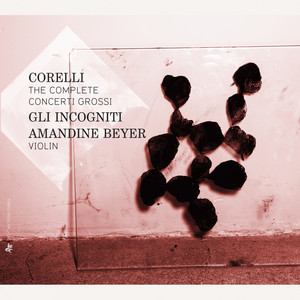 | Concerto grosso No. 1 in D Major, Op. 6: II. Largo - Allegro | Arcangelo Corelli, Gli Incogniti, Amandine Beyer, Helena Zemanova | D♭ Major | 2 | 3B | 146 BPM | |
 | Rameau: Les Indes galantes, Quatrième entrée "Les sauvages": "Forêts paisibles" (Zima, Adario, Sauvages) | Jean-Philippe Rameau, Sabine Devieilhe, Aimery Lefèvre, Le Jeune Choeur de Paris, Alexis Kossenko, Les Ambassadeurs | F♯ Minor | 3 | 11A | 85 BPM | |
 | Laudate pueri in G Major, RV 601 "Salmo 112": III. A solis ortu (Andante) | Antonio Vivaldi, Sandrine Piau, Accademia Bizantina, Ottavio Dantone, Stefano Montanari | A♭ Major | 1 | 4B | 128 BPM | |
 | Dido and Aeneas, Z. 626: When I am Laid in Earth - Arr. for Solo Cello | Henry Purcell, Christian-Pierre La Marca | F♯ Minor | 1 | 11A | 58 BPM | |
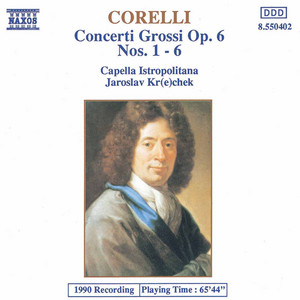 | Concerto Grosso In D Major, Op. 6, No. 1 : III. Largo | Arcangelo Corelli, Daniela Ruso, Anna Holbling, Ludovit Kanta, Quido Holbling, Capella Istropolitana | D Major | 1 | 10B | 78 BPM | |
 | Concerto con 2 violini e viola da gamba, Archi e continuo (Sol Minore, RV 578): I. Adagio e spiccato | Antonio Vivaldi, Manfredo Kraemer, Pablo Valetti, Luca Guglielmi, Jordi Savall, Le Concert Des Nations | F♯ Major | 4 | 2B | 115 BPM | |
 | De Visée: Pièces de théorbe et de luth, Suite No. 7 en ré mineur: V. Chaconne | Robert de Visée, Jean Rondeau | D♭ Minor | 1 | 12A | 94 BPM | |
 | Stabat Mater: 1. Stabat Mater | Giovanni Battista Pergolesi, Emma Kirkby, James Bowman, Academy of Ancient Music, Christopher Hogwood | E Minor | 0 | 9A | 88 BPM | |
 | Fauré: Élégie, Op. 24 (Orchestral Version) | Gabriel Fauré, Paavo Järvi, Eric Picard, Orchestre de Paris | A♭ Major | 0 | 4B | 89 BPM | |
 | Sinfonia in D Minor, Fk. 65: I. Adagio | Wilhelm Friedemann Bach, Il Pomo D'oro, Francesco Corti | D♭ Minor | 0 | 12A | 86 BPM | |
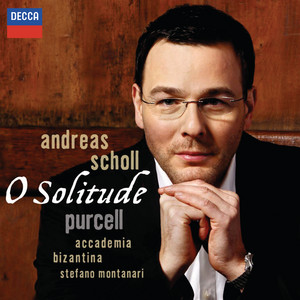 | Come, ye sons of art, away (1694) Ode for the Birthday of Queen Mary II: Strike the viol, touch the lute | Henry Purcell, Andreas Scholl, Accademia Bizantina, Stefano Montanari | D♭ Minor | 2 | 12A | 115 BPM | |
 | Oboe Concerto No. 3 in G Minor, HWV 287: I. Grave | George Frideric Handel, Anthony Camden, City of London Sinfonia, Nicholas Ward | G Minor | 1 | 6A | 101 BPM | |
 | Monteverdi: L'incoronazione di Poppea, SV 308, Act 3: "Pur ti miro" (Nerone, Poppea) | Claudio Monteverdi, Philippe Jaroussky, L'Arpeggiata, Núria Rial, Christina Pluhar | G Major | 1 | 9B | 77 BPM | |
 | The Tempest, Z. 631, "The Enchanted Island": Masque Of Spirits, Act II, No. 5 (Dance of the Winds) | Thomas Shadwell, Paul Grindlay, Nils Brown, Michael Colvin, Meredith Hall, Rosemarie van der Hooft, Gillian Keith, Aradia Ensemble, Brett Polegato, John Dryden, Henry Purcell | B Major | 5 | 1B | 124 BPM | |
 | Il ritorno d'Ulisse in patria: Sinfonia | Claudio Monteverdi, René Jacobs, Concerto Vocale | A Minor | 1 | 8A | 116 BPM | |
 | Couperin: Les Baricades mistérieuses | François Couperin, Aurora Orchestra, Nicholas Collon | B♭ Major | 0 | 6B | 65 BPM | |
 | Membra Jesu Nostri, BuxWV 75, Ad pedes: Aria "Dulcis Jesu, pie Deus" | Dietrich Buxtehude, Ricercar Consort, Philippe Pierlot, Matthias Vieweg | C Minor | 2 | 5A | 90 BPM | |
 | Purcell: Chacony in G Minor, Z. 730 | Henry Purcell, Sir Neville Marriner, Academy of St. Martin in the Fields | B♭ Major | 4 | 6B | 113 BPM | |
 | Purcell: Trumpet Sonata in D Major, Z. 850: II. Adagio | Henry Purcell, John Eliot Gardiner, English Baroque Soloists | D♭ Minor | 0 | 12A | 103 BPM | |
 | Orpheo ed Euridice, Wq. 30, Act II: Dance of the Blessed Spirits | Christoph Willibald Gluck, Eugene Ormandy, Philadelphia Orchestra | D Minor | 1 | 7A | 67 BPM | |
 | Requiem, Op. 48: 4. Pie Jesu (I) | Gabriel Fauré, Catherine Bott, Orchestre Révolutionnaire et Romantique, John Eliot Gardiner | B♭ Major | 0 | 6B | 72 BPM | |
 | The Indian Queen, Z. 630, Act II: I Come to Sing Great Zempoalla’s Story | Henry Purcell, The Sixteen, Harry Christophers, Matthew Long | B Major | 2 | 1B | 75 BPM | |
 | Concerto For 2 Cellos In G Minor, RV 531: I. Allegro | Antonio Vivaldi, Tafelmusik Baroque Orchestra, Jeanne Lamon | F♯ Minor | 2 | 11A | 119 BPM | |
 | Troisième Leçon de Ténèbres | François Couperin, Jordi Savall | A Minor | 0 | 8A | 209 BPM |
- ISRC
- FRZ209500102
- Label
- L-M Records/RCA Records