- BPM
- 166
- Key
- F Minor
- Camelot
- 4A
Cappellini: Raccolta di Ariette: Chi vuol ch’il cor gioisca by Pietro Paolo Cappellini, Jakub Józef Orliński, Il Pomo D'oro Song Details
On October 6, 2023, the song "Cappellini: Raccolta di Ariette: Chi vuol ch’il cor gioisca" was released by Pietro Paolo Cappellini, Jakub Józef Orliński, Il Pomo D'oro. The duration of This song is about two minutes long, specifically at 2:36. This song does not appear to have any foul language. Cappellini: Raccolta di Ariette: Chi vuol ch’il cor gioisca's duration is considered a little bit shorter than the average duration of a typical track. The song is number 14 out of 34 in Beyond by Jakub Józef Orliński, Il Pomo D'oro. Going off of the ISRC code of this track, we detected that the origin of this track is from United Kingdom. The popularity of Cappellini: Raccolta di Ariette: Chi vuol ch’il cor gioisca is currently not that popular right now. The overall mood can be danceable to some, especially with it's high amount of postive energy.
BPM and Tempo
The tempo marking of Cappellini: Raccolta di Ariette: Chi vuol ch’il cor gioisca by Pietro Paolo Cappellini, Jakub Józef Orliński, Il Pomo D'oro is Vivace (lively and fast), since this song has a tempo of 166 BPM. With that information, we can conclude that the song has a fast tempo. The time signature for this track is 3/4.
Music Key
This song has a musical key of F Minor. Because this track belongs in the F Minor key, the camelot key is 4A. So, the perfect camelot match for 4A would be either 4A or 3B. While, a low energy boost can consist of either 4B or 5A. For moderate energy boost, you would use 1A and a high energy boost can either be 6A or 11A. However, if you are looking for a low energy drop, finding a song with a camelot key of 3A would be a great choice. Where 7A would give you a moderate drop, and 2A or 9A would be a high energy drop. Lastly, 7B allows you to change the mood.
Want to find the BPM and music key for other songs? Check out our BPM and Key Finder page!
- Popularity
- 8%
- Loudness
- -23.654 dB
- Acousticness
- 100%
- Danceability
- 55%
- Energy
- 14%
- Instrumentalness
- 90%
- Liveness
- 10%
- Loudness
- 61%
- Speechiness
- 6%
- Valence
- 82%
Recommendations
| Track | Artist | Key | Energy | Camelot | BPM | ||
|---|---|---|---|---|---|---|---|
 | Pasacalles de cuarto tono, WSC 102 - Version for Consort of 4 Viols and Harp | Juan Cabanilles, Philippe Pierlot, Myriam Rignol, Anna Lachegyi, Lucile Boulanger, Giovanna Pessi | A♭ Minor | 1 | 1A | 91 BPM | |
 | Ballet des fous et des estropiés de la cervelle: II. Entrée des demy-fous | Antoine Boësset, Le Poème Harmonique, Vincent Dumestre | G Minor | 3 | 6A | 134 BPM | |
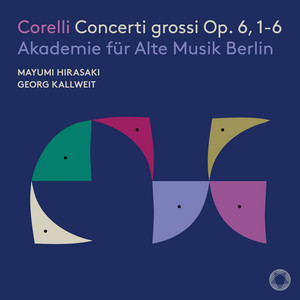 | Concerto grosso in D Major Op. 6, No. 4: II. Adagio | Arcangelo Corelli, Akademie für Alte Musik Berlin, Georg Kallweit | B♭ Minor | 0 | 3A | 111 BPM | |
 | Scarlatti, A / Orch Courbier & Delaforge: Il Pompeo, Act 2: "O cessate di piagarmi" (Orch. Courbier & Delaforge) | Alessandro Scarlatti, Nathalie Stutzmann, Orfeo 55 | E Minor | 2 | 9A | 85 BPM | |
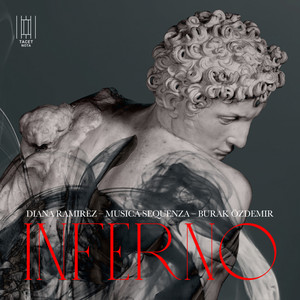 | Madrigals Libro, No.6: Moro, Lasso, Al Mio Duolo | Carlo Gesualdo, Musica Sequenza, BURAK | F♯ Minor | 1 | 11A | 75 BPM | |
 | Ground in A Minor | Christopher Simpson, Mika Suihkonen, Ballo della Battalia | A Major | 1 | 11B | 113 BPM | |
 | Sonata & Suite in D-Dur: Sonata & Suite in D-Dur: I. Adagio | Dietrich Becker, La Rêveuse, Florence Bolton, Sébastien Wonner, Benjamin Perrot | D♭ Major | 1 | 3B | 90 BPM | |
 | Cavalli: Ercole amante, Act 1: Sinfonia | Francesco Cavalli, Thomas Dunford, Jupiter | F♯ Minor | 1 | 11A | 107 BPM | |
 | Handel: Agrippina, HWV 6, Act 2: "Voi che udite" (Ottone) | George Frideric Handel, Jakub Józef Orliński, Maxim Emelyanychev, Il Pomo D'oro | E Minor | 2 | 9A | 134 BPM | |
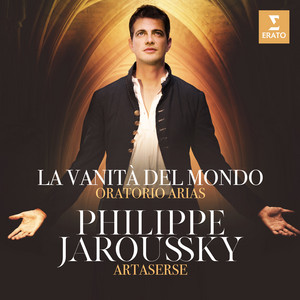 | Fago: Il faraone sommerso: "Forz'è pur nel proprio sangue" (Messo) | Francesco Nicola Fago, Philippe Jaroussky | A♭ Minor | 1 | 1A | 128 BPM | |
 | Prima die Lectio prima: V. Plorans ploravit | Emilio de' Cavalieri, Le Poème Harmonique, Vincent Dumestre | F♯ Major | 0 | 2B | 103 BPM | |
 | Juditha Triumphans, RV 644, Pt. 1: Quocum Patriae me ducit amore | Antonio Vivaldi, Alessandro De Marchi, Academia Montis Regalis, Magdalena Kozená | D♭ Minor | 1 | 12A | 70 BPM | |
 | Dowland: Lachrimae, or Seven Tears: No. 10, Semper Dowland, semper dolens, P. 9 | John Dowland, Jupiter, Thomas Dunford | D♭ Minor | 1 | 12A | 130 BPM | |
 | Historia di Jephte: VIII. Plorate colles | Giacomo Carissimi, Voces Suaves, Michele Vannelli, Mirjam Wernli | B Major | 1 | 1B | 170 BPM | |
 | Purcell: The Fairy Queen, Z. 629, Act V: Chaconne | Henry Purcell, Jupiter, Thomas Dunford | B Minor | 1 | 10A | 68 BPM | |
| Op.12, No.4: Canzon La Treccia | Tarquinio Merula, Musica Sequenza, BURAK | F♯ Minor | 1 | 11A | 75 BPM | |
 | Les Indes galantes, Prologue, Scène 2: "Musettes, résonnez..." (Hébé, Choeur) - Musette en rondeau | Jean-Philippe Rameau, Claron McFadden, Les Arts Florissants, William Christie | F♯ Major | 1 | 2B | 92 BPM | |
 | Alla caccia: Alla caccia | Giovanni Girolamo Kapsberger, Les Kapsber'girls, Alice Duport-Percier, Axelle Verner | E Major | 0 | 12B | 107 BPM | |
 | Gluck: Orfeo ed Euridice, Wq. 30, Act 1: "Gli sguardi trattieni" (Amore) | Christoph Willibald Gluck, Stefan Plewniak, Fatma Said, Il Giardino d'Amore | D♭ Major | 3 | 3B | 129 BPM | |
 | Lachrimae or Seven Tears: II. Lachrimae antiquae novae | John Dowland, Phantasm, Elizabeth Kenny | E Major | 1 | 12B | 112 BPM | |
 | A la fin cette bergère | Antoine Boësset, Paul Figuier, Les Bacchantes, Ronan Khalil | B Major | 1 | 1B | 74 BPM | |
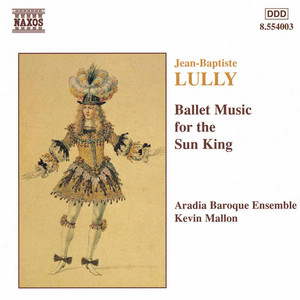 | Alcidiane: Ritournelle et Recit chante par Mademoiselle Hilaire | Jean-Baptiste Lully, Mary Enid Haines, Sharla Nafziger, Aradia Ensemble, Kevin Mallon | F♯ Minor | 0 | 11A | 168 BPM | |
 | Couperin, L: Fantaisie de Violes par Mr. Couperin | Louis Couperin, Jean Rondeau, Anna Lachegyi, Lucile Boulanger, Mathias Ferré, Myriam Rignol, Philippe Pierlot, Thibaut Roussel | C Minor | 2 | 5A | 62 BPM | |
 | La Gamme en forme de petit Opéra: I. Ut - Ré | Marin Marais, The Scale Knitters | G Minor | 2 | 6A | 96 BPM | |
 | Armide: Passacaille | Jean-Baptiste Lully, Véronique Gens/Les Talens Lyriques/Christophe Rousset, Christophe Rousset, Les Talens Lyriques | F Minor | 1 | 4A | 122 BPM |
- ISRC
- GBAYC2301498
- Label
- L-M Records/RCA Records