- BPM
- 69
- Key
- E Minor
- Camelot
- 9A
Two Dialogues with Postscript: III. Morning Serenade - Edit by Valentin Silvestrov, Hélène Grimaud, Camerata Salzburg Song Details
"Two Dialogues with Postscript: III. Morning Serenade - Edit" by Valentin Silvestrov, Hélène Grimaud, Camerata Salzburg had its release date on October 9, 2020. The duration of This song is about two minutes long, specifically at 2:42. This song does not appear to have any foul language. Two Dialogues with Postscript: III. Morning Serenade - Edit's duration is considered a little bit shorter than the average duration of a typical track. Since Silvestrov: Two Dialogues with Postscript: III. Morning Serenade (Edit) only contains only one song in the album, we like to consider this song as a single. Furthermore, we believe that the track originated from Germany. Two Dialogues with Postscript: III. Morning Serenade - Edit is average in popularity right now. In our opinion, the overall tone is not very danceable and projects negative sounds, such as being sad, depressed, or angry.
BPM and Tempo
With Two Dialogues with Postscript: III. Morning Serenade - Edit by Valentin Silvestrov, Hélène Grimaud, Camerata Salzburg having a BPM of 69 with a half-time of 34 BPM and a double-time of 138 BPM, we would consider this track to have a Adagio (slowly with great expression) tempo marking. Because of this, we believe that the song has an overall slow tempo. The time signature for this track is 4/4.
Music Key
The music key of this track is E Minor. Which also means that the camelot key for this song is 9A. So, the perfect camelot match for 9A would be either 9A or 8B. While, a low energy boost can consist of either 9B or 10A. For moderate energy boost, you would use 6A and a high energy boost can either be 11A or 4A. However, if you are looking for a low energy drop, finding a song with a camelot key of 8A would be a great choice. Where 12A would give you a moderate drop, and 7A or 2A would be a high energy drop. Lastly, 12B allows you to change the mood.
Want to find the BPM and music key for other songs? Check out our BPM and Key Finder page!
- Popularity
- 49%
- Loudness
- -34.463 dB
- Acousticness
- 87%
- Danceability
- 7%
- Energy
- 1%
- Instrumentalness
- 94%
- Liveness
- 9%
- Loudness
- 43%
- Speechiness
- 5%
- Valence
- 4%
Recommendations
| Track | Artist | Key | Energy | Camelot | BPM | ||
|---|---|---|---|---|---|---|---|
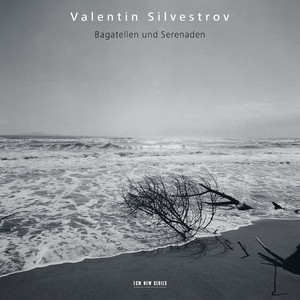 | Elegie | Valentin Silvestrov, Munich Chamber Orchestra, Christoph Poppen | C Major | 0 | 8B | 61 BPM | |
 | Dvořák: Rusalka, Op. 114, B. 203, Act 1: Song to the Moon | Antonín Dvořák, Edgar Moreau, Jérémie Moreau | F♯ Major | 0 | 2B | 138 BPM | |
 | Gymnopédie No. 1 (Arr. for Cello and Guitar) | Jan Vogler, Erik Satie, Ismo Eskelinen | G Major | 2 | 9B | 95 BPM | |
 | Rusalka, Op. 114, Act I: Song to the Moon | Antonín Dvořák, Pablo Ferrandez, Martin Fröst, Swedish Chamber Orchestra | D Minor | 1 | 7A | 109 BPM | |
 | Morricone: Cinema Paradiso | Andrea Morricone, Ennio Morricone, Alexandre Tharaud | B♭ Major | 0 | 6B | 81 BPM | |
 | Méditation from Thaïs | Jules Massenet, Nicola Benedetti, London Symphony Orchestra, Daniel Harding | E Minor | 1 | 9A | 89 BPM | |
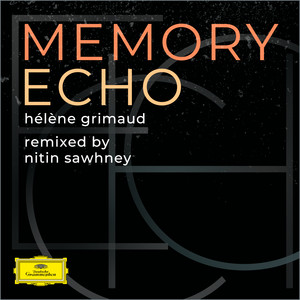 | Clair de lune - Nitin Sawhney Version | Hélène Grimaud, Nitin Sawhney | D♭ Major | 0 | 3B | 64 BPM | |
 | Sarabande et rigaudon, Op. 93: Sarabande | Camille Saint-Saëns, Orchestre National de Lille, Jun Markl | C Major | 0 | 8B | 71 BPM | |
 | Cello Concerto in A Minor, Op. 129: IIa. Sehr langsam | Robert Schumann, Kian Soltani, Camerata Salzburg, Gregory Ahss | E Major | 0 | 12B | 113 BPM | |
 | Morceau de lecture (Arr. for Violin & Piano) | Gabriel Fauré, Christian Svarfvar, Roland Pöntinen | A Major | 0 | 11B | 125 BPM | |
 | Etudes-Tableaux, Op. 33, No. 2 in C Major | Hélène Grimaud | F Major | 0 | 7B | 84 BPM | |
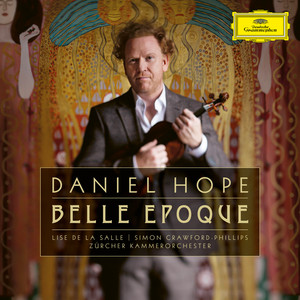 | Rêverie, L. 68 (Arr. by Badzura) | Claude Debussy, Daniel Hope, Zürcher Kammerorchester | F Major | 1 | 7B | 82 BPM | |
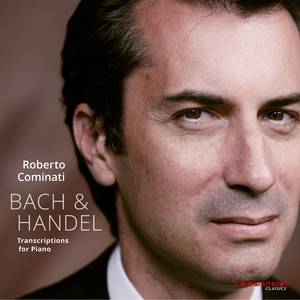 | Minuet in G Minor, HWV 434 No. 4 (Transc. W. Kempff) | George Frideric Handel, Roberto Cominati | G Minor | 0 | 6A | 66 BPM | |
 | Nocturnes, Op. 32: No. 1 in B Major. Andante sostenuto | Frédéric Chopin, Jan Lisiecki | B Major | 0 | 1B | 64 BPM | |
 | Nisi Dominus, RV 608 - Arr. Cello: 4. Cum dederit dilectis suis (Arr. Cello) | Antonio Vivaldi, Harriet Krijgh, Amsterdam Sinfonietta, Candida Thompson | G Minor | 0 | 6A | 106 BPM | |
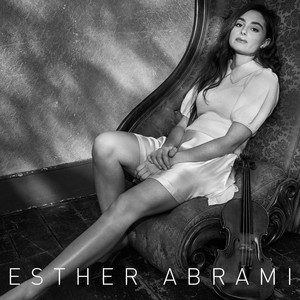 | Three Romances for Violin and Piano, Op. 22: I. Andante molto | Clara Schumann, Esther Abrami, Iyad Sughayer | D♭ Major | 2 | 3B | 81 BPM | |
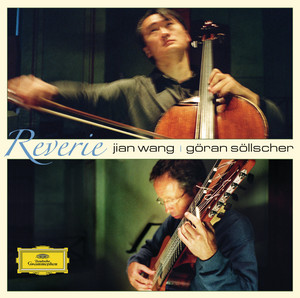 | Sicilienne (Arr. by Söllscher) | Maria Theresia von Paradis, Jian Wang, Göran Söllscher | F Major | 0 | 7B | 112 BPM | |
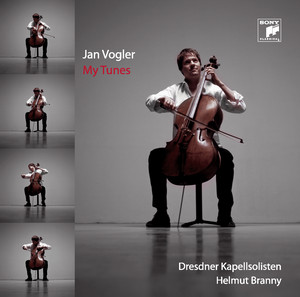 | Kol Nidrei, Op. 47 | Max Bruch, Jan Vogler, Helmut Branny | D Major | 1 | 10B | 136 BPM | |
 | Soirées musicales, Op. 6: II. Notturno. Andante con moto (Version for Harp) | Clara Schumann, Magdalena Hoffmann | D Minor | 0 | 7A | 76 BPM | |
 | L'Arlésienne Suite No. 2 (Arr. Guiraud): III. Menuet | Georges Bizet, Orchestre Symphonique de Montréal, Charles Dutoit | E♭ Major | 0 | 5B | 128 BPM | |
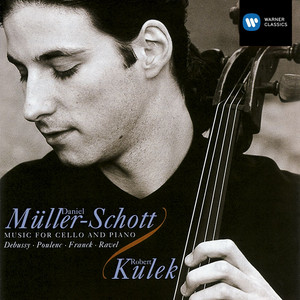 | Poulenc: Cello Sonata, FP 143: II. Cavatine | Francis Poulenc, Daniel Müller-Schott/Robert Kulek | F♯ Major | 0 | 2B | 77 BPM | |
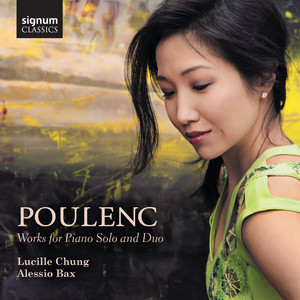 | 15 Improvisations, FP 170: No. 13 in A Minor | Francis Poulenc, Lucille Chung | C Major | 0 | 8B | 72 BPM | |
 | Concerto in D Major, Op. 77: II. Adagio | Johannes Brahms, Francesca Dego, BBC Symphony Orchestra, Dalia Stasevska | C Major | 0 | 8B | 60 BPM | |
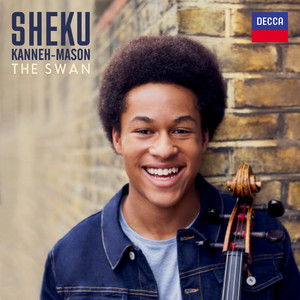 | Le Carnaval des Animaux, R. 125: 13. The Swan (Arr. Hodge for Cello, Harp & Ensemble) | Camille Saint-Saëns, Sheku Kanneh-Mason, Katherine Thomas, CBSO Cellos | G Major | 1 | 9B | 69 BPM | |
 | Les Boréades, RCT 31, Acte IV, Scène IV: Entrée pour les Muses, les Zéphyres, les Saisons, les Heures et les Arts | Jean-Philippe Rameau, Teodor Currentzis | D♭ Major | 1 | 3B | 130 BPM |
- ISRC
- DEN962000434
- Label
- L-M Records/RCA Records