- BPM
- 137
- Key
- F Major
- Camelot
- 7B
Gershwin: Second Rhapsody for Two Pianos "Rhapsody in Rivets": Allegro - Poco meno - by George Gershwin, Katia Labèque, Marielle Labèque Song Details
"Gershwin: Second Rhapsody for Two Pianos "Rhapsody in Rivets": Allegro - Poco meno -" by George Gershwin, Katia Labèque, Marielle Labèque had its release date on 1988. Since This song is still less than 10 minute long, it is still considered a pretty long duration song compared to the average song length. This song does not appear to be explicit due to the lack of the "E" tag. The track order of this song in George Gershwin, Katia Labèque, Marielle Labèque's "Gershwin: Music for Two Pianos" album is number 1 out of 14. On top of that, United Kingdom appears to be the country where this track was created. Based on our statistics, Gershwin: Second Rhapsody for Two Pianos "Rhapsody in Rivets": Allegro - Poco meno -'s popularity is unknown right now. Although the tone can be danceable to some, this track does projects more of a negative sound rather than a postive one.
BPM and Tempo
We consider the tempo marking of Gershwin: Second Rhapsody for Two Pianos "Rhapsody in Rivets": Allegro - Poco meno - by George Gershwin, Katia Labèque, Marielle Labèque to be Allegro (fast, quick, and bright) because the track has a tempo of 137 BPM, a half-time of 68BPM, and a double-time of 274 BPM. Based on that, the speed of the song's tempo is fast. Activities such as, walking, can go well with this song. The time signature for this track is 4/4.
Music Key
This song is in the music key of F Major. This also means that this song has a camelot key of 7B. So, the perfect camelot match for 7B would be either 7B or 8A. While, 8B can give you a low energy boost. For moderate energy boost, you would use 4B and a high energy boost can either be 9B or 2B. Though, if you want a low energy drop, you should looking for songs with either a camelot key of 7A or 6B will give you a low energy drop, 10B would be a moderate one, and 5B or 12B would be a high energy drop. Lastly, 4A allows you to change the mood.
Want to find the BPM and music key for other songs? Check out our BPM and Key Finder page!
- Popularity
- 0%
- Loudness
- -21.321 dB
- Acousticness
- 99%
- Danceability
- 41%
- Energy
- 28%
- Instrumentalness
- 93%
- Liveness
- 13%
- Loudness
- 64%
- Speechiness
- 4%
- Valence
- 7%
Recommendations
| Track | Artist | Key | Energy | Camelot | BPM | ||
|---|---|---|---|---|---|---|---|
 | Polovetsian Dances from Prince Igor: Moderato alla breve | Alexander Borodin, George Szell, The Cleveland Orchestra | A Major | 2 | 11B | 108 BPM | |
 | George Gershwin's Song-Book: No. 8, The Man I Love | George Gershwin, Michael Endres | A♭ Major | 0 | 4B | 69 BPM | |
 | In the Steppes of Central Asia | Alexander Borodin, Royal Philharmonic Orchestra, Vladimir Ashkenazy | A Major | 0 | 11B | 69 BPM | |
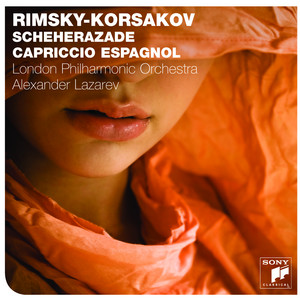 | Scheherazade: Calm at Sea | Nikolai Rimsky-Korsakov, Lars Hjalmar Joakim | E Major | 2 | 12B | 84 BPM | |
 | Carmen Suite No. 1 (Arr. E. Guiraud): IV. Séguedille | Georges Bizet, Orquestra Simfònica de Barcelona i Nacional de Catalunya, Pablo González | G Minor | 0 | 6A | 66 BPM | |
 | 3 Ghost Rags: No. 1, The Graceful Ghost Rag | William Bolcom, Spencer Myer | B♭ Minor | 0 | 3A | 116 BPM | |
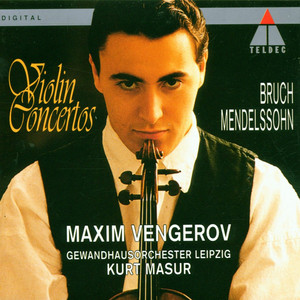 | Bruch: Violin Concerto No. 1 in G Minor, Op. 26: I. Prelude. Allegro moderato | Max Bruch, Maxim Vengerov, Kurt Masur, Gewandhausorchester | E♭ Major | 1 | 5B | 113 BPM | |
 | Moods, Impressions and Souvenirs, Op. 41: IV. Poème | Zdeněk Fibich, Balazs Szokolay | E Major | 0 | 12B | 126 BPM | |
 | Carmen Fantasy, Op. 25: Introduction. Allegro moderato | Pablo de Sarasate, Hilary Hahn, Frankfurt Radio Symphony Orchestra, Andrés Orozco-Estrada | C Major | 3 | 8B | 135 BPM | |
 | Tango jalousie | Jacob Gade, Sakari Oramo, Wiener Philharmoniker | D Major | 1 | 10B | 72 BPM | |
 | Play Piano Play (10 Übungsstücke für Yuko): VI. Presto possibile | Glenn Gould, Friedrich Gulda, Sasha Grynyuk | B♭ Minor | 3 | 3A | 152 BPM | |
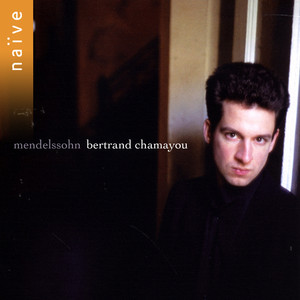 | Songs Without Words, Book VI Opus 67: No. 2 in F-Sharp Minor | Felix Mendelssohn, Bertrand Chamayou | F♯ Minor | 1 | 11A | 69 BPM | |
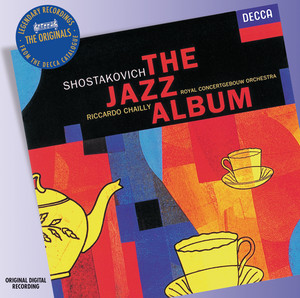 | Jazz Suite No.1: 3. Foxtrot | Dmitri Shostakovich, Concertgebouworkest, Riccardo Chailly | D Major | 0 | 10B | 125 BPM | |
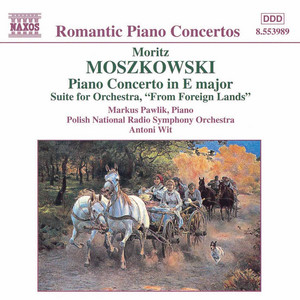 | Aus aller Herren Landern (From Foreign Lands), Op. 23: VI.Hungarian: Molto allegro | Moritz Moszkowski, Markus Pawlik, Polish National Radio Symphony Orchestra, Antoni Wit | D Major | 4 | 10B | 141 BPM | |
 | Petrushka: Danse Russe | Robert Groslot, Belgian Radio and Television Philharmonic Orchestra, Igor Stravinsky | D Minor | 5 | 7A | 80 BPM | |
 | Piano Quintet in C Minor: I. Andante | Alexander Borodin, Ilona Prunyi, New Budapest Quartet | C Minor | 1 | 5A | 68 BPM | |
 | Carmen, Opera Suite No. 1: V. Seguedille, Act 1 | London Festival Orchestra, Alfred Scholz | D Major | 0 | 10B | 92 BPM | |
 | Rodeo: 4 Dance Episodes: No. 4. Hoe-Down | Aaron Copland, Buffalo Philharmonic Orchestra | G Major | 3 | 9B | 125 BPM | |
 | Lullaby for string orchestra | George Gershwin, The Cleveland Orchestra, Riccardo Chailly | G Major | 0 | 9B | 94 BPM | |
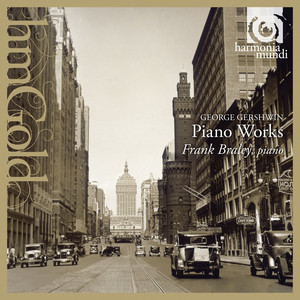 | Merry Andrew: Allegretto | George Gershwin, Frank Braley | A Major | 0 | 11B | 156 BPM | |
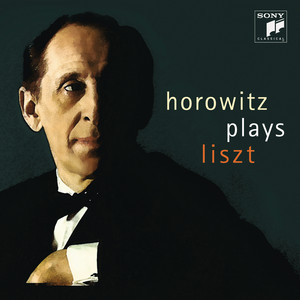 | Consolation No. 2 in E Major, S. 172/2 | Franz Liszt, Vladimir Horowitz | E Major | 0 | 12B | 50 BPM | |
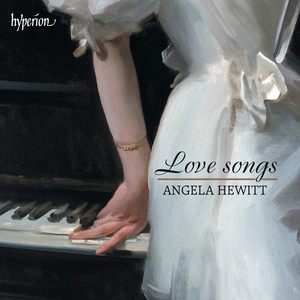 | Morgen, Op. 27 No. 4 (Arr. Reger for Piano) | Richard Strauss, Angela Hewitt | A Major | 2 | 11B | 143 BPM | |
 | Poulenc: Concerto for Two Pianos in D Minor, FP 61: I. Allegro ma non troppo | Francis Poulenc, James Conlon, Rotterdam Philharmonic Orchestra | E♭ Major | 1 | 5B | 103 BPM | |
 | Lieder ohne Worte (Songs without Words), Book 2, Op. 30: No. 7 in E-Flat Major, Op. 30, No. 1, MWV U103 | Felix Mendelssohn, Péter Nagy | E♭ Major | 0 | 5B | 65 BPM | |
 | Love Walked In | George Gershwin, Benjamin Grosvenor | D♭ Major | 1 | 3B | 125 BPM |
- ISRC
- GBAYC8703301
- Label
- L-M Records/RCA Records