- BPM
- 91
- Key
- G Major
- Camelot
- 9B
Pavane pour une infante défunte, M. 19 (Version for Orchestra) by Maurice Ravel, Orchestre Philharmonique Du Luxembourg, Gustavo Gimeno Song Details
"Pavane pour une infante défunte, M. 19 (Version for Orchestra)" by Maurice Ravel, Orchestre Philharmonique Du Luxembourg, Gustavo Gimeno had its release date on August 1, 2017. Since This song is still less than 10 minute long, it is still considered a pretty long duration song compared to the average song length. This song does not appear to be explicit due to the lack of the "E" tag. There are a total of 16 in the song's album "Ravel: Daphnis et Chloé". In this album, this song's track order is #16. Furthermore, we believe that the track originated from Netherlands. In terms of popularity, Pavane pour une infante défunte, M. 19 (Version for Orchestra) is currently unknown. In our opinion, the overall tone is not very danceable and projects negative sounds, such as being sad, depressed, or angry.
BPM and Tempo
With Pavane pour une infante défunte, M. 19 (Version for Orchestra) by Maurice Ravel, Orchestre Philharmonique Du Luxembourg, Gustavo Gimeno having a BPM of 91 with a half-time of 46 BPM and a double-time of 182 BPM, we would consider this track to have a Andante (at a walking pace) tempo marking. Because of this, we believe that the song has an overall slow tempo. Looking at the BPM of this song, this song might go great with yoga or pilates. The time signature for this track is 4/4.
Music Key
This song is in the music key of G Major. Or for those who are familiar with the camelot wheel, this song has a camelot key of 9B. So, the perfect camelot match for 9B would be either 9B or 10A. While, 10B can give you a low energy boost. For moderate energy boost, you would use 6B and a high energy boost can either be 11B or 4B. Though, if you want a low energy drop, you should looking for songs with either a camelot key of 9A or 8B will give you a low energy drop, 12B would be a moderate one, and 7B or 2B would be a high energy drop. Lastly, 6A allows you to change the mood.
Want to find the BPM and music key for other songs? Check out our BPM and Key Finder page!
- Popularity
- 0%
- Loudness
- -35.821 dB
- Acousticness
- 98%
- Danceability
- 10%
- Energy
- 0%
- Instrumentalness
- 82%
- Liveness
- 5%
- Loudness
- 40%
- Speechiness
- 4%
- Valence
- 4%
Recommendations
| Track | Artist | Key | Energy | Camelot | BPM | ||
|---|---|---|---|---|---|---|---|
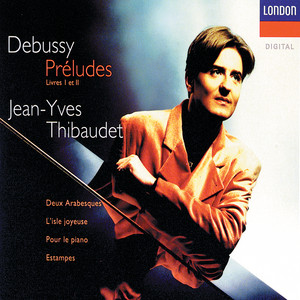 | Rêverie, L. 68: Rêverie | Claude Debussy, Jean-Yves Thibaudet | G Minor | 0 | 6A | 69 BPM | |
 | Die Rose, Romanze aus der Oper Zemir und Azor, S571/R259 (Spohr) | Franz Liszt, Soyeon Kate Lee | E Major | 0 | 12B | 88 BPM | |
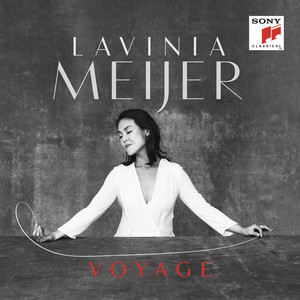 | Introduction et Allegro, M. 46 | Lavinia Meijer, Amsterdam Sinfonietta | E♭ Minor | 1 | 2A | 78 BPM | |
 | Pavane pour une infante défunte, M. 19 | Maurice Ravel, Alexandre Tharaud | E Minor | 0 | 9A | 63 BPM | |
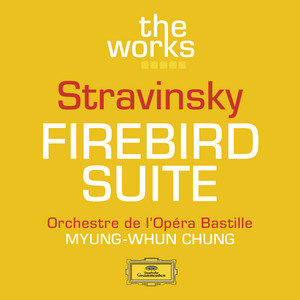 | The Firebird (L'oiseau De Feu) - Suite (1919): Finale | Igor Stravinsky, Orchestre de l'Opéra National de Paris, Myung-Whun Chung | E Major | 2 | 12B | 78 BPM | |
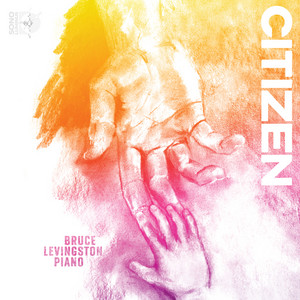 | 3 Visions: No. 2, Summerland | William Grant Still, Bruce Levingston | F♯ Major | 0 | 2B | 67 BPM | |
 | Petite Suite: Nocturne | Alexander Borodin, Alexander Krichel | E Minor | 1 | 9A | 66 BPM | |
 | Le tombeau de Couperin: 3. Menuet (version for orchestra) | Maurice Ravel, フランス国立リヨン管弦楽団, レナード・スラットキン | A Major | 1 | 11B | 107 BPM | |
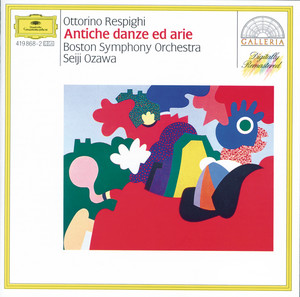 | Ancient Airs & Dances, Suite III, P. 172: III. Siciliana (Anonymous) | Ottorino Respighi, Boston Symphony Orchestra, Seiji Ozawa | C Minor | 2 | 5A | 109 BPM | |
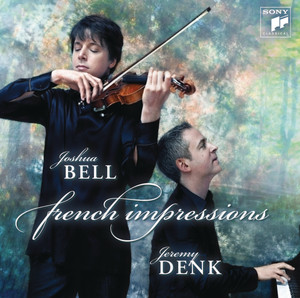 | Violin Sonata in A major, FWV 8: IV. Allegretto poco mosso | César Franck, Joshua Bell, Jeremy Denk | A Major | 1 | 11B | 94 BPM | |
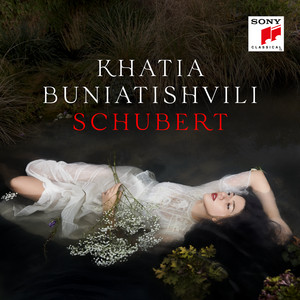 | Ständchen, S. 560 (Trans. from Schwanengesang No. 4, D. 957) | Franz Schubert, Franz Liszt, Khatia Buniatishvili | D Major | 0 | 10B | 67 BPM | |
 | Walton: Henry V: Touch Her Soft Lips and Part | William Walton, Sir Neville Marriner, Academy of St. Martin in the Fields | B♭ Major | 4 | 6B | 113 BPM | |
 | Young Birches, Op. 128, No. 2 | Amy Beach, Joanne Polk | F♯ Minor | 1 | 11A | 170 BPM | |
 | Paradis: Sicilienne 파라디스 시실리안느 | 김준영 | E♭ Major | 0 | 5B | 137 BPM | |
 | Warsaw Concerto | Richard Addinsell, Jean-Yves Thibaudet, BBC Symphony Orchestra, Hugh Wolff | B Major | 1 | 1B | 76 BPM | |
 | Violin Sonata No. 3 in C Minor, Op. 45: II. Allegretto espressivo alla romanza | Edvard Grieg, Duo Cammarano-Deljavan | D Major | 1 | 10B | 72 BPM | |
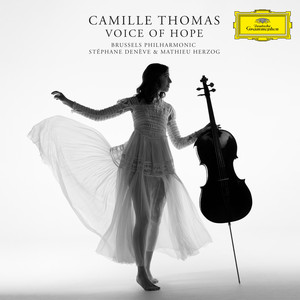 | Dido and Aeneas, Z. 626 / Act III: "When I Am Laid in Earth" Dido's Lamento (Arr. by Mathieu Herzog for Cello and Strings) | Henry Purcell, Camille Thomas, Brussels Philharmonic, Mathieu Herzog | G Minor | 1 | 6A | 77 BPM | |
 | Piano Quartet in E-Flat Major, Op. 47: III. Andante cantabile | Robert Schumann, Beaux Arts Trio, Samuel Rhodes | B♭ Major | 0 | 6B | 67 BPM | |
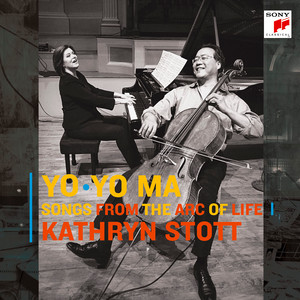 | Was it a Dream?, Op. 37, No. 4 | Jean Sibelius, Yo-Yo Ma, Kathryn Stott | A♭ Minor | 1 | 1A | 74 BPM | |
 | Sonata In G Minor For Cello & Piano, Op. 19: 3. Andante | Sergei Rachmaninoff, Alisa Weilerstein, Inon Barnatan | F Major | 2 | 7B | 82 BPM | |
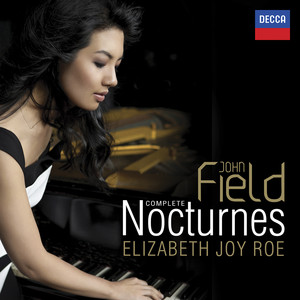 | Nocturne No. 1 in E-Flat Major, H. 24 | John Field, Elizabeth Joy Roe | E♭ Major | 0 | 5B | 75 BPM | |
 | Jazz Suite No. 2: IV. Waltz I | Dmitri Shostakovich, Royal Concertgebouw Orchestra, Riccardo Chailly | B♭ Major | 2 | 6B | 178 BPM | |
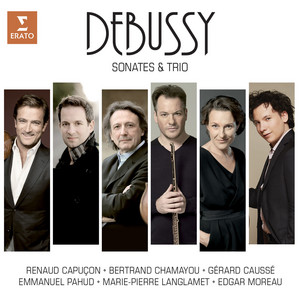 | Debussy: Piano Trio in G Major, CD 5, L. 3: III. Andante espressivo | Claude Debussy, Bertrand Chamayou, Edgar Moreau, Renaud Capuçon | C Major | 1 | 8B | 84 BPM | |
 | Fauré: Pavane, Op. 50 (Instrumental Version) | Gabriel Fauré, Sir Neville Marriner, Academy of St. Martin in the Fields | F♯ Minor | 1 | 11A | 70 BPM | |
 | Lyric Pieces, Book 5, Op. 54: Nocturne | Edvard Grieg, Alessio Bax | C Major | 0 | 8B | 72 BPM |
- ISRC
- NLE421604416
- Label
- L-M Records/RCA Records