- BPM
- 115
- Key
- G Major
- Camelot
- 9B
The Four Seasons: Concerto for Violin in G Major, Op. 8, No. 2, RV315, Summer, I. Allegro non molto, Allegro by Antonio Janigro Song Details
Antonio Janigro's ' "The Four Seasons: Concerto for Violin in G Major, Op. 8, No. 2, RV315, Summer, I. Allegro non molto, Allegro" was released on its scheduled release date, August 12, 2003. With this song being about 5 minutes long, at This song is fairly a long song compared to the average song length. This song does not have an "Explicit" tag, making it safe for all ages. This song is part of Vivaldi: Orchestral Masterpieces by Alfred Brendel, Jeanne-Marie Darre, Anton Heiller, Antonio Janigro, Jan Tomasow, Rudolf Klepack. The song's track number on the album is #8 out of 45 tracks. Based on our data, United States was the country where this track was produced or recorded. In terms of popularity, The Four Seasons: Concerto for Violin in G Major, Op. 8, No. 2, RV315, Summer, I. Allegro non molto, Allegro is currently unknown. The overall mood can be danceable to some, especially with it's high amount of postive energy.
BPM and Tempo
Since The Four Seasons: Concerto for Violin in G Major, Op. 8, No. 2, RV315, Summer, I. Allegro non molto, Allegro by Antonio Janigro has a tempo of 115 beats per a minute, the tempo markings of this song would be Moderato (at a moderate speed). With The Four Seasons: Concerto for Violin in G Major, Op. 8, No. 2, RV315, Summer, I. Allegro non molto, Allegro being at 115 BPM, the half-time would be 58 BPM with a double-time of 230 BPM.In addition, we consider the tempo speed to be pretty moderate for this song. This makes this song perfect for activities such as, walking. The time signature for this track is 4/4.
Music Key
G Major is the music key of this track. Or for those who are familiar with the camelot wheel, this song has a camelot key of 9B. So, the perfect camelot match for 9B would be either 9B or 10A. While, 10B can give you a low energy boost. For moderate energy boost, you would use 6B and a high energy boost can either be 11B or 4B. Though, if you want a low energy drop, you should looking for songs with either a camelot key of 9A or 8B will give you a low energy drop, 12B would be a moderate one, and 7B or 2B would be a high energy drop. Lastly, 6A allows you to change the mood.
Want to find the BPM and music key for other songs? Check out our BPM and Key Finder page!
- Popularity
- 0%
- Loudness
- -11.682 dB
- Acousticness
- 93%
- Danceability
- 47%
- Energy
- 33%
- Instrumentalness
- 90%
- Liveness
- 30%
- Loudness
- 81%
- Speechiness
- 4%
- Valence
- 63%
Recommendations
| Track | Artist | Key | Energy | Camelot | BPM | ||
|---|---|---|---|---|---|---|---|
 | Oboe Concerto , Op. 7 No. 12 - Allegro | Tomaso Albinoni, Senia Trubashnik, Luxembourg Radio Symphony Orchestra, Kurt Redel | C Major | 3 | 8B | 115 BPM | |
 | III. Minuetto | Luigi Boccherini, Zoltan Tokos, Danubius Quartet | G Major | 1 | 9B | 80 BPM | |
 | Flute Sonata in G Major, Op. 1 No. 5, HWV 363b: I. Adagio | George Frideric Handel, Hans-Martin Linde, Karl Richter, Johannes Koch | G Major | 1 | 9B | 74 BPM | |
 | Symphony in D Minor, W. I/3: I. Allegro | Johann Christoph Friedrich Bach, Concerto Köln | E♭ Minor | 1 | 2A | 82 BPM | |
 | Overture No. 6 in B-Flat Major: II. Largo | Francesco Maria Veracini, L'Arte dell' Arco, Federico Guglielmo | F♯ Major | 0 | 2B | 96 BPM | |
 | Bach Orchestral Suite No.2 in B Minor, BWV 1076: V. Polonaise | London Conchord Ensemble, Florian Uhlig | B Minor | 1 | 10A | 85 BPM | |
 | Sonata No. 1 in G Major | Gioachino Rossini, I Solisti di Zagreb, Antonio Janigro | D Major | 1 | 10B | 114 BPM | |
 | Symphony in A Major, J-C 62: IIIb. Allegro (alternative finale) | Giovanni Battista Sammartini, Aradia Ensemble, Kevin Mallon | F♯ Major | 1 | 2B | 137 BPM | |
 | Paganini: Centone di sonate, Op. 64, Lettera A, Sonata No. 2 in D Major: I. Adagio cantabile | Niccolò Paganini, Gyorgy Terebesi, Sonja Prunnbauer | A Major | 1 | 11B | 112 BPM | |
 | Cello Concerto in C Major, G. 481: II. Adagio | Luigi Boccherini, Tim Hugh, Scottish Chamber Orchestra, Anthony Halstead | G Major | 0 | 9B | 100 BPM | |
 | Ravel: Piece en forme de Habanera | Maurice Ravel, Antonio Janigro, Antonio Beltrami | A Minor | 2 | 8A | 92 BPM | |
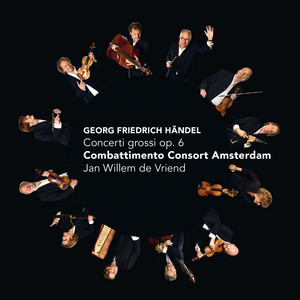 | Concerto grosso op. 6 no. 1 in G major HWV 319: I. A tempo guisto | George Frideric Handel, Combattimento Consort Amsterdam, Jan Willem de Vriend | A Minor | 0 | 8A | 70 BPM | |
 | Concerto grosso in D Major, Op. 3 No. 4: II. Allegro ardito | Pietro Castrucci, Antonio Anselmi, Marco Serino, Vito Paternoster, I Musici | E Minor | 3 | 9A | 124 BPM | |
 | The Kingdom of Silence | Anastasiia Shevchenko | G Minor | 1 | 6A | 69 BPM | |
 | Oboe d'amore Concerto in D Major: I. Grave | Christoph Graupner, Lajos Lencsés, Budapest Strings, Karoly Botvay | E Minor | 1 | 9A | 89 BPM | |
 | Punto: Horn Concerto No. 6 in E-Flat Major: II. Adagio cantabile | Giovanni Punto, Barry Tuckwell, Academy of St. Martin in the Fields, Sir Neville Marriner | E♭ Major | 0 | 5B | 57 BPM | |
 | Concerto à cinque in B Major: II. Adagio | I Solisti di Zagreb | G Major | 1 | 9B | 166 BPM | |
 | Concerto Grosso h-Moll, Op. 6, Nr. 12, HWV 330: 3. Larghetto, e piano - Variatio (Fluch der Karibik): I. Largo | George Frideric Handel, Capella Istropolitana, Jozef Kopelman | B Minor | 1 | 10A | 66 BPM | |
| Cello Concerto in G Major, G. 480: III. Allegro | Luigi Boccherini, Tim Hugh, Scottish Chamber Orchestra, Anthony Halstead | E Minor | 1 | 9A | 96 BPM | |
 | 6 Sonates en symphonies, Op. 3, Sonata No. 6: IIa. Larghetto | Jean-Joseph Cassanéa De Mondonville, Les Musiciens du Louvre, Marc Minkowski | A♭ Minor | 0 | 1A | 133 BPM | |
 | Cello Concerto No. 1 in G Major: III. Rondo. Allegro | Carl Stamitz, Christian Benda, Prague Chamber Orchestra | C Major | 1 | 8B | 74 BPM | |
 | Water Music Suite - Water Music Suite in F Major HWV 348: 2. Adagio e staccato | George Frideric Handel, London Philharmonic Orchestra, Thurston Dart | D Minor | 0 | 7A | 94 BPM | |
 | Sinfonia In G Major, Wq. 183/4, H. 666: I. Allegro Assai | Carl Philipp Emanuel Bach, Salzburg Chamber Philharmonic Orchestra | F Major | 0 | 7B | 133 BPM | |
 | Brahms / Orch. Hidas: 21 Hungarian Dances, WoO 1: No. 2 in D Minor | Johannes Brahms, János Rolla, Franz Liszt Chamber Orchestra | G Major | 1 | 9B | 129 BPM | |
 | Sonata In C Major, RV 779: Largo e cantabile | Gail Hennessy & Nicholas Parle | A♭ Minor | 0 | 1A | 80 BPM |
- ISRC
- USAT50311215
- Label
- L-M Records/RCA Records