- BPM
- 84
- Key
- A♭ Major
- Camelot
- 4B
Orff: Carmina Burana, Pt. 2, In Taberna: Ego sum abbas Cucaniensis by Carl Orff, Riccardo Muti, Jonathan Summers, Philharmonia Chorus, Philharmonia Orchestra Song Details
"Orff: Carmina Burana, Pt. 2, In Taberna: Ego sum abbas Cucaniensis" by Carl Orff, Riccardo Muti, Jonathan Summers, Philharmonia Chorus, Philharmonia Orchestra had its release date on 1980. With This song being less than two minutes long, at 1:27, we are fairly confident that this song is not explicit and is safe for all ages. Based on the duration of this song, this song duration is much smaller than the average song duration. There are a total of 25 in the song's album "Orff: Carmina burana". In this album, this song's track order is #13. Furthermore, we believe that the track originated from United Kingdom. Orff: Carmina Burana, Pt. 2, In Taberna: Ego sum abbas Cucaniensis is not that popular right now. Although the tone can be danceable to some, this track does projects more of a negative sound rather than a postive one.
BPM and Tempo
With Orff: Carmina Burana, Pt. 2, In Taberna: Ego sum abbas Cucaniensis by Carl Orff, Riccardo Muti, Jonathan Summers, Philharmonia Chorus, Philharmonia Orchestra having a BPM of 84 with a half-time of 42 BPM and a double-time of 168 BPM, we would consider this track to have a Andante (at a walking pace) tempo marking. Because of this, we believe that the song has an overall slow tempo. The time signature for this track is 3/4.
Music Key
A♭ Major is the music key of this track. Or for those who are familiar with the camelot wheel, this song has a camelot key of 4B. So, the perfect camelot match for 4B would be either 4B or 5A. While, 5B can give you a low energy boost. For moderate energy boost, you would use 1B and a high energy boost can either be 6B or 11B. Though, if you want a low energy drop, you should looking for songs with either a camelot key of 4A or 3B will give you a low energy drop, 7B would be a moderate one, and 2B or 9B would be a high energy drop. Lastly, 1A allows you to change the mood.
Want to find the BPM and music key for other songs? Check out our BPM and Key Finder page!
- Popularity
- 2%
- Loudness
- -21.056 dB
- Acousticness
- 95%
- Danceability
- 43%
- Energy
- 16%
- Instrumentalness
- 0%
- Liveness
- 11%
- Loudness
- 65%
- Speechiness
- 9%
- Valence
- 18%
Recommendations
| Track | Artist | Key | Energy | Camelot | BPM | ||
|---|---|---|---|---|---|---|---|
 | Puccini: Turandot, Act 3: "Tu, che di gel sei cinta" (Turandot) | Giacomo Puccini, Maria Callas, Philharmonia Orchestra, Tullio Serafin | E♭ Minor | 2 | 2A | 80 BPM | |
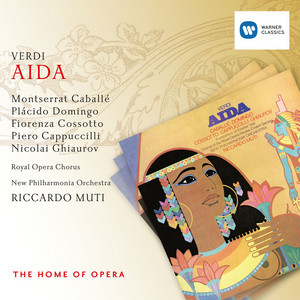 | Verdi: Aida, Act 1: "Alta cagion v'aduna" (Il Re, Messaggero, Radamès, Ramfis, Coro, Aida, Amneris) | Giuseppe Verdi, Riccardo Muti, Chorus of the Royal Opera House, Covent Garden, Fiorenza Cossotto, Luigi Roni, Montserrat Caballé, Nicola Martinucci, Nicolai Ghiaurov, Plácido Domingo, New Philharmonia Orchestra | C Major | 3 | 8B | 88 BPM | |
 | Don Pasquale, Act I Seconda Scena: Bella siccome un angelo (Malatesta/Pasquale) | Gaetano Donizetti, Leo Nucci/Sesto Bruscantini/Philharmonia Orchestra/Riccardo Muti, Riccardo Muti, Philharmonia Orchestra | D♭ Major | 2 | 3B | 126 BPM | |
 | Orff: Carmina Burana, Pt. 2, In Taberna: Olim lacus colueram | Carl Orff, Sir Simon Rattle, Lawrence Brownlee, Rundfunkchor Berlin, Berliner Philharmoniker | E Minor | 2 | 9A | 99 BPM | |
 | Mattinata (Orch. Faris) | Ruggero Leoncavallo, Luciano Pavarotti, Philharmonia Orchestra, Piero Gamba | E Major | 3 | 12B | 79 BPM | |
 | Britten: The Turn of the Screw, Op. 54, Act 1: The Tower. "How Beautiful It Is" (Governess) | Benjamin Britten, Daniel Harding, Jane Henschel, Mahler Chamber Orchestra | D Major | 0 | 10B | 111 BPM | |
 | Tosca | Renata Tebaldi, Chorus and Orchestra of the Accademia di Santa Cecilia, Rome, Francesco Molinari-Pradelli | D Major | 2 | 10B | 112 BPM | |
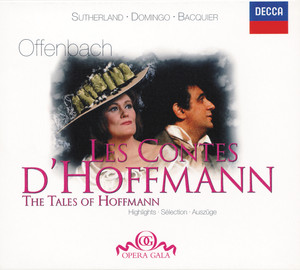 | Les Contes d'Hoffmann / Act 2: "Belle nuit, ô nuit d'amour" | Jacques Offenbach, Dame Joan Sutherland, Huguette Tourangeau, Chorus Pro Arte Lausanne Du Brassus, Radio Suisse Romande Chorus, Orchestre de la Suisse Romande, Richard Bonynge | D Major | 1 | 10B | 82 BPM | |
 | Palestrina, Act III: Wie lange sie bleiben | Hans Pfitzner, Otmar Suitner, Staatskapelle Berlin, Chor Der Staatsoper Berlin, Peter Schreier, Carola Nossek | F♯ Major | 1 | 2B | 87 BPM | |
 | Stabat Mater: 2. Cujus animam gementem | Gioachino Rossini, Dalmacio Gonzales, Philharmonia Orchestra, Carlo Maria Giulini | D Major | 1 | 10B | 93 BPM | |
 | Requiem, K. 626: VII. Agnus Dei | Wolfgang Amadeus Mozart, Anna Tomowa-Sintow, Wiener Singverein, Wiener Philharmoniker, Herbert von Karajan | F Major | 1 | 7B | 87 BPM | |
 | Vier letzte Lieder: 1. Frühling | Richard Strauss, Renée Fleming, Munich Philharmonic Orchestra, Christian Thielemann | D Major | 0 | 10B | 98 BPM | |
 | Orff: Carmina Burana, Pt. 2, In Taberna: Olim lacus colueram | Carl Orff, Riccardo Muti, John Van Kesteren, The Philharmonia Chorus, Philharmonia Orchestra | D Minor | 1 | 7A | 133 BPM | |
 | La Gioconda / Act 1: Feste! Pane! Feste! | Amilcare Ponchielli, Sherrill Milnes, The London Opera Chorus, National Philharmonic Orchestra, Bruno Bartoletti | B♭ Major | 4 | 6B | 67 BPM | |
 | Carmina Burana: Fortuna Imperatix Mundi: O Fortuna | Carl Orff, Rundfunk-Sinfonieorchester Leipzig, Celestina Casapietra, Horst Hiestermann, Karl-Heinz Stryczek, MDR Leipzig Radio Chorus, Dresdner Kapellknaben, Konrad Wagner, Herbert Kegel | B♭ Major | 4 | 6B | 141 BPM | |
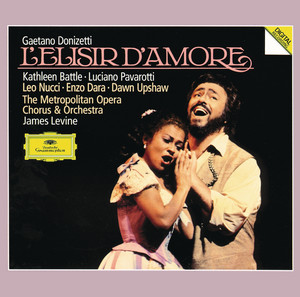 | L'elisir d'amore / Act I: "Chiedi all'aura lusinghiera" | Gaetano Donizetti, Kathleen Battle, Luciano Pavarotti, Metropolitan Opera Orchestra, James Levine | E♭ Major | 1 | 5B | 77 BPM | |
 | Carmen / Act 2: Chanson: "Les tringles des sistres tintaient" | Georges Bizet, Elina Garanca, Cristina Antoaneta Pasaroiu, Giuseppina Bridelli, Orchestra Sinfonica Nazionale Della RAI, Karel Mark Chichon | C Major | 1 | 8B | 111 BPM | |
 | Mozart: Requiem in D Minor, K. 626: V. Rex tremendae | Wolfgang Amadeus Mozart, Riccardo Muti, Stockholm Chamber Choir, Swedish Radio Choir, Berliner Philharmoniker | G Minor | 2 | 6A | 135 BPM | |
 | Samson et Dalila, Op. 47, R. 288 / Act 1: Dieu! Dieu d'Israël! | Camille Saint-Saëns, Orchestre de Paris, Daniel Barenboim, Choeur de l'Orchestre de Paris, Arthur Oldham | B Major | 3 | 1B | 94 BPM | |
 | Carmina Burana: XXII. Tempus est iocundum | Carl Orff, Gundula Janowitz, Dietrich Fischer-Dieskau, Schöneberger Sängerknaben, Orchester der Deutschen Oper Berlin, Eugen Jochum | F♯ Major | 7 | 2B | 138 BPM | |
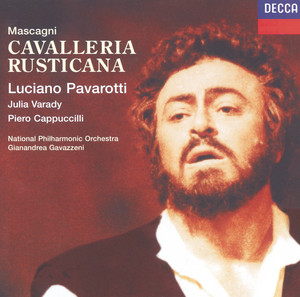 | Cavalleria rusticana: "Dite, mama Lucia" | Pietro Mascagni, Julia Varady, Ida Bormida, National Philharmonic Orchestra, Gianandrea Gavazzeni | F♯ Minor | 1 | 11A | 139 BPM | |
| Don Pasquale, Act III Quinta Scena: Aspetta, aspetta, cara sposina (Pasquale/Malatesta) | Gaetano Donizetti, Sesto Bruscantini, Riccardo Muti, Philharmonia Orchestra | F Major | 3 | 7B | 84 BPM | |
| Cavalleria rusticana: "A voi tutti salute" | Pietro Mascagni, Luciano Pavarotti, Piero Cappuccilli, Carmen Gonzales, The London Opera Chorus, National Philharmonic Orchestra, Gianandrea Gavazzeni | B Major | 1 | 1B | 69 BPM | |
 | Lohengrin, Act I Scene 2: Einsam in trüben Tagen "Elsa's Dream" | Richard Wagner, Gundula Janowitz, Karl Ridderbusch, Bavarian Radio Chorus, Heinz Mende, Bavarian Radio Symphony Orchestra, Rafael Kubelík | D Major | 4 | 10B | 103 BPM | |
 | 4 Lieder, Op. 27, TrV 170: 1. Ruhe, meine Seele! | Richard Strauss, Lise Davidsen, Philharmonia Orchestra, Esa-Pekka Salonen | F Major | 0 | 7B | 85 BPM |
- ISRC
- GBAYC9700998
- Label
- L-M Records/RCA Records