- BPM
- 34
- Key
- E♭ Major
- Camelot
- 5B
Magnificat: II. Quia respexit by Rinaldo Alessandrini, Concerto Italiano, Pietro Paolo Bencini Song Details
"Magnificat: II. Quia respexit" by Rinaldo Alessandrini, Concerto Italiano, Pietro Paolo Bencini had its release date on May 9, 2011. With This song being less than two minutes long, at 1:16, we are fairly confident that this song is not explicit and is safe for all ages. Based on the duration of this song, this song duration is much smaller than the average song duration. There are a total of 20 in the song's album "Per la Vergine Maria (Bencini, Soler, Stravinsky...)". In this album, this song's track order is #3. Magnificat: II. Quia respexit is not that popular right now. In our opinion, the overall tone is not very danceable and projects negative sounds, such as being sad, depressed, or angry.
BPM and Tempo
With Magnificat: II. Quia respexit by Rinaldo Alessandrini, Concerto Italiano, Pietro Paolo Bencini having a BPM of 34 with a half-time of 17 BPM and a double-time of 68 BPM, we would consider this track to have a Grave (very slow) tempo marking. Because of this, we believe that the song has an overall slow tempo. The time signature for this track is 3/4.
Music Key
This song has a musical key of E♭ Major. Or for those who are familiar with the camelot wheel, this song has a camelot key of 5B. So, the perfect camelot match for 5B would be either 5B or 6A. While, 6B can give you a low energy boost. For moderate energy boost, you would use 2B and a high energy boost can either be 7B or 12B. Though, if you want a low energy drop, you should looking for songs with either a camelot key of 5A or 4B will give you a low energy drop, 8B would be a moderate one, and 3B or 10B would be a high energy drop. Lastly, 2A allows you to change the mood.
Want to find the BPM and music key for other songs? Check out our BPM and Key Finder page!
- Popularity
- 2%
- Loudness
- -23.584 dB
- Acousticness
- 99%
- Danceability
- 20%
- Energy
- 6%
- Instrumentalness
- 0%
- Liveness
- 15%
- Loudness
- 61%
- Speechiness
- 4%
- Valence
- 12%
Recommendations
| Track | Artist | Key | Energy | Camelot | BPM | ||
|---|---|---|---|---|---|---|---|
 | Ciaccona, Op. 12 No. 20 | Tarquinio Merula, Tafelmusik Baroque Orchestra, Elisa Citterio | C Major | 1 | 8B | 113 BPM | |
 | Les Indes galantes, RCT 44, Nouvelle Entrée, Scène 6: Chaconne | Jean-Philippe Rameau, Les Arts Florissants, William Christie | D♭ Major | 1 | 3B | 116 BPM | |
 | Purcell: The Indian Queen, Z. 630, Act 2: Symphony. Adagio | Henry Purcell, John Eliot Gardiner, English Baroque Soloists | F♯ Major | 0 | 2B | 174 BPM | |
 | Concerto con 2 violini e viola da gamba, Archi e continuo (Sol Minore, RV 578): II. Larghetto | Antonio Vivaldi, Manfredo Kraemer, Pablo Valetti, Luca Guglielmi, Jordi Savall, Le Concert Des Nations | F♯ Major | 4 | 2B | 115 BPM | |
 | Concerto grosso No. 3 in D Minor: IV. Allegro (After D. Scarlatti) | Charles Avison, Avison Ensemble, Pavlo Beznosiuk | F Major | 1 | 7B | 74 BPM | |
 | Concerto in G major Seibel 215: 4. Allegro - 2/4 | Johann David Heinichen, Musica Antiqua Köln, Reinhard Goebel | F♯ Major | 1 | 2B | 162 BPM | |
 | In convertendo Dominus | Sébastien de Brossard, Ensemble Baroque De Limoges, Christophe Coin | A Major | 2 | 11B | 151 BPM | |
 | Sonata da camera in G Minor, "O Haupt voll Blut und Wunden": I. Largo | Johann Gottlieb Janitsch, Il Gardellino | F♯ Minor | 2 | 11A | 171 BPM | |
 | Sonata da camera, Op. 2 No. 11: I. Preludio | Antonio Caldara, Amandine Beyer, Leila Schayegh, Matthias Spaeter, Jonathan Pesek, Jörg-Andreas Bötticher | E♭ Minor | 1 | 2A | 117 BPM | |
 | Les Boréades, RCT 31: Entrée de Polymnie (Arr. for Baroque Ensemble & Saxophone by Bo Wiget) | Jean-Philippe Rameau, Lautten Compagney, Asya Fateyeva, Wolfgang Katschner | F Major | 1 | 7B | 101 BPM | |
 | Il trionfo del Tempo e del Disinganno, HWV 46a, Parte prima: No. 8, Une schiera di piaceri (Aria) (Bellezza) | George Frideric Handel, Deborah York, Concerto Italiano, Rinaldo Alessandrini | E♭ Minor | 1 | 2A | 133 BPM | |
 | 3e Livre de Sonates à violon seul et basse continue, Sonata Sexta: I. Adagio | Jean-Baptiste Quentin, Anna Besson, Myriam Rignol, Jean Rondeau | A♭ Major | 1 | 4B | 105 BPM | |
 | Déraisonnable beauté: Chaconne | Rinaldo Alessandrini | B Major | 1 | 1B | 124 BPM | |
 | Sonate in A Minor: IV. Sarabande | Élisabeth Jacquet de La Guerre, Sophie de Bardonnèche, Justin Taylor | D♭ Major | 1 | 3B | 110 BPM | |
| Il trionfo del Tempo e del Disinganno, HWV 46a, Parte seconda: No. 41, Voglio Tempo per risolvere (Aria) (Bellezza, Piacere, Disinganno, Tempo) | George Frideric Handel, Deborah York, Gemma Bertagnolli, Sara Mingardo, Nicholas Sears, Concerto Italiano, Rinaldo Alessandrini | E♭ Minor | 1 | 2A | 133 BPM | |
 | Six Brandenburg Concertos, No. 1 in F Major, BWV 1046: VII. Polacca | Johann Sebastian Bach, Rinaldo Alessandrini, Concerto Italiano | E Major | 0 | 12B | 125 BPM | |
 | Concerto Armonico No. 6 in E-Flat Major: Vivace | Unico Wilhelm van Wassenaer, Aradia Ensemble, Kevin Mallon | A Major | 2 | 11B | 126 BPM | |
 | Symphony No. 59 in B-Flat Major: I. Allegro | Franz Xaver Richter, Helsinki Baroque Orchestra, Aapo Häkkinen | B Major | 1 | 1B | 123 BPM | |
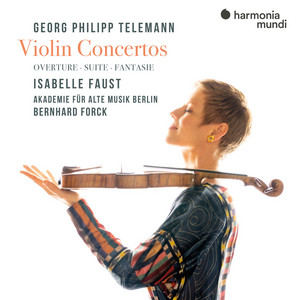 | Ouverture-Suite in B Minor, TWV 55:h4: V. La Bravoure | Georg Philipp Telemann, Isabelle Faust, Akademie für Alte Musik Berlin, Bernhard Forck | G Major | 3 | 9B | 87 BPM | |
 | Cello Sonata in F Major, Op. 1, No. 1: I. Largo | Benedetto Marcello, Collegium Pro Musica | B Major | 1 | 1B | 77 BPM | |
 | Concerto a cinque No. 9, Op. 7: II. Adagio (Oboe tacet) | Tomaso Albinoni, Paul Dombrecht, Il Fondamento | E Major | 1 | 12B | 131 BPM | |
 | Suite In G Minor (Suite En Sol Mineur): Prélude | Marin Marais | F♯ Minor | 1 | 11A | 88 BPM | |
 | Symphony in D Minor, W. I/3: I. Allegro | Johann Christoph Friedrich Bach, Concerto Köln | E♭ Minor | 1 | 2A | 82 BPM | |
 | Pergolesi: Sinfonia a tre in F Major: III. Adagio | Giovanni Battista Pergolesi, Il Seminario Musicale | C Minor | 0 | 5A | 111 BPM | |
| Concerto grosso No. 1 in A Major: II. Allegro (After D. Scarlatti) | Charles Avison, Avison Ensemble, Pavlo Beznosiuk | D♭ Major | 0 | 3B | 79 BPM |
- ISRC
- This song does not have an ISRC.
- Label
- L-M Records/RCA Records