- BPM
- 83
- Key
- D♭ Major
- Camelot
- 3B
Verdi : Rigoletto : Act 1 "Quel vecchio maledivami!" [Rigoletto, Sparafucile] by Giuseppe Verdi, Carlo Rizzi, Orchestra of Welsh National Opera Song Details
"Verdi : Rigoletto : Act 1 "Quel vecchio maledivami!" [Rigoletto, Sparafucile]" by Giuseppe Verdi, Carlo Rizzi, Orchestra of Welsh National Opera had its release date on 1992. With this song being about 5 minutes long, at This song is fairly a long song compared to the average song length. This song does not have an "Explicit" tag, making it safe for all ages. This song is part of Verdi : Rigoletto by Giuseppe Verdi, Carlo Rizzi, Orchestra of Welsh National Opera. The song's track number on the album is #7 out of 36 tracks. Based on our data, Germany was the country where this track was produced or recorded. Verdi : Rigoletto : Act 1 "Quel vecchio maledivami!" [Rigoletto, Sparafucile] is unknown right now. In our opinion, the overall tone is not very danceable and projects negative sounds, such as being sad, depressed, or angry.
BPM and Tempo
Since Verdi : Rigoletto : Act 1 "Quel vecchio maledivami!" [Rigoletto, Sparafucile] by Giuseppe Verdi, Carlo Rizzi, Orchestra of Welsh National Opera has a tempo of 83 beats per a minute, the tempo markings of this song would be Andante (at a walking pace). With Verdi : Rigoletto : Act 1 "Quel vecchio maledivami!" [Rigoletto, Sparafucile] being at 83 BPM, the half-time would be 42 BPM with a double-time of 166 BPM.In addition, we consider the tempo speed to be pretty slow for this song. The time signature for this track is 4/4.
Music Key
This song is in the music key of D♭ Major. Or for those who are familiar with the camelot wheel, this song has a camelot key of 3B. So, the perfect camelot match for 3B would be either 3B or 4A. While, 4B can give you a low energy boost. For moderate energy boost, you would use 12B and a high energy boost can either be 5B or 10B. Though, if you want a low energy drop, you should looking for songs with either a camelot key of 3A or 2B will give you a low energy drop, 6B would be a moderate one, and 1B or 8B would be a high energy drop. Lastly, 12A allows you to change the mood.
Want to find the BPM and music key for other songs? Check out our BPM and Key Finder page!
- Popularity
- 0%
- Loudness
- -25.821 dB
- Acousticness
- 97%
- Danceability
- 21%
- Energy
- 3%
- Instrumentalness
- 1%
- Liveness
- 7%
- Loudness
- 57%
- Speechiness
- 6%
- Valence
- 4%
Recommendations
| Track | Artist | Key | Energy | Camelot | BPM | ||
|---|---|---|---|---|---|---|---|
 | Blumenduett - Lakmé | Léo Delibes, Alain Lombard, Danielle Millet, Mady Mesplé, Orchestre Du Theatre National De L'Opera Comique | B Major | 1 | 1B | 130 BPM | |
 | Coro de los Gitanos de Il Trovatore (De "Una Noche en la Opera") | The Oscar's Orchestra | G Major | 2 | 9B | 135 BPM | |
 | Cavalleria rusticana: "O lola ch'ai di latti la cammisa" (Siciliana) | Pietro Mascagni, Carlo Bergonzi, Orchestra Del Teatro Alla Scala, Milano, Herbert von Karajan | F Minor | 0 | 4A | 167 BPM | |
 | La traviata: Act II: Amami, Alfredo! (Violetta, Alfredo) | Giuseppe Verdi, Orquestra Sinfónica do Teatro Nacional de São Carlos Lisboa, Maria Callas, Alfredo Kraus, Franco Ghione | F Major | 6 | 7B | 90 BPM | |
 | Bizet: Carmen, Act 3: Entr'acte | Georges Bizet, Orchestre de l'Opéra National de Paris/Georges Prêtre, Georges Prêtre, Orchestre du Théâtre National de l'Opéra Paris, Orchestre de l'Opéra National de Paris, Paris Opera Orchestra | D Minor | 2 | 7A | 132 BPM | |
 | Carmina Burana: XI. Estuans interius | Carl Orff, Dietrich Fischer-Dieskau, Orchester der Deutschen Oper Berlin, Eugen Jochum | A Minor | 4 | 8A | 84 BPM | |
 | Radetzky March Op. 228 | Riccardo Muti, Wiener Philharmoniker | A Major | 5 | 11B | 106 BPM | |
 | Tannhäuser - Paris version / Act III: O du, mein holder Abendstern | Richard Wagner, Andreas Schmidt, Philharmonia Orchestra, Giuseppe Sinopoli | G Major | 0 | 9B | 71 BPM | |
 | Carmen Suite No. 2: 2. Habanera | Georges Bizet, Orchestre de Paris, Semyon Bychkov | D Major | 0 | 10B | 134 BPM | |
 | La Gioconda / Act 1: Feste! Pane! Feste! | Amilcare Ponchielli, Sherrill Milnes, The London Opera Chorus, National Philharmonic Orchestra, Bruno Bartoletti | B♭ Major | 4 | 6B | 67 BPM | |
| Bizet: Carmen, Act 2: "Les tringles des sistres tintaient" (Carmen, Frasquita, Mercédès) | Georges Bizet, Maria Callas, Orchestre de l'Opéra National de Paris, Georges Prêtre, Orchestre du Théâtre National de l'Opéra Paris | C Major | 2 | 8B | 138 BPM | |
 | Tannhäuser (Paris/Vienna Version), Act III: Beglückt darf nun dich, o Heimat "Pilgrims' Chorus" | Richard Wagner, Helga Dernesch, Victor Braun, Wiener Staatsopernchor, Wiener Philharmoniker, Sir Georg Solti | E♭ Major | 1 | 5B | 80 BPM | |
 | Mozart: Le nozze di Figaro, K. 492, Act 2: "Voi che sapete" (Cherubino) | Wolfgang Amadeus Mozart, Joyce DiDonato, Kazushi Ono, Orchestre De L'Opéra National De Lyon | E Major | 2 | 12B | 91 BPM | |
 | Verdi: Otello, Act 4: "Ave Maria" (Desdemona) | Giuseppe Verdi, Cristina Gallardo-Domas, Maurizio Barbacini, Munich Radio Orchestra | A♭ Major | 0 | 4B | 181 BPM | |
 | Tuba mirum | Giuseppe Verdi, Cesar Hernandez, Carlo Colombara, Hungarian State Opera Chorus, Hungarian State Opera Orchestra, Pier Giorgio Morandi | D♭ Minor | 3 | 12A | 91 BPM | |
 | Gounod: Roméo et Juliette: Ouverture | Charles Gounod, Michel Plasson, Orchestre Du Capitole De Toulouse | D Minor | 3 | 7A | 123 BPM | |
 | Messa da Requiem: 2c. Liber scriptus | Giuseppe Verdi, Olga Borodina, Mariinsky Chorus, Mariinsky Orchestra, Valery Gergiev | D Major | 1 | 10B | 76 BPM | |
 | Verdi: La traviata, Act 1: "Sempre libera" (Violetta, Alfredo) | Giuseppe Verdi, Philharmonia Orchestra, Riccardo Muti, Alfredo Kraus, Renata Scotto | A♭ Major | 1 | 4B | 85 BPM | |
 | La Bohème / Act 1: "Sì. Mi chiamano Mimì" (Aria) - "Ehi! Rodolfo!" | Giacomo Puccini, Renata Tebaldi, Carlo Bergonzi, Renato Cesari, Cesare Siepi, Ettore Bastianini, Orchestra dell'Accademia Nazionale di Santa Cecilia, Tullio Serafin | D Major | 2 | 10B | 130 BPM | |
 | Die Zauberflöte, K.620 / Act 2: "Pa-Pa-Pa-Pa-Pa-Pa-Papagena!" | Wolfgang Amadeus Mozart, Cecilia Bartoli, Bryn Terfel, Orchestra dell'Accademia Nazionale di Santa Cecilia, Myung-Whun Chung | G Major | 3 | 9B | 117 BPM | |
 | The Merry Widow (Die lustige Witwe) / Act 2: Valse moderato | Franz Lehár, Berliner Philharmoniker, Herbert von Karajan | C Major | 1 | 8B | 98 BPM | |
 | Il Trovatore - Act II | Maria Callas, Giuseppe Di Stefano, Rolando Panerai, Renato Ercolani, Giuseppe Verdi, Fedora Barbieri, Luisa Villa, Herbert von Karajan, Orchestra and Chorus of La Scala, Nicola Zaccaria | G Major | 3 | 9B | 128 BPM | |
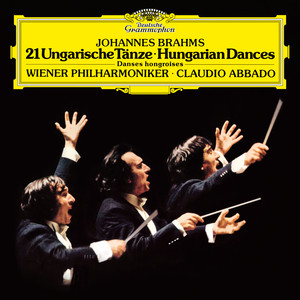 | 21 Hungarian Dances, WoO 1: Hungarian Dance No. 5 in G Minor. Allegro (Orch. Schmeling) | Johannes Brahms, Wiener Philharmoniker, Claudio Abbado | G Minor | 2 | 6A | 145 BPM | |
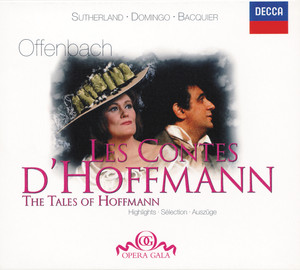 | Les Contes d'Hoffmann / Act 2: "Belle nuit, ô nuit d'amour" | Jacques Offenbach, Dame Joan Sutherland, Huguette Tourangeau, Chorus Pro Arte Lausanne Du Brassus, Radio Suisse Romande Chorus, Orchestre de la Suisse Romande, Richard Bonynge | D Major | 1 | 10B | 82 BPM | |
 | Don Giovanni, ossia Il dissoluto punito, K.527 / Act 1: "Madamina, il catalogo è questo" | Wolfgang Amadeus Mozart, Luca Pisaroni, Mahler Chamber Orchestra, Yannick Nézet-Séguin | G Major | 3 | 9B | 140 BPM |
- ISRC
- DEA809360006
- Label
- L-M Records/RCA Records