- BPM
- 175
- Key
- E♭ Major
- Camelot
- 5B
Lyric Pieces Op. 71: 7. Remembrances by Edvard Grieg, Peter Jablonski Song Details
"Lyric Pieces Op. 71: 7. Remembrances" by Edvard Grieg, Peter Jablonski had its release date on October 6, 1997. With This song being less than two minutes long, at 1:55, we are fairly confident that this song is not explicit and is safe for all ages. Based on the duration of this song, this song duration is much smaller than the average song duration. The track order of this song in Edvard Grieg, Peter Jablonski's "Grieg: Piano Sonata; Holberg Suite; Lyric Pieces" album is number 16 out of 16. On top of that, United Kingdom appears to be the country where this track was created. The popularity of Lyric Pieces Op. 71: 7. Remembrances is currently not that popular right now. In our opinion, the overall tone is not very danceable and projects negative sounds, such as being sad, depressed, or angry.
BPM and Tempo
We consider the tempo marking of Lyric Pieces Op. 71: 7. Remembrances by Edvard Grieg, Peter Jablonski to be Vivace (lively and fast) because the track has a tempo of 175 BPM, a half-time of 88BPM, and a double-time of 350 BPM. Based on that, the speed of the song's tempo is fast. The time signature for this track is 3/4.
Music Key
E♭ Major is the music key of this track. This also means that this song has a camelot key of 5B. So, the perfect camelot match for 5B would be either 5B or 6A. While, 6B can give you a low energy boost. For moderate energy boost, you would use 2B and a high energy boost can either be 7B or 12B. Though, if you want a low energy drop, you should looking for songs with either a camelot key of 5A or 4B will give you a low energy drop, 8B would be a moderate one, and 3B or 10B would be a high energy drop. Lastly, 2A allows you to change the mood.
Want to find the BPM and music key for other songs? Check out our BPM and Key Finder page!
- Popularity
- 4%
- Loudness
- -35.204 dB
- Acousticness
- 100%
- Danceability
- 28%
- Energy
- 1%
- Instrumentalness
- 94%
- Liveness
- 7%
- Loudness
- 41%
- Speechiness
- 6%
- Valence
- 4%
Recommendations
| Track | Artist | Key | Energy | Camelot | BPM | ||
|---|---|---|---|---|---|---|---|
 | Soirées musicales, Op. 6: II. Notturno. Andante con moto (Version for Harp) | Clara Schumann, Magdalena Hoffmann | D Minor | 0 | 7A | 76 BPM | |
 | Fauré: Pavane, Op. 50 (Instrumental Version) | Gabriel Fauré, Sir Neville Marriner, Academy of St. Martin in the Fields | F♯ Minor | 1 | 11A | 70 BPM | |
 | Suite No. 3, P. 172: I. Italiana: Andantino | Ottorino Respighi, RTÉ National Symphony Orchestra | B♭ Major | 1 | 6B | 94 BPM | |
 | Orfeo Ed Euridice: Dance of the Blessed Spirits (Act II) | Christoph Willibald Gluck, Karlheinz Zoeller, Berliner Philharmoniker, Herbert von Karajan | C Major | 1 | 8B | 75 BPM | |
 | Rachmaninov: Rhapsody on a Theme of Paganini, Op. 43: Variation XVIII | Sergei Rachmaninoff, Nikolai Lugansky, Sakari Oramo, City Of Birmingham Symphony Orchestra | D♭ Major | 1 | 3B | 61 BPM | |
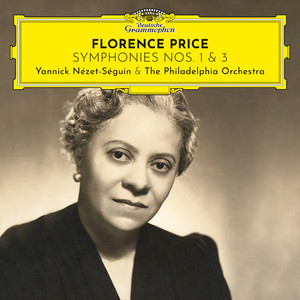 | Symphony No. 3 in C Minor: II. Andante ma non troppo | Florence Beatrice Price, Philadelphia Orchestra, Yannick Nézet-Séguin | A♭ Major | 0 | 4B | 88 BPM | |
 | Mozart: Piano Concerto No. 21 in C Major, K. 467: II. Andante | Wolfgang Amadeus Mozart, Stephen Hough, Bryden Thomson, Hallé | F Major | 0 | 7B | 66 BPM | |
 | Capriol Suite: 5. Pied-en- l'air | Peter Warlock, Academy of St. Martin in the Fields, Nicholas Kraemer, Sir Neville Marriner | G Major | 1 | 9B | 113 BPM | |
 | Wind Quintet in E-Flat Major, Hess 19: II. Adagio maestoso | Ludwig van Beethoven, Ottó Rácz, Jozsef Vajda, Sándor Berki, János Keveházi, Jeno Kevehazi | E♭ Major | 0 | 5B | 62 BPM | |
 | Lieder ohne Worte, Op. 62: No. 6 Allegretto grazioso "Frühlingslied" (Arr. Ottensamer for Clarinet and Strings) | Felix Mendelssohn, Andreas Ottensamer, Schumann Quartett, Gunars Upatnieks | A Major | 1 | 11B | 99 BPM | |
 | Bagatelles et impromptus, JB 1:19: VII. Love | Bedřich Smetana, William Howard | A Major | 0 | 11B | 76 BPM | |
 | Andante Festivo | Jean Sibelius, Gothenburg Symphony Orchestra, Neeme Järvi | G Major | 1 | 9B | 86 BPM | |
 | Humoresque No. 7 in G-flat Major, Op. 101 | Boston Symphony Orchestra, Yo-Yo Ma, Seiji Ozawa, Itzhak Perlman | F♯ Major | 1 | 2B | 83 BPM | |
 | Lieder ohne Worte, Op. 19: No. 6 in G Minor (Andante sostenuto) "Venetian Gondola Song", MWV U78 | Felix Mendelssohn, Jan Lisiecki | G Minor | 0 | 6A | 168 BPM | |
 | Sonata In G Minor For Cello & Piano, Op. 19: 3. Andante | Sergei Rachmaninoff, Alisa Weilerstein, Inon Barnatan | F Major | 2 | 7B | 82 BPM | |
 | Lyric Pieces, Book 9, Op. 68: Badnlat (Cradle Song) | Edvard Grieg, Einar Steen-Nøkleberg | B♭ Major | 0 | 6B | 72 BPM | |
 | Zdes' khorosho ('How Fair This Spot'), Op. 21, No. 7 | Sergei Rachmaninoff, Pablo Ferrandez, Denis Kozhukhin | A Major | 0 | 11B | 87 BPM | |
 | Orfeo ed Euridice, Wq. 30 / Act II: Dance of the Blessed Spirits (Arr. by Mathieu Herzog for Cello and Strings) | Christoph Willibald Gluck, Camille Thomas, Brussels Philharmonic, Mathieu Herzog | B Minor | 1 | 10A | 87 BPM | |
 | Sonata in D Minor, K. 9 | Domenico Scarlatti, Ivo Pogorelich | D Minor | 0 | 7A | 94 BPM | |
 | Come, Sweet Death, BWV 478 (Arr. for 5 Cellos) | Sheku Kanneh-Mason, Hannah Roberts, Ben Davies, Desmond Neysmith, Max Ruisi | C Major | 0 | 8B | 122 BPM | |
 | Peer Gynt Suite No. 1, Op. 46: Morning | Donald Sosin, Edvard Grieg, Nora Shulman, Judy Loman | E Major | 0 | 12B | 66 BPM | |
 | Oboe Quartet in F Major, K. 370: II. Adagio | Wolfgang Amadeus Mozart, Alexei Ogrintchouk, Boris Brovtsyn, Maxim Rysanov, Kristine Blaumane | D Minor | 0 | 7A | 84 BPM | |
 | Vocalise, Op. 34, No. 14 | Sergei Rachmaninoff, Berliner Philharmoniker, Lorin Maazel | E Minor | 1 | 9A | 76 BPM | |
 | Adagio in F, H.XVII No. 9 | Joseph Haydn, Alfred Brendel | F Major | 0 | 7B | 71 BPM | |
 | Orpheo ed Euridice, Wq. 30, Act II: Dance of the Blessed Spirits | Christoph Willibald Gluck, Eugene Ormandy, Philadelphia Orchestra | D Minor | 1 | 7A | 67 BPM |
- ISRC
- GBF079611066
- Label
- L-M Records/RCA Records