- BPM
- 82
- Key
- E♭ Major
- Camelot
- 5B
Schubert: String Quintet in C Major, Op. 163, D. 956: II. Adagio (Excerpt) by Franz Schubert, Borodin Quartet, Misha Milman Song Details
"Schubert: String Quintet in C Major, Op. 163, D. 956: II. Adagio (Excerpt)" by Franz Schubert, Borodin Quartet, Misha Milman had its release date on February 14, 2025. The duration of This song is about two minutes long, specifically at 2:37. This song does not appear to have any foul language. Schubert: String Quintet in C Major, Op. 163, D. 956: II. Adagio (Excerpt)'s duration is considered a little bit shorter than the average duration of a typical track. The song is number 17 out of 70 in All We Need Is Love (& Classical Music) - A Valentine's Day Collection by Wolfgang Amadeus Mozart, Alexander Borodin, Antonio Vivaldi, Camille Saint-Saëns, Christoph Willibald Gluck, Claude Debussy, Dmitri Shostakovich, Edvard Grieg, Emmanuel Chabrier, Erik Satie, Felix Mendelssohn, Francis Poulenc, Franz Liszt, Franz Schubert, François Couperin, Frédéric Chopin, Gabriel Fauré, George Frideric Handel, George Gershwin, Giuseppe Verdi, Heitor Villa-Lobos, Jacques Offenbach, Jean Sibelius, Jean-Philippe Rameau, Johann Sebastian Bach, Johann Strauss II, John Dowland, Jules Massenet, Ludwig van Beethoven, Léo Delibes, Maurice Ravel, Pyotr Ilyich Tchaikovsky, Robert Schumann, Sergei Prokofiev, Sergei Rachmaninoff, Edward Elgar. Going off of the ISRC code of this track, we detected that the origin of this track is from Germany. Schubert: String Quintet in C Major, Op. 163, D. 956: II. Adagio (Excerpt) is unknown right now. In our opinion, the overall tone is not very danceable and projects negative sounds, such as being sad, depressed, or angry.
BPM and Tempo
The tempo marking of Schubert: String Quintet in C Major, Op. 163, D. 956: II. Adagio (Excerpt) by Franz Schubert, Borodin Quartet, Misha Milman is Andante (at a walking pace), since this song has a tempo of 82 BPM. With that information, we can conclude that the song has a slow tempo. The time signature for this track is 3/4.
Music Key
E♭ Major is the music key of this track. This also means that this song has a camelot key of 5B. So, the perfect camelot match for 5B would be either 5B or 6A. While, 6B can give you a low energy boost. For moderate energy boost, you would use 2B and a high energy boost can either be 7B or 12B. Though, if you want a low energy drop, you should looking for songs with either a camelot key of 5A or 4B will give you a low energy drop, 8B would be a moderate one, and 3B or 10B would be a high energy drop. Lastly, 2A allows you to change the mood.
Want to find the BPM and music key for other songs? Check out our BPM and Key Finder page!
- Popularity
- 0%
- Loudness
- -24.179 dB
- Acousticness
- 94%
- Danceability
- 8%
- Energy
- 5%
- Instrumentalness
- 82%
- Liveness
- 8%
- Loudness
- 60%
- Speechiness
- 4%
- Valence
- 3%
Recommendations
| Track | Artist | Key | Energy | Camelot | BPM | ||
|---|---|---|---|---|---|---|---|
 | Piano Sonata No. 21 In B Flat Major, D.960: II. Andante sostenuto | Franz Schubert, Krystian Zimerman | D♭ Minor | 0 | 12A | 134 BPM | |
 | The Seasons, Op. 37b: X. October (Autumn Song) | Pyotr Ilyich Tchaikovsky, Khatia Buniatishvili | D Minor | 0 | 7A | 72 BPM | |
 | Halvorsen: Passacaglia (After Handel's Keyboard Suite, HWV 432) | Johan Halvorsen, Itzhak Perlman, Pinchas Zukerman | G Minor | 2 | 6A | 109 BPM | |
 | Bach Siciliano | Nimrod David Pfeffer | G Minor | 0 | 6A | 94 BPM | |
 | Piano Sonata No. 9 in F Minor: I. Andante spiritoso | Baldassare Galuppi, Víkingur Ólafsson | F Minor | 0 | 4A | 73 BPM | |
 | Rêverie, L. 68 | Claude Debussy, Alain Planès | F Major | 0 | 7B | 63 BPM | |
 | Ancient Airs & Dances, Suite III, P. 172: I. Italiana (Anonymous) | Ottorino Respighi, Filarmonica della Scala, Riccardo Chailly | B♭ Major | 1 | 6B | 172 BPM | |
 | Rinaldo, HWV 7: Lascia ch'io pianga (Arr. for Piano) | George Frideric Handel, Martin Stadtfeld | F Major | 0 | 7B | 68 BPM | |
 | Gavotte - Arr. for Cello and Piano | Jean-Baptiste Lully, Mischa Maisky, Pavel Gililov | D Minor | 0 | 7A | 85 BPM | |
 | Schubert / Transcr. Tharaud: Rosamunde, Op. 26, D. 797: No. 6, Entr'acte No. 3 | Franz Schubert, Alexandre Tharaud | B♭ Major | 1 | 6B | 79 BPM | |
 | Lied opus 34 no.2, transcription Franz Liszt: Auf Flügeln Des Gesanges | Felix Mendelssohn, Bertrand Chamayou | A♭ Major | 0 | 4B | 71 BPM | |
 | Symphony No. 5: IV. Adagietto. Sehr langsam | Gustav Mahler, Berliner Philharmoniker, Claudio Abbado | F Major | 0 | 7B | 91 BPM | |
 | Bach: Flute Sonata in E-Flat Major, BWV 1031: II. Siciliano (Arr. Duchâble for Piano) | Johann Sebastian Bach, François-René Duchâble | G Minor | 0 | 6A | 104 BPM | |
 | Preghiera (Arr. by Fritz Kreisler from Piano Concerto No. 2 in C Minor, Op. 18, 2nd Movement) | Sergei Rachmaninoff, Gidon Kremer, Daniil Trifonov | C Major | 1 | 8B | 104 BPM | |
 | 3 Romances, Op. 11: I. Andante | Clara Schumann, Yoshiko Iwai | C Major | 0 | 8B | 66 BPM | |
 | Rachmaninov: Rhapsody on a Theme of Paganini, Op. 43: Variation XVIII. Andante cantabile | Sergei Rachmaninoff, Gautier Capuçon, Gabriela Montero | D♭ Major | 0 | 3B | 84 BPM | |
 | 4 Impromptus, Op. 90, D. 899: No. 4 in A-Flat Major | Franz Schubert, Khatia Buniatishvili | A♭ Major | 0 | 4B | 88 BPM | |
 | Canción | Manuel de Falla, Javier Perianes | C Minor | 0 | 5A | 76 BPM | |
 | Songs without Words for Piano, Book 2, op.30: No.6: Venetian Gondolera Song ("Venezianisches Gondellied") | Peter Schmalfuss | C Major | 1 | 8B | 89 BPM | |
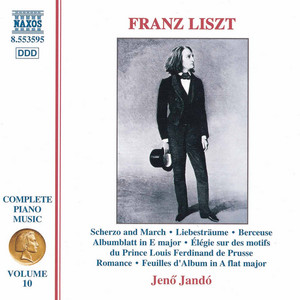 | Liebestraume, S541/R211 : No. 3: Nocturne in A-Flat Major | Franz Liszt, Jenő Jandó | A♭ Major | 0 | 4B | 60 BPM | |
 | Allegro molto agitato in D Minor | Fanny Mendelssohn, Heather Schmidt | D Major | 1 | 10B | 111 BPM | |
 | Rachmaninov: 10 Preludes, Op. 23: No. 5 in G Minor | Sergei Rachmaninoff, Nikolai Lugansky | G Minor | 1 | 6A | 113 BPM | |
| Liebesleid - Arr. Mischa Maisky | Fritz Kreisler, Mischa Maisky, Pavel Gililov | A Minor | 0 | 8A | 83 BPM | |
 | The Lark | Mikhail Glinka, Evgeny Kissin | B♭ Minor | 0 | 3A | 96 BPM | |
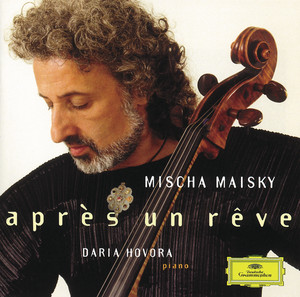 | Les chemins de l'amour, FP. 106 | Francis Poulenc, Mischa Maisky, Daria Hovora | E Major | 1 | 12B | 67 BPM |
- ISRC
- DEA809419206
- Label
- L-M Records/RCA Records