- BPM
- 167
- Key
- A Major
- Camelot
- 11B
Peer Gynt Suite No. 1, Op. 46: II. Anitra’s Dance (Pas de Basques) by Edvard Grieg, Nina Miller Song Details
Edvard Grieg, Nina Miller's ' "Peer Gynt Suite No. 1, Op. 46: II. Anitra’s Dance (Pas de Basques)" was released on its scheduled release date, August 30, 2019. With This song being less than two minutes long, at 1:20, we are fairly confident that this song is not explicit and is safe for all ages. Based on the duration of this song, this song duration is much smaller than the average song duration. There are a total of 26 in the song's album "Piano Music for Children's Classical Ballet Class, Vol. 2". In this album, this song's track order is #23. The popularity of Peer Gynt Suite No. 1, Op. 46: II. Anitra’s Dance (Pas de Basques) is currently not that popular right now. Since there is more of a neutral sound being played, this makes the track somewhat danceable.
BPM and Tempo
With Peer Gynt Suite No. 1, Op. 46: II. Anitra’s Dance (Pas de Basques) by Edvard Grieg, Nina Miller having a BPM of 167 with a half-time of 84 BPM and a double-time of 334 BPM, we would consider this track to have a Vivace (lively and fast) tempo marking. Because of this, we believe that the song has an overall fast tempo. The time signature for this track is 3/4.
Music Key
A Major is the music key of this track. Or for those who are familiar with the camelot wheel, this song has a camelot key of 11B. So, the perfect camelot match for 11B would be either 11B or 12A. While, 12B can give you a low energy boost. For moderate energy boost, you would use 8B and a high energy boost can either be 1B or 6B. Though, if you want a low energy drop, you should looking for songs with either a camelot key of 11A or 10B will give you a low energy drop, 2B would be a moderate one, and 9B or 4B would be a high energy drop. Lastly, 8A allows you to change the mood.
Want to find the BPM and music key for other songs? Check out our BPM and Key Finder page!
- Popularity
- 7%
- Loudness
- -18.157 dB
- Acousticness
- 97%
- Danceability
- 42%
- Energy
- 12%
- Instrumentalness
- 91%
- Liveness
- 13%
- Loudness
- 70%
- Speechiness
- 7%
- Valence
- 53%
Recommendations
| Track | Artist | Key | Energy | Camelot | BPM | ||
|---|---|---|---|---|---|---|---|
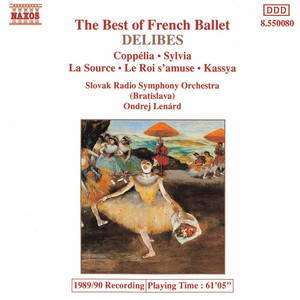 | Le roi s'amuse: Pavane | Léo Delibes, Slovak Philharmonic, Ondrej Lenard | B♭ Major | 0 | 6B | 91 BPM | |
 | Young Birches, Op. 128, No. 2 | Amy Beach, Joanne Polk | F♯ Minor | 1 | 11A | 170 BPM | |
 | Paganini: Cantabile in D Major, Op. 17 | Niccolò Paganini, Vilde Frang, Michail Lifits | A Major | 1 | 11B | 109 BPM | |
 | Le tombeau de Couperin: 3. Menuet (version for orchestra) | Maurice Ravel, フランス国立リヨン管弦楽団, レナード・スラットキン | A Major | 1 | 11B | 107 BPM | |
 | Violin Concerto No. 1 in G Minor, Op. 26: I. Allegro moderato | Max Bruch, Itzhak Perlman, Bernard Haitink, Concertgebouworkest | E♭ Major | 2 | 5B | 99 BPM | |
 | 5 Pieces for Violin and Piano: I. Elegia. Andante larghetto | Valentin Silvestrov, Duo Gazzana | E♭ Major | 0 | 5B | 74 BPM | |
 | Suite No. 3, P. 172: I. Italiana: Andantino | Ottorino Respighi, RTÉ National Symphony Orchestra | B♭ Major | 1 | 6B | 94 BPM | |
 | Carnaval, Op. 9: XII. Chopin | Robert Schumann, Daniil Trifonov | E Major | 0 | 12B | 68 BPM | |
 | Carmen Suite No. 1: Intermezzo | Georges Bizet, Orchestre Symphonique de Montréal, Charles Dutoit | E♭ Major | 0 | 5B | 80 BPM | |
 | 12 Songs, Op. 21: V. Lilacs (Transcr. Rachmaninoff for Solo Piano) | Sergei Rachmaninoff, Sergei Babayan | A♭ Major | 0 | 4B | 78 BPM | |
 | Stille Musik: III. Augenblicke der Serenade | Valentin Silvestrov | C Major | 0 | 8B | 86 BPM | |
 | 8 Pièces brèves, Op. 84: No. 5, Improvisation in C-Sharp Minor | Gabriel Fauré, Christine Croshaw | F♯ Minor | 0 | 11A | 70 BPM | |
 | Suite No. 3 in D Major, BWV 1068: II. Air | Johann Sebastian Bach, Sir Neville Marriner, Academy of St. Martin in the Fields | D Major | 1 | 10B | 89 BPM | |
 | Schumann, Clara: 3 Romances, Op. 11: No. 1 in E-Flat Minor | Clara Schumann, Sophie Pacini | E♭ Minor | 0 | 2A | 60 BPM | |
 | Ancient Airs & Dances, Suite III, P. 172: I. Italiana (Anonymous) | Ottorino Respighi, Filarmonica della Scala, Riccardo Chailly | B♭ Major | 1 | 6B | 172 BPM | |
 | Pièces Lyriques, Op. 47 No. 3: Mélodie | Edvard Grieg, Shani Diluka | F Major | 0 | 7B | 105 BPM | |
 | Scheherazade: The princess in a palanquin | Nikolai Rimsky-Korsakov, Lars Hjalmar Joakim | G Major | 1 | 9B | 166 BPM | |
 | Pavane, Op. 50 (Version for Piano) | Gabriel Fauré, Jorge Federico Osorio | F♯ Minor | 0 | 11A | 75 BPM | |
 | Holberg Suite, Op. 40: II. Sarabande (Andante) | Edvard Grieg, Gothenburg Symphony Orchestra, Neeme Järvi | A Major | 1 | 11B | 87 BPM | |
| Violin Concerto No. 1 in G Minor, Op. 26: II. Adagio | Max Bruch, Itzhak Perlman, Bernard Haitink, Royal Concertgebouw Orchestra | E♭ Major | 1 | 5B | 87 BPM | |
 | 3 Spirituals for Orchestra: No. 2, Kum Ba Ya | Adolphus Hailstork, Virginia Symphony Orchestra, Joann Falletta | D Minor | 0 | 7A | 172 BPM | |
 | Slavonic Dance for Four Hands in E Minor, Op. 72/2: Dumka (Allegretto grazioso) | Antonín Dvořák, Khatia Buniatishvili | C Major | 0 | 8B | 77 BPM | |
 | Symphony No. 3 in F major, Op. 90: III. Poco allegretto | Seattle Symphony Orchestra | C Minor | 0 | 5A | 92 BPM | |
 | Piano Concerto in A Minor, Op. 7: II. Romanze. Andante non troppo con grazia | Clara Schumann, Veronica Jochum, Bamberg Symphony, Joseph Silverstein | A♭ Major | 0 | 4B | 96 BPM | |
 | Bruch: Violin Concerto No. 1 in G Minor, Op. 26: II. Adagio | Max Bruch, Maxim Vengerov, Kurt Masur, Gewandhausorchester | E♭ Major | 1 | 5B | 110 BPM |
- ISRC
- This song does not have an ISRC.
- Label
- L-M Records/RCA Records