- BPM
- 150
- Key
- E Minor
- Camelot
- 9A
Introduction et Rondo capriccioso in A Minor, Op. 28, R. 188 by Camille Saint-Saëns, Pinchas Zukerman, Sir Charles Mackerras, London Symphony Orchestra Song Details
"Introduction et Rondo capriccioso in A Minor, Op. 28, R. 188" by Camille Saint-Saëns, Pinchas Zukerman, Sir Charles Mackerras, London Symphony Orchestra had its release date on 1965. Since This song is still less than 10 minute long, it is still considered a pretty long duration song compared to the average song length. This song does not appear to be explicit due to the lack of the "E" tag. There are a total of 7 in the song's album "Saint-Saëns: Piano Concertos Nos. 2, 4, Cello Concerto & Introduction et Rondo capriccioso". In this album, this song's track order is #7. Furthermore, we believe that the track originated from United States. Based on our statistics, Introduction et Rondo capriccioso in A Minor, Op. 28, R. 188's popularity is unknown right now. In our opinion, the overall tone is not very danceable and projects negative sounds, such as being sad, depressed, or angry.
BPM and Tempo
With Introduction et Rondo capriccioso in A Minor, Op. 28, R. 188 by Camille Saint-Saëns, Pinchas Zukerman, Sir Charles Mackerras, London Symphony Orchestra having a BPM of 150 with a half-time of 75 BPM and a double-time of 300 BPM, we would consider this track to have a Allegro (fast, quick, and bright) tempo marking. Because of this, we believe that the song has an overall fast tempo. Looking at the BPM of this song, this song might go great with jogging or cycling. The time signature for this track is 4/4.
Music Key
E Minor is the music key of this track. Which also means that the camelot key for this song is 9A. So, the perfect camelot match for 9A would be either 9A or 8B. While, a low energy boost can consist of either 9B or 10A. For moderate energy boost, you would use 6A and a high energy boost can either be 11A or 4A. However, if you are looking for a low energy drop, finding a song with a camelot key of 8A would be a great choice. Where 12A would give you a moderate drop, and 7A or 2A would be a high energy drop. Lastly, 12B allows you to change the mood.
Want to find the BPM and music key for other songs? Check out our BPM and Key Finder page!
- Popularity
- 0%
- Loudness
- -22.332 dB
- Acousticness
- 99%
- Danceability
- 32%
- Energy
- 16%
- Instrumentalness
- 88%
- Liveness
- 14%
- Loudness
- 63%
- Speechiness
- 3%
- Valence
- 12%
Recommendations
| Track | Artist | Key | Energy | Camelot | BPM | ||
|---|---|---|---|---|---|---|---|
 | Petite suite de concert, Op. 77: III. Un sonnet d'amour | Samuel Coleridge-Taylor, Chicago Sinfonietta, Paul Freeman | A Major | 0 | 11B | 70 BPM | |
 | Thaïs: Méditation | Jules Massenet, Bomsori, NFM Wrocław Philharmonic, Giancarlo Guerrero | D Major | 0 | 10B | 84 BPM | |
 | Chopin - 6 Chants Polonais, S480/R145: No. 2. Fruhling(Wiosna, Spring) | Joseph Banowetz, Franz Liszt | G Major | 1 | 9B | 108 BPM | |
 | Ravel Piano Concerto In G Major, 2nd Movement | Alison Teale | D♭ Minor | 0 | 12A | 133 BPM | |
 | Orfeo ed Euridice, Wq. 30 / Act II: Dance of the Blessed Spirits (Arr. by Mathieu Herzog for Cello and Strings) | Christoph Willibald Gluck, Camille Thomas, Brussels Philharmonic, Mathieu Herzog | B Minor | 1 | 10A | 87 BPM | |
 | Symphony No. 8 in G Major, Op. 88, B. 163: III. Allegretto grazioso - Molto vivace | Antonín Dvořák, Los Angeles Philharmonic, Gustavo Dudamel | C Major | 1 | 8B | 127 BPM | |
 | Le carnaval des animaux, R. 125: I. Introduction et marche royale du lion | Camille Saint-Saëns, Pascal Rogé, Cristina Ortiz, London Sinfonietta, Charles Dutoit | G Major | 2 | 9B | 82 BPM | |
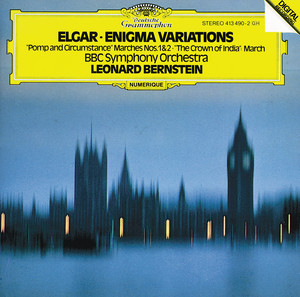 | Enigma Variations, Op. 36: Var. 1. L'istesso tempo "C.A.E." | Edward Elgar, BBC Symphony Orchestra, Leonard Bernstein | G Minor | 0 | 6A | 81 BPM | |
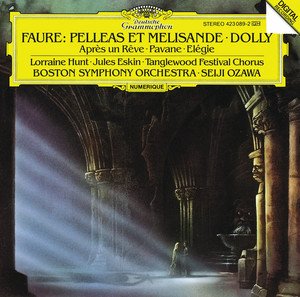 | Après un Rêve Op.7, No.1 | Gabriel Fauré, Jules Eskin, Boston Symphony Orchestra, Seiji Ozawa | F Minor | 1 | 4A | 96 BPM | |
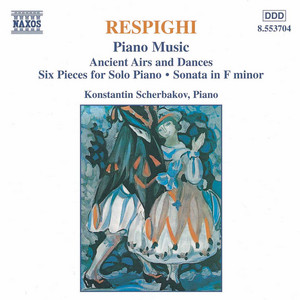 | 6 Pezzi, P. 44: No. 6. Internmezzo-serenata | Ottorino Respighi, Konstantin Scherbakov | A Major | 0 | 11B | 83 BPM | |
 | Orfeo ed Euridice, Wq. 30: Dance of the Blessed Spirits "Melody" (Arr. Sgambati for Piano) | Christoph Willibald Gluck, Yuja Wang | D Minor | 0 | 7A | 70 BPM | |
 | Sechs Klavierstücke, Op. 118: II. Intermezzo in A Major | Johannes Brahms, Arcadi Volodos | A Major | 0 | 11B | 69 BPM | |
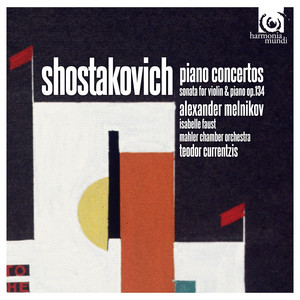 | Piano Concerto No. 2 Op. 102 in F Major: II. Andante | Dmitri Shostakovich, Alexander Melnikov, Mahler Chamber Orchestra, Teodor Currentzis | C Minor | 0 | 5A | 78 BPM | |
 | Nocturne No. 5 in B-Flat Major, H 37 | John Field, Benjamin Frith | B♭ Major | 0 | 6B | 70 BPM | |
 | Elgar: Salut d'amour, Op. 12 | Edward Elgar, Min Kym, Gordon Back | E Major | 1 | 12B | 86 BPM | |
 | The Seal Lullaby (Arr. Parkin) | Eric Whitacre, Isata Kanneh-Mason, Jeneba Kanneh-Mason, Braimah Kanneh-Mason, Konya Kanneh-Mason, Aminata Kanneh-Mason, Sheku Kanneh-Mason, Mariatu Kanneh-Mason | D♭ Major | 0 | 3B | 81 BPM | |
 | Lyric Pieces, Book 1, Op. 12: Arietta | Edvard Grieg, Einar Steen-Nøkleberg | E♭ Major | 0 | 5B | 111 BPM | |
 | Saint-Saëns: Le carnaval des animaux, R 125: XIII. Le cygne | Camille Saint-Saëns, Güher Pekinel, Éric Levionnais, Süher Pekinel | E♭ Major | 1 | 5B | 82 BPM | |
| Le rouet d'Omphale, Op. 31 | Camille Saint-Saëns, Philharmonia Orchestra, Charles Dutoit | D Major | 1 | 10B | 125 BPM | |
 | Il barbiere di Siviglia: Overture (Sinfonia) | Gioachino Rossini, Academy of St. Martin in the Fields, Sir Neville Marriner | E Major | 1 | 12B | 92 BPM | |
 | Shostakovich / Arr. Atovmyan: Suite from the Gadfly, Op. 97a: VIII. Romance | Dmitri Shostakovich, Tasmin Little, Piers Lane | C Major | 1 | 8B | 175 BPM | |
 | Salut d'Amour, Op. 12 | Edward Elgar, Yo-Yo Ma, Kathryn Stott | D Major | 0 | 10B | 73 BPM | |
 | Piano Concerto in G Major, M. 83: II. Adagio assai | Maurice Ravel, Krystian Zimerman, Cleveland Orchestra, Pierre Boulez | E Major | 0 | 12B | 74 BPM | |
 | Samson et Dalila: Bacchanale | Camille Saint-Saëns, Slovak Radio Symphony Orchestra, Stephen Gunzenhauser | A Minor | 1 | 8A | 109 BPM | |
 | Carmen Suite No. 2 (Arr. E. Guiraud): II. Habanera | Georges Bizet, Orquestra Simfònica de Barcelona i Nacional de Catalunya, Pablo González | D Major | 0 | 10B | 128 BPM |
- ISRC
- USSM16900578
- Label
- L-M Records/RCA Records