- BPM
- 138
- Key
- C Major
- Camelot
- 8B
Divertissement for Bassoon & Strings: I. Vivace by Jean Françaix, Matthias Rácz, Stuttgart Chamber Orchestra, Johannes Klumpp Song Details
On October 30, 2015, the song "Divertissement for Bassoon & Strings: I. Vivace" was released by Jean Françaix, Matthias Rácz, Stuttgart Chamber Orchestra, Johannes Klumpp. The duration of This song is about two minutes long, specifically at 2:22. This song does not appear to have any foul language. Divertissement for Bassoon & Strings: I. Vivace's duration is considered a little bit shorter than the average duration of a typical track. The song is number 11 out of 14 in Françaix, Tomasi, Jolivet & Villa-Lobos: Bassoon Concertos by Matthias Rácz, Stuttgart Chamber Orchestra, Johannes Klumpp. Going off of the ISRC code of this track, we detected that the origin of this track is from Germany. Based on our statistics, Divertissement for Bassoon & Strings: I. Vivace's popularity is not that popular right now. The overall mood can be danceable to some, especially with it's high amount of postive energy.
BPM and Tempo
The tempo marking of Divertissement for Bassoon & Strings: I. Vivace by Jean Françaix, Matthias Rácz, Stuttgart Chamber Orchestra, Johannes Klumpp is Allegro (fast, quick, and bright), since this song has a tempo of 138 BPM. With that information, we can conclude that the song has a fast tempo. This song can go great with walking. The time signature for this track is 4/4.
Music Key
This song is in the music key of C Major. This also means that this song has a camelot key of 8B. So, the perfect camelot match for 8B would be either 8B or 9A. While, 9B can give you a low energy boost. For moderate energy boost, you would use 5B and a high energy boost can either be 10B or 3B. Though, if you want a low energy drop, you should looking for songs with either a camelot key of 8A or 7B will give you a low energy drop, 11B would be a moderate one, and 6B or 1B would be a high energy drop. Lastly, 5A allows you to change the mood.
Want to find the BPM and music key for other songs? Check out our BPM and Key Finder page!
- Popularity
- 1%
- Loudness
- -20.137 dB
- Acousticness
- 98%
- Danceability
- 45%
- Energy
- 25%
- Instrumentalness
- 93%
- Liveness
- 10%
- Loudness
- 66%
- Speechiness
- 3%
- Valence
- 82%
Recommendations
| Track | Artist | Key | Energy | Camelot | BPM | ||
|---|---|---|---|---|---|---|---|
 | Cello Concerto in A Minor, Op. 129: IIa. Sehr langsam | Robert Schumann, Kian Soltani, Camerata Salzburg, Gregory Ahss | E Major | 0 | 12B | 113 BPM | |
 | Piano Quartet No. 2 in G Minor, Op. 45: III. Adagio non troppo | Gabriel Fauré, Trio Wanderer, Antoine Tamestit | B♭ Major | 2 | 6B | 104 BPM | |
 | Quintett No.3 in E flat for solo Clarinet and String Orchestra Op.23: II. Adagio | Heinrich Joseph Baermann, Sabine Meyer, Kenneth Sillito, Academy of St. Martin in the Fields | E♭ Major | 1 | 5B | 66 BPM | |
 | Suite for Flute and Piano Op. 34 No 1: II Scherzo | Charles-Marie Widor, Emmanuel Pahud, Eric Le Sage | C Major | 1 | 8B | 139 BPM | |
 | Reinecke: Flute Concerto in D Major, Op. 283: I. Allegro molto moderato | Carl Reinecke, Emmanuel Pahud, Ivan Repušić, Das Münchner Rundfunkorchester | A Major | 1 | 11B | 110 BPM | |
 | Nielsen: Violin Sonata No. 2 in G Minor, Op. 35: II. Molto adagio | Carl Nielsen, Leif Ove Andsnes, Christian Tetzlaff | B♭ Minor | 0 | 3A | 80 BPM | |
 | Piano Trio in G Minor, Op. 17: III. Andante | Clara Schumann, Dartington Piano Trio | D Minor | 2 | 7A | 87 BPM | |
 | Poulenc: Sextet for Piano and Winds, FP 100: I. Allegro vivace | Francis Poulenc, Les Vents Français | E Minor | 1 | 9A | 76 BPM | |
 | Max Bruch Romanze Op.85 | Christian Yoo | F Major | 1 | 7B | 140 BPM | |
 | Suita Concertante-Encounters IV for Viola Clarinet and Chamber Orchestra: II. Allegro | Menachem Wiesenberg, Yuval Gotlibovich, Chen Halevi, Thomas Rösner, Beethoven Philarmonie Orchestra | A Minor | 2 | 8A | 137 BPM | |
 | Bassoon Concerto in F Major, Op. 75, J. 127: II. Adagio | Carl Maria von Weber, Matthias Rácz, Nordwestdeutsche Philharmonie, Johannes Klumpp | E Minor | 0 | 9A | 105 BPM | |
 | 8 Pieces, Op. 83: III. Andante con moto – Andante | Max Bruch, Philon Trio | F♯ Minor | 0 | 11A | 63 BPM | |
 | Oscher: Rapsodia latina: I. Guajira | Efraín Oscher, Lucienne Renaudin Vary, Sascha Goetzel, Orchestre de chambre de Paris | D Minor | 2 | 7A | 78 BPM | |
 | Divertimento for Strings, BB 118 (Sz.113): II. Molto adagio | Béla Bartók, Orpheus Chamber Orchestra | B♭ Major | 1 | 6B | 105 BPM | |
 | L'Horloge de Flore: 19h - Geranium triste | Jean Françaix, Albrecht Mayer, Academy of St. Martin in the Fields, Mathias Mönius | G Major | 2 | 9B | 167 BPM | |
 | Variationen Über Ein Thema Aus Silvana, Op. 33: Thema | Carl Maria von Weber, Martin Klett, Sebastian Manz | F Major | 0 | 7B | 71 BPM | |
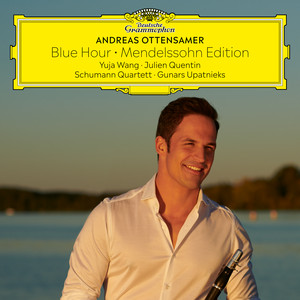 | Lieder ohne Worte VII, Op. 85: IV. Andante sostenuto, MWV U190 "Elegy" (Arr. Ottensamer for Clarinet & Piano) | Felix Mendelssohn, Andreas Ottensamer, Yuja Wang | D Major | 0 | 10B | 133 BPM | |
 | Piano Concerto in C Major, Op. 39: II. Pezzo giocoso. Vivacemente, ma senza fretta - Live | Ferruccio Busoni, Boston Symphony Orchestra, Sakari Oramo, Kirill Gerstein | F♯ Minor | 2 | 11A | 100 BPM | |
 | Wind Quintet: III. Theme and Variations. Andante - L'istesso tempo - Andantino con moto - Lento - Vivo - Andante | Jean Françaix, Bergen Wind Quintet | B Minor | 0 | 10A | 84 BPM | |
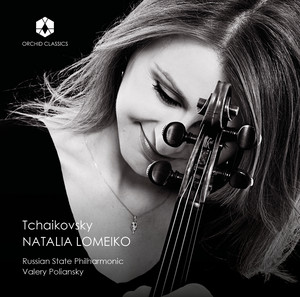 | Souvenir d'un lieu cher, Op. 42, TH 116 (Arr. for Violin & Orchestra by Alexander Glazunov): No. 3, Mélodie | Pyotr Ilyich Tchaikovsky, Natalia Lomeiko, The Russian State Philharmonic, Valery Polyansky | E Minor | 0 | 9A | 82 BPM | |
 | Suite for flute and piano, Op. 116: II. Idylle | Benjamin Godard, Jeffrey Khaner | G Major | 0 | 9B | 83 BPM | |
 | Violin Concerto: II. Sonata | Maya Badian, Florin Paul, Romanian National Orchestra, Ludovic Bacs | G Minor | 2 | 6A | 94 BPM | |
 | Concerto for Viola and Orchestra: I. Andante comodo | William Walton, Edward Gardner, BBC Symphony Orchestra, James Ehnes | A Minor | 1 | 8A | 103 BPM | |
 | Variations on a Rococo Theme, Op. 33, TH 57: Var. V: Allegro moderato | Pyotr Ilyich Tchaikovsky, Jean-Guihen Queyras, BBC Symphony Orchestra, Jiří Bělohlávek | A Major | 0 | 11B | 107 BPM | |
 | Velvet Valves (Six Romantic Trio Arrangements): Melodia (After Pyotr Ilyich Tchaikovsky) | David Riniker, Sarah Willis, Kotowa Machida, Philip Mayers, Klaus Wallendorf | E♭ Major | 0 | 5B | 173 BPM |
- ISRC
- DEFG21517411
- Label
- L-M Records/RCA Records