- BPM
- 90
- Key
- E♭ Minor
- Camelot
- 2A
交響詩「ローマの祭り」 Ⅲ. L’Ottobrata 十月祭 by O. レスピーギ, 龍谷大学吹奏楽部 Song Details
"交響詩「ローマの祭り」 Ⅲ. L’Ottobrata 十月祭" by O. レスピーギ, 龍谷大学吹奏楽部 had its release date on March 15, 2025. Since This song is still less than 10 minute long, it is still considered a pretty long duration song compared to the average song length. This song does not appear to be explicit due to the lack of the "E" tag. There are a total of 12 in the song's album "O.レスピーギ 交響詩「ローマの祭り」/龍谷大学吹奏楽部". In this album, this song's track order is #10. Furthermore, we believe that the track originated from Japan. In terms of popularity, 交響詩「ローマの祭り」 Ⅲ. L’Ottobrata 十月祭 is currently unknown. In our opinion, the overall tone is not very danceable and projects negative sounds, such as being sad, depressed, or angry.
BPM and Tempo
With 交響詩「ローマの祭り」 Ⅲ. L’Ottobrata 十月祭 by O. レスピーギ, 龍谷大学吹奏楽部 having a BPM of 90 with a half-time of 45 BPM and a double-time of 180 BPM, we would consider this track to have a Andante (at a walking pace) tempo marking. Because of this, we believe that the song has an overall slow tempo. Looking at the BPM of this song, this song might go great with yoga or pilates. The time signature for this track is 4/4.
Music Key
This song has a musical key of E♭ Minor. Which also means that the camelot key for this song is 2A. So, the perfect camelot match for 2A would be either 2A or 1B. While, a low energy boost can consist of either 2B or 3A. For moderate energy boost, you would use 11A and a high energy boost can either be 4A or 9A. However, if you are looking for a low energy drop, finding a song with a camelot key of 1A would be a great choice. Where 5A would give you a moderate drop, and 12A or 7A would be a high energy drop. Lastly, 5B allows you to change the mood.
Want to find the BPM and music key for other songs? Check out our BPM and Key Finder page!
- Popularity
- 0%
- Loudness
- -23.777 dB
- Acousticness
- 96%
- Danceability
- 19%
- Energy
- 4%
- Instrumentalness
- 74%
- Liveness
- 13%
- Loudness
- 60%
- Speechiness
- 4%
- Valence
- 4%
Recommendations
| Track | Artist | Key | Energy | Camelot | BPM | ||
|---|---|---|---|---|---|---|---|
 | Les biches Suite, FP 36b: IV. Andantino | Francis Poulenc, RTÉ National Symphony Orchestra, Jean-Luc Tingaud | C Major | 0 | 8B | 105 BPM | |
 | Herzlich tut mich verlangen, BWV 727 (Arr. for Orchestra by Sir Andrew Davis) | Johann Sebastian Bach, Martyn Brabbins, BBC Philharmonic | E♭ Major | 0 | 5B | 73 BPM | |
 | Symphony No. 7 in E Minor "Song of the Night": II. Nachtmusik. Allegro moderato | Gustav Mahler, Gianandrea Noseda, National Symphony Orchestra, Kennedy Center | C Major | 2 | 8B | 74 BPM | |
 | Bronze Horseman Suite: IIb. Parasha. Andantino | Reinhold Glière, Sir Edward Downes, BBC Philharmonic | G Minor | 0 | 6A | 86 BPM | |
 | Suite for 13 Wind Instruments in B flat major, Op. 4: I. Praeludium | Richard Strauss, François Leleux | B♭ Major | 0 | 6B | 127 BPM | |
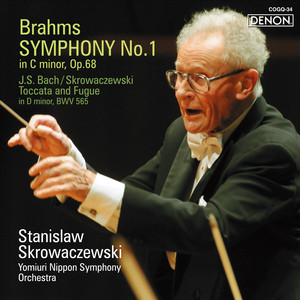 | トッカータとフーガ ニ短調 BWV 565 | Johann Sebastian Bach, Stanisław Skrowaczewski, Yomiuri Nippon Symphony Orchestra | C Minor | 2 | 5A | 75 BPM | |
 | Don Quixote, Op. 35: II. Don Quixote, the Knight of the Sorrowful Countenance – III. Sancha Panza. Maggiore | Richard Strauss, Pierre Fournier, Giusto Cappone, Berliner Philharmoniker, Herbert von Karajan | E♭ Major | 2 | 5B | 121 BPM | |
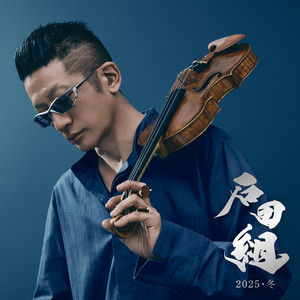 | 弦楽セレナード ホ短調 作品20: 第3楽章: Allegretto | Edward Elgar, 石田泰尚, 石田組 | F Major | 3 | 7B | 116 BPM | |
 | Symphony No. 1 in F Minor, Op. 10: III. Lento - Largo - Lento | Dmitri Shostakovich, Gianandrea Noseda, London Symphony Orchestra | E Major | 0 | 12B | 76 BPM | |
 | Miške, MKČ 101: VI. Recapitulation, Main Theme a tempo I | Mikalojus Konstantinas Čiurlionis, Orchestre Philharmonique de Radio France, Mirga Gražinytė-Tyla | A Minor | 0 | 8A | 85 BPM | |
| Jūra, MKČ 102: VII. Coda | Mikalojus Konstantinas Čiurlionis, Lithuanian National Symphony Orchestra, Mirga Gražinytė-Tyla | A Minor | 0 | 8A | 85 BPM | |
 | Strauss, R: Der Bürger als Edelmann Suite, Op. 60-IIIa: V. Das Menuett des Lully | Richard Strauss, Jeffrey Tate, English Chamber Orchestra | B♭ Major | 3 | 6B | 75 BPM | |
 | well done | Soundscapes of Serenity | C Major | 0 | 8B | 110 BPM | |
 | Duruflé : 3 Dances Op.6 : I Divertissement | Maurice Duruflé, Marie-Claire Alain, Jean-Jacques Kantorow & Bamberg Symphony Orchestra, Jean-Jacques Kantorow, Bamberg Symphony | G Major | 1 | 9B | 99 BPM | |
 | Schubert / Orch. Mahler: String Quartet No. 14 in D Minor, D. 810 "Death and the Maiden": II. Andante con moto | Franz Schreker, Camerata Academica Salzburg/Franz Welser-Möst, Franz Welser-Möst, Camerata Salzburg | A Major | 0 | 11B | 80 BPM | |
 | The Three-Cornered Hat: Suite No. 2 - Three Dances, II. The Miller's Dance - Farruca | Manuel de Falla, Philadelphia Orchestra, Raphael Frühbeck de Burgos | G Major | 2 | 9B | 78 BPM | |
 | Symphony No. 3 in E Flat Major, Op. 90: III. Menuetto. Moderato - Trio I - Trio II | Ferdinand Ries, Tapiola Sinfonietta, Janne Nisonen | E♭ Major | 0 | 5B | 174 BPM | |
 | Concertstück in F Major, Op. 86: II. Romanze | Robert Schumann, American Horn Quartet, Sinfonia Varsovia, Dariusz Wisniewski | B♭ Major | 0 | 6B | 86 BPM | |
 | Carmen Fantasy, Op. 25 (Arr. for Marimba by Thibault Lepri): Introduction. Allegro moderato | Pablo de Sarasate, Adélaïde Ferrière, Orchestre Dijon Bourgogne, Joseph Bastian | B♭ Major | 3 | 6B | 75 BPM | |
 | Piccola reminiscenza | Giacomo Cataldo | B♭ Minor | 1 | 3A | 92 BPM | |
 | Two Melodies, Op. 53, for string Orchestra: Det første møte (First Encounter). Lento | Edvard Grieg, WDR Sinfonieorchester Köln, Eivind Aadland | D Minor | 0 | 7A | 100 BPM | |
 | Cello Concerto in C Minor, Op. 43: I. Adagio | Mieczysław Weinberg, Kristina Reiko Cooper, Constantine Orbelian, Kaunas City Symphony Orchestra | B♭ Major | 3 | 6B | 75 BPM | |
 | Czech Suite, Op. 39: I. Preludium. Pastorale | Antonín Dvořák, Janáček Philharmonic Orchestra, Theodore Kuchar | F♯ Major | 1 | 2B | 86 BPM | |
 | Mozart: 6 German Dances, K. 509: No. 4 in F Major | Wolfgang Amadeus Mozart, Sir Charles Mackerras, Pro Arte Orchestra | B♭ Major | 3 | 6B | 75 BPM | |
 | Concertino for Horn and Orchestra in E minor, Op. 45: Polacca | Carl Maria von Weber, Hermann Baumann, Gewandhausorchester, Kurt Masur | E Major | 1 | 12B | 104 BPM |
- ISRC
- JPJ672416610
- Label
- L-M Records/RCA Records