- BPM
- 67
- Key
- F Major
- Camelot
- 7B
Pieces For Piano From "Romeo And Juliet" Op. 75: 5. The Montagues and Capulets. Allegro pesante by Sergei Prokofiev, Lazar Berman Song Details
Sergei Prokofiev, Lazar Berman's 'Pieces For Piano From "Romeo And Juliet" Op. 75: 5. The Montagues and Capulets. Allegro pesante' had a release date set for January 1, 2010. With this song being around four minutes long, at 4:01, the duration of this song is pretty average compared to other songs. This track is safe for children and doesn't appear to contain any foul language, since the "Explicit" tag was not present in this track. There are a total of 63 in the song's album "Piano Gold (Multipack)". In this album, this song's track order is #7. Furthermore, we believe that the track originated from Germany. Pieces For Piano From "Romeo And Juliet" Op. 75: 5. The Montagues and Capulets. Allegro pesante is unknown right now. Although the tone can be danceable to some, this track does projects more of a negative sound rather than a postive one.
BPM and Tempo
With Pieces For Piano From "Romeo And Juliet" Op. 75: 5. The Montagues and Capulets. Allegro pesante by Sergei Prokofiev, Lazar Berman having a BPM of 67 with a half-time of 34 BPM and a double-time of 134 BPM, we would consider this track to have a Adagio (slowly with great expression) tempo marking. Because of this, we believe that the song has an overall slow tempo. The time signature for this track is 5/4.
Music Key
This song has a musical key of F Major. Or for those who are familiar with the camelot wheel, this song has a camelot key of 7B. So, the perfect camelot match for 7B would be either 7B or 8A. While, 8B can give you a low energy boost. For moderate energy boost, you would use 4B and a high energy boost can either be 9B or 2B. Though, if you want a low energy drop, you should looking for songs with either a camelot key of 7A or 6B will give you a low energy drop, 10B would be a moderate one, and 5B or 12B would be a high energy drop. Lastly, 4A allows you to change the mood.
Want to find the BPM and music key for other songs? Check out our BPM and Key Finder page!
- Popularity
- 0%
- Loudness
- -26.593 dB
- Acousticness
- 100%
- Danceability
- 45%
- Energy
- 2%
- Instrumentalness
- 91%
- Liveness
- 9%
- Loudness
- 56%
- Speechiness
- 8%
- Valence
- 20%
Recommendations
| Track | Artist | Key | Energy | Camelot | BPM | ||
|---|---|---|---|---|---|---|---|
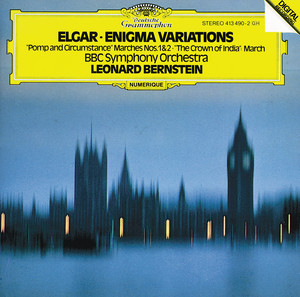 | Enigma Variations, Op. 36: Var. 1. L'istesso tempo "C.A.E." | Edward Elgar, BBC Symphony Orchestra, Leonard Bernstein | G Minor | 0 | 6A | 81 BPM | |
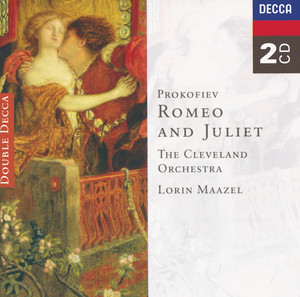 | Romeo and Juliet, Op. 64 - Act 1: The Street Wakens - Morning Dance | Sergei Prokofiev, The Cleveland Orchestra, Lorin Maazel | G Major | 2 | 9B | 90 BPM | |
 | The Love for Three Oranges Op. 33: Marche | Sergei Prokofiev, Kent Nagano, Orchestre De L'Opéra National De Lyon | A♭ Major | 4 | 4B | 128 BPM | |
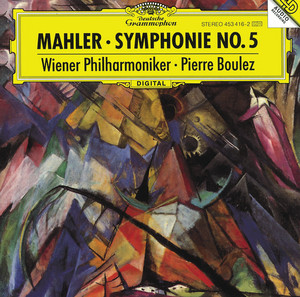 | Symphony No. 5: IV. Adagietto. Sehr langsam | Gustav Mahler, Wiener Philharmoniker, Pierre Boulez | F Major | 0 | 7B | 87 BPM | |
 | Prince Igor: Polovtsian Dances (Remastered): No. 17c, Allegro | Alexander Borodin, Leonard Bernstein, New York Philharmonic | D Major | 3 | 10B | 70 BPM | |
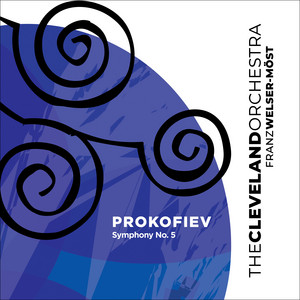 | Symphony No. 5 in B-Flat Major, Op. 100: II. Allegro marcato | Sergei Prokofiev, The Cleveland Orchestra, Franz Welser-Möst | C Major | 0 | 8B | 105 BPM | |
 | Ancient Airs & Dances, Suite III, P. 172: IV. Passacaglia (Roncalli) | Ottorino Respighi, Boston Symphony Orchestra, Seiji Ozawa | G Minor | 3 | 6A | 116 BPM | |
 | Pictures at an Exhibition (Orch. Ravel): Promenade I | Modest Mussorgsky, Wiener Philharmoniker, Gustavo Dudamel | F Major | 0 | 7B | 88 BPM | |
 | The Rite of Spring, Part 1: II. The Augurs of Spring - Dances of the Young Girls | Igor Stravinsky, Vasily Petrenko, Royal Liverpool Philharmonic Orchestra | B♭ Major | 3 | 6B | 115 BPM | |
 | Romeo and Juliet, Op. 64, Act I: Dance of the Knights | Sergei Prokofiev, Vasily Petrenko, Oslo Philharmonic Orchestra | C Major | 0 | 8B | 104 BPM | |
 | Egmont Overture, Op. 84 - 2018 Remastered Version | Ludwig van Beethoven, George Szell, The Cleveland Orchestra | A♭ Major | 1 | 4B | 83 BPM | |
| Prince Igor: Polovtsian Dances (Remastered): No. 17e, Moderato alla breve | Alexander Borodin, Leonard Bernstein, New York Philharmonic | A Major | 2 | 11B | 0 BPM | |
 | Symphonie fantastique, Op. 14, H 48: II. Un Bal | Hector Berlioz, London Symphony Orchestra, Sir Colin Davis | A Major | 1 | 11B | 113 BPM | |
 | El amor brujo: Danza ritual del fuego, para ahuyentar los malos espíritus | Manuel de Falla, Orchestre Symphonique de Montréal, Charles Dutoit | G Major | 1 | 9B | 141 BPM | |
 | Aladdin Suite, Op. 34, FS 89: IV. Chinese Dance | Carl Nielsen, South Jutland Symphony Orchestra, Niklas Willen | E Minor | 1 | 9A | 96 BPM | |
 | Strauss II, J: Frühlingsstimmen, Op. 410 | Johann Strauss II, Hallé, Bryden Thomson | B♭ Major | 0 | 6B | 103 BPM | |
 | L'Apprenti sorcier | Paul Dukas, Berliner Philharmoniker, James Levine | F Minor | 4 | 4A | 125 BPM | |
 | Andante Festivo | Jean Sibelius, Gothenburg Symphony Orchestra, Neeme Järvi | G Major | 1 | 9B | 86 BPM | |
 | Schwanengesang, D.957: No. 4 Serenade | Franz Schubert, Eugene Ormandy, Philadelphia Orchestra | C Major | 0 | 8B | 91 BPM | |
 | Candide: Overture | Leonard Bernstein, New York Philharmonic | E♭ Major | 4 | 5B | 82 BPM | |
 | Elgar: Serenade for Strings, Op. 20: I. Allegro piacevole | Edward Elgar, London Philharmonic Orchestra, Sir Adrian Boult | E Minor | 1 | 9A | 125 BPM | |
 | La Bayadere, Act I, Scene 1: 1. “Introduction" | Evergreen Symphony Orchestra, Kevin Galiè | D Major | 0 | 10B | 129 BPM | |
 | Carmen Fantasy, Op. 25: I. Moderato | Pablo de Sarasate, Hilary Hahn, Frankfurt Radio Symphony Orchestra, Andrés Orozco-Estrada | D Major | 1 | 10B | 89 BPM | |
 | Les danses polovtsiennes (Extraits de l'opéra Le Prince Igor): II. Danse des hommes | Alexander Borodin, Anima Eterna, Jos Van Immerseel | A Major | 0 | 11B | 87 BPM | |
 | III. The Betrothal | Sergei Prokofiev, Ukrainian State Symphony Orchestra, Theodore Kuchar | C Minor | 1 | 5A | 91 BPM |
- ISRC
- DEF057801146
- Label
- L-M Records/RCA Records