- BPM
- 92
- Key
- A♭ Minor
- Camelot
- 1A
Circus Polka, K064 (Arr. Babin for 2 Pianos) by Igor Stravinsky, Marc-André Hamelin, Leif Ove Andsnes Song Details
Igor Stravinsky, Marc-André Hamelin, Leif Ove Andsnes's ' "Circus Polka, K064 (Arr. Babin for 2 Pianos)" was released on its scheduled release date, February 2, 2018. With this song being around four minutes long, at 3:54, the duration of this song is pretty average compared to other songs. This track is safe for children and doesn't appear to contain any foul language, since the "Explicit" tag was not present in this track. There are a total of 21 in the song's album "Stravinsky: The Rite of Spring, Concerto & Other Works for 2 Pianos". In this album, this song's track order is #21. Furthermore, we believe that the track originated from United Kingdom. In terms of popularity, Circus Polka, K064 (Arr. Babin for 2 Pianos) is currently not that popular. Even with the track produces more of a neutral energy, it is pretty danceable compared to others.
BPM and Tempo
With Circus Polka, K064 (Arr. Babin for 2 Pianos) by Igor Stravinsky, Marc-André Hamelin, Leif Ove Andsnes having a BPM of 92 with a half-time of 46 BPM and a double-time of 184 BPM, we would consider this track to have a Andante (at a walking pace) tempo marking. Because of this, we believe that the song has an overall slow tempo. Looking at the BPM of this song, this song might go great with yoga or pilates. The time signature for this track is 4/4.
Music Key
This song is in the music key of A♭ Minor. Which also means that the camelot key for this song is 1A. So, the perfect camelot match for 1A would be either 1A or 12B. While, a low energy boost can consist of either 1B or 2A. For moderate energy boost, you would use 10A and a high energy boost can either be 3A or 8A. However, if you are looking for a low energy drop, finding a song with a camelot key of 12A would be a great choice. Where 4A would give you a moderate drop, and 11A or 6A would be a high energy drop. Lastly, 4B allows you to change the mood.
Want to find the BPM and music key for other songs? Check out our BPM and Key Finder page!
- Popularity
- 2%
- Loudness
- -19.545 dB
- Acousticness
- 99%
- Danceability
- 60%
- Energy
- 14%
- Instrumentalness
- 85%
- Liveness
- 24%
- Loudness
- 67%
- Speechiness
- 4%
- Valence
- 40%
Recommendations
| Track | Artist | Key | Energy | Camelot | BPM | ||
|---|---|---|---|---|---|---|---|
 | Symphony No. 7 in E Major, WAB 107 (Ed. Haas): I. Allegro moderato | Anton Bruckner, Wiener Philharmoniker, Herbert von Karajan | B Major | 1 | 1B | 87 BPM | |
 | Symphony No. 1, Op. 9: III. Andante tranquillo | Samuel Barber, Leonard Slatkin, St. Louis Symphony | B♭ Major | 3 | 6B | 93 BPM | |
 | Symphony in E Minor, Op. 32, "Gaelic Symphony": I. Allegro con fuoco | Amy Beach, Nashville Symphony Orchestra, Kenneth Schermerhorn | E Minor | 1 | 9A | 111 BPM | |
 | The Firebird Suite (1919 Version): The Princesses' Round - 2017 Remastered Version | Igor Stravinsky, Leonard Bernstein, New York Philharmonic | B Major | 1 | 1B | 65 BPM | |
 | Pacific 231 | Arthur Honegger, Neeme Järvi, Danish National Symphony Orchestra | B♭ Minor | 3 | 3A | 130 BPM | |
 | Symphony No. 8 in G Minor, Op. 88, B. 163: III. Allegretto grazioso - Molto vivace | Antonín Dvořák, London Symphony Orchestra, Sir Colin Davis | G Major | 1 | 9B | 130 BPM | |
 | Japanese Suite, Op. 33, H. 126: II. Ceremonial Dance | Gustav Holst, Ulster Orchestra, Joann Falletta | C Minor | 3 | 5A | 103 BPM | |
 | Elgar: Cello Concerto in E Minor, Op. 85: II. Lento - Allegro molto | Edward Elgar, Sir John Barbirolli, London Symphony Orchestra | G Major | 2 | 9B | 82 BPM | |
 | Short Ride in a Fast Machine | John Adams, Berliner Philharmoniker, Alan Gilbert | E Minor | 5 | 9A | 146 BPM | |
 | Nocturnes, CD 98: I. Nuages | Claude Debussy, Orchestre Symphonique de Montréal, Charles Dutoit | C Major | 0 | 8B | 77 BPM | |
 | Stravinsky: The Rite of Spring, Pt. 2 "The Sacrifice": Sacrificial Dance | Igor Stravinsky, Riccardo Muti, Philadelphia Orchestra | G Minor | 5 | 6A | 132 BPM | |
 | Histoire du soldat Suite (the Soldier's Tale Suite): I. The Soldier's March | Igor Stravinsky, Rolf Schulte, William Blount, Christopher Gekker, Michael Powell, Frank Morelli, John Feeney, Gordon Gottlieb, Robert Craft | B Minor | 1 | 10A | 61 BPM | |
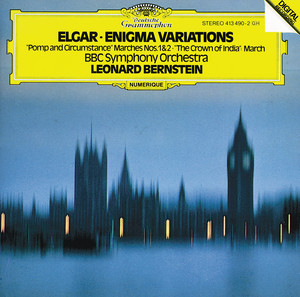 | Variations On An Original Theme, Op.36 "Enigma": 13. Romanza *** (Moderato) | Edward Elgar, BBC Symphony Orchestra, Leonard Bernstein | A♭ Major | 0 | 4B | 87 BPM | |
 | Scheherezade, Op. 35: I. The Sea and Sinbad's Ship | Nikolai Rimsky-Korsakov, Pelin Halkacı Alkın, Sascha Goetzel, Borusan Istanbul Philharmonic Orchestra | E Minor | 1 | 9A | 70 BPM | |
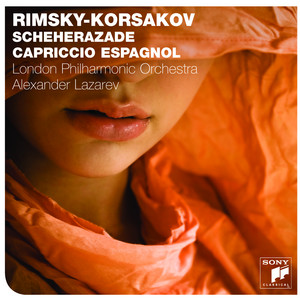 | Scheherazade: The Sea & Sinbad's Ship | Nikolai Rimsky-Korsakov, Lars Hjalmar Joakim | E Major | 1 | 12B | 82 BPM | |
 | Fontane di Roma, P. 106: IV. La fontana di Villa Medici al tramonto | Ottorino Respighi, New York Philharmonic, Giuseppe Sinopoli | F♯ Minor | 0 | 11A | 61 BPM | |
 | Fauré: Élégie, Op. 24 (Orchestral Version) | Gabriel Fauré, Paavo Järvi, Eric Picard, Orchestre de Paris | A♭ Major | 0 | 4B | 89 BPM | |
| Symphony No. 8 in G Minor, Op. 88, B. 163: II. Adagio | Antonín Dvořák, London Symphony Orchestra, Sir Colin Davis | C Major | 0 | 8B | 54 BPM | |
 | La Mer, L.109: 2. Play of the Waves (Jeux de vagues) | Claude Debussy, Orchestre Symphonique de Montréal, Charles Dutoit | E Major | 1 | 12B | 113 BPM | |
 | Symphony No. 5 in E Minor, Op. 64: IV. Finale. Andante maestoso – Allegro vivace – Moderato assai e molto maestoso – Presto – Molto meno mosso | Pyotr Ilyich Tchaikovsky, Berliner Philharmoniker, Kirill Petrenko | E Major | 3 | 12B | 141 BPM | |
 | Symphony in C Major, Op. 46: II. Sehr langsam - | Hans Pfitzner, Seattle Symphony Orchestra, Gerard Schwarz | F Major | 0 | 7B | 87 BPM | |
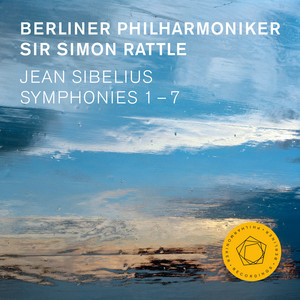 | Symphony No. 1 in E Minor, Op. 39: III. Scherzo. Allegro | Jean Sibelius, Berliner Philharmoniker, Sir Simon Rattle | D Minor | 0 | 7A | 126 BPM | |
 | Also sprach Zarathustra, Op. 30, TrV 176: Das Tanzlied - Das Nachtlied | Richard Strauss, Michel Schwalbé, Berliner Philharmoniker, Herbert von Karajan | C Major | 2 | 8B | 100 BPM | |
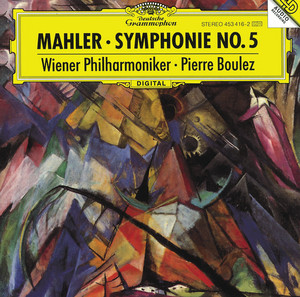 | Symphony No. 5: IV. Adagietto. Sehr langsam | Gustav Mahler, Wiener Philharmoniker, Pierre Boulez | F Major | 0 | 7B | 87 BPM | |
 | Chamber Symphony No. 5 in A-Flat Major, Op. 118a: IV. Allegretto | Dmitri Shostakovich, Yuli Turovsky, I Musici de Montréal | C Minor | 0 | 5A | 121 BPM |
- ISRC
- GBAJY1818921
- Label
- L-M Records/RCA Records