- BPM
- 124
- Key
- D Minor
- Camelot
- 7A
Violin Concerto No. 1 in D Minor, Op. 3: III. Polonaise by Pierre Rode, Friedemann Eichhorn, Jena Philharmonic Orchestra, Nicolás Pasquet Song Details
Pierre Rode, Friedemann Eichhorn, Jena Philharmonic Orchestra, Nicolás Pasquet's ' "Violin Concerto No. 1 in D Minor, Op. 3: III. Polonaise" was released on its scheduled release date, January 6, 2015. Since This song is still less than 10 minute long, it is still considered a pretty long duration song compared to the average song length. This song does not appear to be explicit due to the lack of the "E" tag. There are a total of 9 in the song's album "Rode: Violin Concertos Nos. 1, 5 & 9". In this album, this song's track order is #3. Furthermore, we believe that the track originated from Hong Kong. Based on our statistics, Violin Concerto No. 1 in D Minor, Op. 3: III. Polonaise's popularity is unknown right now. Since there is more of a neutral sound being played, this makes the track somewhat danceable.
BPM and Tempo
With Violin Concerto No. 1 in D Minor, Op. 3: III. Polonaise by Pierre Rode, Friedemann Eichhorn, Jena Philharmonic Orchestra, Nicolás Pasquet having a BPM of 124 with a half-time of 62 BPM and a double-time of 248 BPM, we would consider this track to have a Allegro (fast, quick, and bright) tempo marking. Because of this, we believe that the song has an overall fast tempo. Looking at the BPM of this song, this song might go great with walking. The time signature for this track is 3/4.
Music Key
This song has a musical key of D Minor. Which also means that the camelot key for this song is 7A. So, the perfect camelot match for 7A would be either 7A or 6B. While, a low energy boost can consist of either 7B or 8A. For moderate energy boost, you would use 4A and a high energy boost can either be 9A or 2A. However, if you are looking for a low energy drop, finding a song with a camelot key of 6A would be a great choice. Where 10A would give you a moderate drop, and 5A or 12A would be a high energy drop. Lastly, 10B allows you to change the mood.
Want to find the BPM and music key for other songs? Check out our BPM and Key Finder page!
- Popularity
- 0%
- Loudness
- -15.891 dB
- Acousticness
- 82%
- Danceability
- 48%
- Energy
- 26%
- Instrumentalness
- 3%
- Liveness
- 24%
- Loudness
- 74%
- Speechiness
- 5%
- Valence
- 55%
Recommendations
| Track | Artist | Key | Energy | Camelot | BPM | ||
|---|---|---|---|---|---|---|---|
 | Sonata for Violin and Guitar in A Minor, Op. 2, No. 6, MS 26: Largo con precisione | Niccolò Paganini, Scott St. John, Simon Wynberg | A Minor | 1 | 8A | 107 BPM | |
 | Capriccio sesto | Giuseppe Maria Dall'Abaco, Elinor Frey | E♭ Minor | 1 | 2A | 67 BPM | |
 | Bériot Concerto No. 9 in A minor —1st Mov | Charles-Auguste de Bériot, tnnha | A Minor | 0 | 8A | 115 BPM | |
 | Perpetual Motion, Op. 28 | Jayda Leysath, Yaroslav Medvedev-Taraldset | G Minor | 5 | 6A | 103 BPM | |
 | Cello Sonata No. 1 in E Minor, Op. 38 No. 1 (Arr. for 2 Cellos): I. Allegro non troppo | Bernhard Romberg, VC2 Cello Duo | E Minor | 3 | 9A | 133 BPM | |
 | Violin Sonata No. 4 in D Major, HWV 371, Op. 1: I. Adagio | Anthony Bracewell, Jun Cho | A Major | 0 | 11B | 78 BPM | |
 | Romance in B-Flat Major, Op. 1 | Roman Kim, Jure Gorucan | B♭ Major | 1 | 6B | 114 BPM | |
 | Viola Concerto in E-Flat Major: I. Allegro con fuoco | Carl Friedrich Zelter, Hariolf Schlichtig, Munich Chamber Orchestra | E♭ Major | 1 | 5B | 147 BPM | |
 | Bach, JC: Harpsichord Concerto No. 6 in F Minor, W. C73 (formerly attrib. W. F. Bach): I. Allegro di molto | Johann Christian Bach, Jean Rondeau, Sophie Gent, Louis Creac'h, Fanny Paccoud, Antoine Touche, Thomas de Pierrefeu, Evolène Kiener | G Major | 2 | 9B | 92 BPM | |
 | 24 caprices en formes d'etudes: No. 6 in B Minor | Pierre Rode, Axel Strauss | D Major | 2 | 10B | 88 BPM | |
 | 6 Sonatas for Violin Solo, Op. 27 / Sonata No. 2 in A Minor: I. Obsession. Prèlude | Eugène Ysaÿe, Hilary Hahn | A Minor | 1 | 8A | 106 BPM | |
 | Dvořák: Violin Sonatina in G Major, Op. 100, B. 183 "Indian Lament": II. Larghetto | Antonín Dvořák, Itzhak Perlman, Samuel Sanders | D♭ Major | 1 | 3B | 88 BPM | |
 | Double Concerto for 2 Violins, Strings, and Continuo in D Minor, BWV 1043: III. Allegro | Johann Sebastian Bach, David Oistrakh, Igor Oistrakh, George Malcolm, Royal Philharmonic Orchestra, Eugene Goossens | D Minor | 3 | 7A | 178 BPM | |
 | Moz-Art für zwei Violinen (Nach dem Fragment KV 416d) | Alfred Schnittke, Clarissa Bevilacqua, Larissa Cidlinsky | B♭ Major | 0 | 6B | 137 BPM | |
 | Sonata X in G Major for Two Cellos: III. Allegro prestissimo | Jean Barrière, Patrick Demenga, Thomas Demenga | D Major | 2 | 10B | 153 BPM | |
 | Violin Sonata No. 2 in G Major, Op. 13: II. Allegretto tranquillo | Edvard Grieg, Frederic Chiu, Pierre Amoyal | D Minor | 2 | 7A | 148 BPM | |
 | Rieding: Violin Concerto in B Minor, Op. 35: II. Andante | Oskar Rieding, Itzhak Perlman, Lawrence Foster, The Juilliard Orchestra | G Major | 2 | 9B | 95 BPM | |
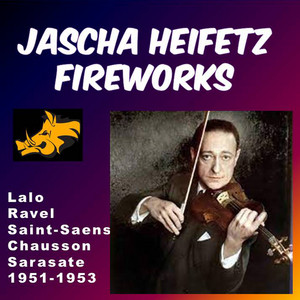 | Zigeunerweisen, Op. 20 (version for violin and orchestra): III. Allegro molto vivace | RCA Victor Symphony Orchestra & William Steinberg | A♭ Major | 1 | 4B | 88 BPM | |
 | Henryk Wieniawski: Polonaise n° 1 in Re Maggiore | Uto Ughi, Henryk Wieniawski | D Major | 2 | 10B | 101 BPM | |
 | Suite for Violin and Orchestra in A Minor, Op.10 (Suite im alten Stil): III. Tempo giusto | Christian Sinding, Itzhak Perlman, André Previn, Pittsburgh Symphony Orchestra | A Minor | 2 | 8A | 106 BPM | |
 | Violin Concerto in D Major, Op. 35: III. Finale - Allegro vivacissimo | Johannes Brahms, Leonid Kogan, Constantin Silvestri, Orchestre De La Société Des Concerts Du Conservatoire | B♭ Major | 0 | 6B | 137 BPM | |
 | Violin Concerto No. 5 in D Major, Op. 22: III. Rondo. Allegretto | Friedrich Seitz, Hyejin Chung, Warren Lee | D Major | 1 | 10B | 82 BPM | |
 | Gulda: Concerto for Cello, Wind Orchestra and Band, Op. 129: IV. Menuett | Friedrich Gulda, Edgar Moreau, Raphaël Merlin, Les Forces Majeures | A Major | 1 | 11B | 133 BPM | |
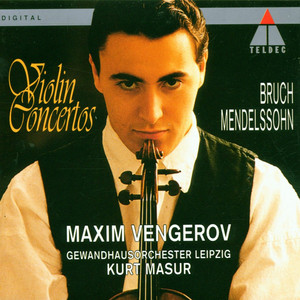 | Bruch: Violin Concerto No. 1 in G Minor, Op. 26: I. Prelude. Allegro moderato | Max Bruch, Maxim Vengerov, Kurt Masur, Gewandhausorchester | E♭ Major | 1 | 5B | 113 BPM | |
 | Sonata in A Minor, D. 821: II. Adagio | Franz Schubert, Anne Gastinel, Claire Désert | D Major | 0 | 10B | 95 BPM |
- ISRC
- HKI191408503
- Label
- L-M Records/RCA Records