- BPM
- 146
- Key
- A♭ Major
- Camelot
- 4B
Someone To Watch Over Me (Arr. for Clarinet by Jirka Kadlec) by George Gershwin, Milan Rericha, Marc Reift, Philharmonic Wind Orchestra Song Details
George Gershwin, Milan Rericha, Marc Reift, Philharmonic Wind Orchestra's ' "Someone To Watch Over Me (Arr. for Clarinet by Jirka Kadlec)" was released on its scheduled release date, August 13, 2025. With this song being around four minutes long, at 3:36, the duration of this song is pretty average compared to other songs. This track is safe for children and doesn't appear to contain any foul language, since the "Explicit" tag was not present in this track. The track order of this song in Milan Rericha, Marc Reift, Philharmonic Wind Orchestra's "Moto Perpetuo" album is number 10 out of 13. On top of that, Switzerland appears to be the country where this track was created. Based on our statistics, Someone To Watch Over Me (Arr. for Clarinet by Jirka Kadlec)'s popularity is unknown right now. The overall mood can be danceable to some, especially with it's high amount of postive energy.
BPM and Tempo
We consider the tempo marking of Someone To Watch Over Me (Arr. for Clarinet by Jirka Kadlec) by George Gershwin, Milan Rericha, Marc Reift, Philharmonic Wind Orchestra to be Allegro (fast, quick, and bright) because the track has a tempo of 146 BPM, a half-time of 73BPM, and a double-time of 292 BPM. Based on that, the speed of the song's tempo is fast. Activities such as, jogging or cycling, can go well with this song. The time signature for this track is 4/4.
Music Key
This song is in the music key of A♭ Major. This also means that this song has a camelot key of 4B. So, the perfect camelot match for 4B would be either 4B or 5A. While, 5B can give you a low energy boost. For moderate energy boost, you would use 1B and a high energy boost can either be 6B or 11B. Though, if you want a low energy drop, you should looking for songs with either a camelot key of 4A or 3B will give you a low energy drop, 7B would be a moderate one, and 2B or 9B would be a high energy drop. Lastly, 1A allows you to change the mood.
Want to find the BPM and music key for other songs? Check out our BPM and Key Finder page!
- Popularity
- 0%
- Loudness
- -2.884 dB
- Acousticness
- 76%
- Danceability
- 41%
- Energy
- 64%
- Instrumentalness
- 64%
- Liveness
- 31%
- Loudness
- 95%
- Speechiness
- 3%
- Valence
- 70%
Recommendations
| Track | Artist | Key | Energy | Camelot | BPM | ||
|---|---|---|---|---|---|---|---|
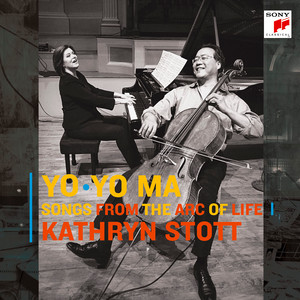 | Salut d'Amour, Op. 12 | Edward Elgar, Yo-Yo Ma, Kathryn Stott | D Major | 0 | 10B | 73 BPM | |
![Spartacus, Act III: Adagio of Spartacus and Phrygia (arr. Y. Grigorovich) [1968 Bolshoi Version] by Aram Khachaturian, RIAS Kammerchor, Deutsches Symphonie-Orchester Berlin, Michail Jurowski](https://i.scdn.co/image/ab67616d00001e02c21d253eed4ccdd547b4b94d) | Spartacus, Act III: Adagio of Spartacus and Phrygia (arr. Y. Grigorovich) [1968 Bolshoi Version] | Aram Khachaturian, RIAS Kammerchor, Deutsches Symphonie-Orchester Berlin, Michail Jurowski | E Major | 2 | 12B | 123 BPM | |
 | Prelude in G-Flat Major, La Fille Aux Cheveux De Lin | Rik | G Minor | 2 | 6A | 79 BPM | |
 | Mahler: Blumine | Gustav Mahler, San Francisco Symphony, Michael Tilson Thomas | C Major | 1 | 8B | 100 BPM | |
 | Musetta's Waltz | Giacomo Puccini, Arthur Fiedler | A Major | 1 | 11B | 68 BPM | |
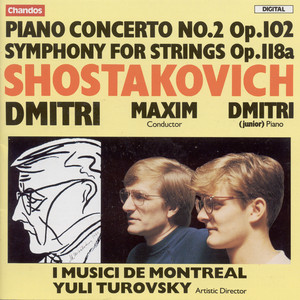 | Piano Concerto No. 2 in F Major, Op. 102: II. Andante | Dmitri Shostakovich, I Musici de Montréal, Maxim Shostakovich | C Minor | 0 | 5A | 177 BPM | |
 | Montgomery Variations: Montgomery Variations: I. Decision | Margaret Bonds, Kellen Gray, Royal Scottish National Orchestra | D Minor | 1 | 7A | 82 BPM | |
 | Carnival of the Animals, R. 125: XIII. The Swan | Camille Saint-Saëns, Marian Lapsansky, Peter Toperczer, Slovak Radio Symphony Orchestra, Ondrej Lenard | G Major | 0 | 9B | 79 BPM | |
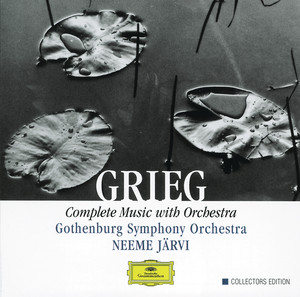 | Holberg Suite, Op. 40: II. Sarabande. Andante | Edvard Grieg, Gothenburg Symphony Orchestra, Neeme Järvi | G Major | 0 | 9B | 75 BPM | |
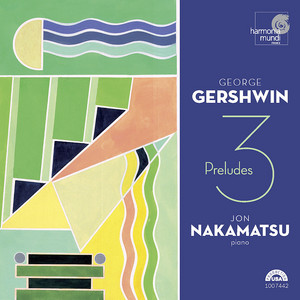 | 3 Preludes: II. Andante con moto e poco rubato | George Gershwin, Jon Nakamatsu | F♯ Major | 0 | 2B | 72 BPM | |
 | Symphony No. 6 in B Minor, Op. 74 "Pathétique": IV. Finale. Adagio lamentoso | Pyotr Ilyich Tchaikovsky, Teodor Currentzis, musicAeterna | B Minor | 1 | 10A | 100 BPM | |
 | Romance "O pourquoi donc" in E Minor, S. 169 | Franz Liszt, Lang Lang | E Minor | 0 | 9A | 67 BPM | |
 | Gershwin: Gershwin's Songbook: No. 5, I Got Rhythm | George Gershwin, Martin James Bartlett | C Minor | 1 | 5A | 70 BPM | |
 | Rosa Mundi | Paul Lewis, Royal Ballet Sinfonia, Gavin Sutherland | E Major | 0 | 12B | 81 BPM | |
![Etudes symphoniques (Symphonic Etudes), Op. 13, Adagio and Allegro brillante: Variation 11 [arr. P.I. Tchaikovsky for orchestra] by Robert Schumann, Seattle Symphony Orchestra, Gerard Schwarz](https://i.scdn.co/image/ab67616d00001e029057c124b554163ef1edd618) | Etudes symphoniques (Symphonic Etudes), Op. 13, Adagio and Allegro brillante: Variation 11 [arr. P.I. Tchaikovsky for orchestra] | Robert Schumann, Seattle Symphony Orchestra, Gerard Schwarz | A Minor | 0 | 8A | 104 BPM | |
 | Appalachian Spring Suite: I. Very Slowly | Aaron Copland, Los Angeles Philharmonic, Zubin Mehta | A Major | 0 | 11B | 71 BPM | |
 | Les biches Suite, FP 36b: II. Adagietto | Francis Poulenc, RTÉ National Symphony Orchestra, Jean-Luc Tingaud | B♭ Major | 1 | 6B | 112 BPM | |
| Piano Concerto No. 2 in F Major, Op. 102: I. Allegro | Dmitri Shostakovich, I Musici de Montréal, Maxim Shostakovich | B♭ Major | 3 | 6B | 160 BPM | |
 | Ständchen, S. 560 (Trans. from Schwanengesang No. 4, D. 957) | Franz Schubert, Franz Liszt, Khatia Buniatishvili | D Major | 0 | 10B | 67 BPM | |
 | Polovetsian Dances from Prince Igor: Introduzione | Alexander Borodin, George Szell, The Cleveland Orchestra | A Major | 1 | 11B | 83 BPM | |
 | Danse Macabre, Op. 40 | Camille Saint-Saëns, Eugene Ormandy, Philadelphia Orchestra | G Minor | 2 | 6A | 110 BPM | |
 | Eight Concert Etudes Op. 40 Intermezzo | Nikolai Kapustin | F♯ Major | 4 | 2B | 113 BPM | |
 | Grand Canyon Suite: 4. Sunset | Ferde Grofé, Detroit Symphony Orchestra, Antal Doráti | D Major | 1 | 10B | 84 BPM | |
 | Petite suite de concert, Op. 77: II. Demande et reponse | Samuel Coleridge-Taylor, Chicago Sinfonietta, Paul Freeman | G Major | 0 | 9B | 90 BPM | |
 | Porgy And Bess: Summertime | George Gershwin, Betty Lane, Houston Grand Opera Women"s Ensemble, Houston Grand Opera Orchestra, John DeMain, Houston Grand Opera | E Minor | 1 | 9A | 109 BPM |
- ISRC
- CH1602512604
- Label
- L-M Records/RCA Records