- BPM
- 75
- Key
- F Minor
- Camelot
- 4A
Piano Quintet in E-flat Major, Op. 44: II. In modo d'una Marcia. Un poco largamente - Agitato by Juilliard String Quartet, Leonard Bernstein Song Details
Juilliard String Quartet, Leonard Bernstein's 'Piano Quintet in E-flat Major, Op. 44: II. In modo d'una Marcia. Un poco largamente - Agitato' had a release date set for 1967. Since This song is still less than 10 minute long, it is still considered a pretty long duration song compared to the average song length. This song does not appear to be explicit due to the lack of the "E" tag. The track order of this song in Juilliard String Quartet's "Juilliard String Quartet: Great Collaborations" album is number 2 out of 20. On top of that, United States appears to be the country where this track was created. Piano Quintet in E-flat Major, Op. 44: II. In modo d'una Marcia. Un poco largamente - Agitato is not that popular right now. In our opinion, the overall tone is not very danceable and projects negative sounds, such as being sad, depressed, or angry.
BPM and Tempo
We consider the tempo marking of Piano Quintet in E-flat Major, Op. 44: II. In modo d'una Marcia. Un poco largamente - Agitato by Juilliard String Quartet, Leonard Bernstein to be Adagio (slowly with great expression) because the track has a tempo of 75 BPM, a half-time of 38BPM, and a double-time of 150 BPM. Based on that, the speed of the song's tempo is slow. The time signature for this track is 4/4.
Music Key
This song is in the music key of F Minor. Because this track belongs in the F Minor key, the camelot key is 4A. So, the perfect camelot match for 4A would be either 4A or 3B. While, a low energy boost can consist of either 4B or 5A. For moderate energy boost, you would use 1A and a high energy boost can either be 6A or 11A. However, if you are looking for a low energy drop, finding a song with a camelot key of 3A would be a great choice. Where 7A would give you a moderate drop, and 2A or 9A would be a high energy drop. Lastly, 7B allows you to change the mood.
Want to find the BPM and music key for other songs? Check out our BPM and Key Finder page!
- Popularity
- 4%
- Loudness
- -20.844 dB
- Acousticness
- 97%
- Danceability
- 25%
- Energy
- 8%
- Instrumentalness
- 48%
- Liveness
- 11%
- Loudness
- 65%
- Speechiness
- 5%
- Valence
- 20%
Recommendations
| Track | Artist | Key | Energy | Camelot | BPM | ||
|---|---|---|---|---|---|---|---|
 | Insight | Dobrinka Tabakova, Maxim Rysanov, Roman Mints, Kristine Blaumane | D Minor | 1 | 7A | 86 BPM | |
 | 12 Movements from Romeo and Juliet, Op. 64: II. Dance Of The Knights (Transcription For 2 Pianos By Sergei Babayan) | Sergei Prokofiev, Martha Argerich, Sergei Babayan | A Minor | 1 | 8A | 101 BPM | |
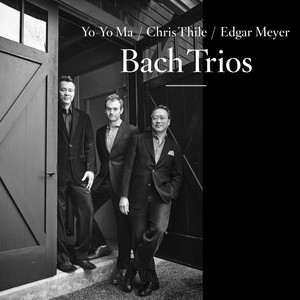 | Wachet auf, ruft uns die Stimme, BWV 645 | Johann Sebastian Bach, Yo-Yo Ma, Chris Thile, Edgar Meyer | A♭ Major | 0 | 4B | 129 BPM | |
 | Cello Sonata in F-Sharp Minor, Op. 52: III. Intermezzo. Andantino | Giuseppe Martucci, Raphaela Gromes | F♯ Minor | 0 | 11A | 178 BPM | |
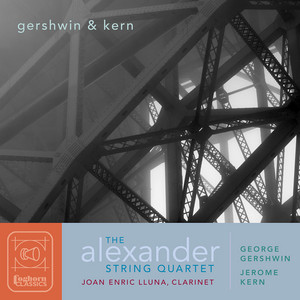 | Lullaby for String Quartet | George Gershwin, Alexander String Quartet | G Major | 1 | 9B | 96 BPM | |
 | Valse nonchalante en Ré-Bémol Majeur, Op. 110 | Camille Saint-Saëns, Anne Queffélec | D♭ Major | 0 | 3B | 68 BPM | |
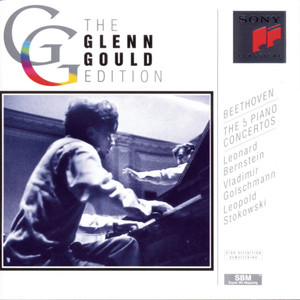 | Piano Concerto No. 2 in B-Flat Major, Op. 19: II. Adagio | Ludwig van Beethoven, Glenn Gould, Leonard Bernstein, Columbia Symphony Orchestra | E♭ Major | 1 | 5B | 131 BPM | |
 | Masquerade Suite: I. Waltz | Aram Khachaturian, Karine Poghosyan | E Minor | 1 | 9A | 92 BPM | |
 | Asyla, Op. 17: III. Ecstasio | Thomas Adès, London Symphony Orchestra | G Major | 3 | 9B | 130 BPM | |
 | Old Refrain (Kreisler) | Angele Dubeau, Ensemble Amati, Raymond Dessaints | C Major | 1 | 8B | 159 BPM | |
 | Martynov: "Come in!", Movement III | Vladimir Martynov, Gidon Kremer | A Major | 1 | 11B | 90 BPM | |
 | Sonata for Violin & Piano in A Major, FWV 8: I. Allegro moderato | César Franck, Louis Pantillon, Steve Huter | A Major | 0 | 11B | 62 BPM | |
 | 12 Lieder von Franz Schubert, S. 558: No. 2, Auf dem Wasser zu singen | Franz Liszt, Murray Perahia | A♭ Major | 0 | 4B | 86 BPM | |
 | Symphony No. 2 "The Age of Anxiety": Pt. 2a, The Dirge. Largo | Leonard Bernstein, Philippe Entremont, New York Philharmonic | A Major | 2 | 11B | 65 BPM | |
 | Violin Sonata in A Major, FWV 8: II. Allegro | César Franck, Isabelle Faust, Alexander Melnikov | G Minor | 1 | 6A | 108 BPM | |
 | String Quartet in E flat major: I Adagio ma non troppo | Fanny Mendelssohn, Quatuor Ébène | F Minor | 1 | 4A | 83 BPM | |
 | Symphony No. 2 "The Age of Anxiety" / Part 1 / II. The Seven Ages: Variation 2. Poco più mosso | Leonard Bernstein, Krystian Zimerman, Berliner Philharmoniker, Sir Simon Rattle | A♭ Minor | 1 | 1A | 78 BPM | |
 | Sonata in A Major: I. Allegretto ben moderato | César Franck, Lisa Jacobs, Ksenia Kouzmenko | A Major | 1 | 11B | 87 BPM | |
 | Debussy: La Mer, L. 111a: I. De l'aube à midi sur la mer | Claude Debussy, Emmanuel Krivine, Orchestre National De France | E Major | 1 | 12B | 75 BPM | |
 | Rondo capriccioso in E Major, Op. 14, MWV U 67 | Felix Mendelssohn, Murray Perahia | E Major | 1 | 12B | 113 BPM | |
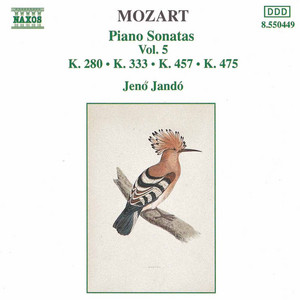 | Piano Sonata No. 2 In F Major, K. 280: II. Adagio | Jenő Jandó, Wolfgang Amadeus Mozart | F Minor | 0 | 4A | 101 BPM | |
 | Fratres (for cello and piano) | Arvo Pärt, Tibor Parkanyi, Sandor Falvai | F Major | 0 | 7B | 93 BPM | |
 | Orfeo ed Euridice, Wq. 30 / Act II: Dance of the Furies | Christoph Willibald Gluck, Daniel Hope, Zurich Chamber Orchestra | D Minor | 4 | 7A | 153 BPM | |
 | Les Barricades mystérieuses | François Couperin, David Greilsammer | B♭ Major | 0 | 6B | 131 BPM | |
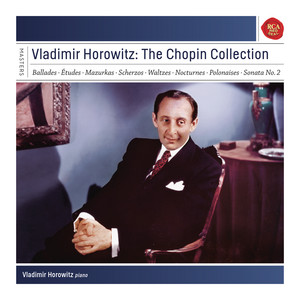 | Nocturne in F Minor, Op. 55, No. 1 | Frédéric Chopin, Vladimir Horowitz | D Major | 1 | 10B | 173 BPM |
- ISRC
- USSM16400078
- Label
- L-M Records/RCA Records